
Canine Good Citizen Test
The Canine Good Citizen (CGC) is a certification program created by the American Kennel Club to recognize dogs who demonstrate good manners in real-world situations. It's not a competition--it's a pass/fail evaluation of basic skills that every well-trained dog should have.
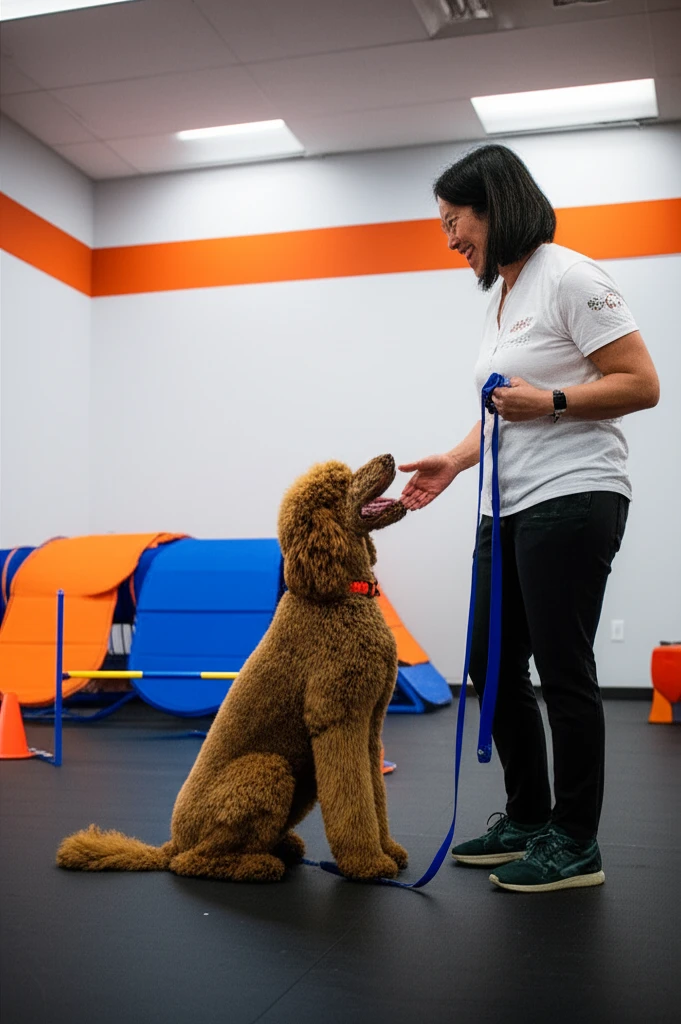
The 10 Test Items
Any dog can take the CGC test, regardless of breed, age, or registration status. Purebreds and mixed breeds are equally welcome.
The CGC evaluates dogs on ten skills, all simulating everyday situations:
1. Accepting a friendly stranger. The evaluator approaches and speaks to you, ignoring your dog. Your dog must remain calm--no jumping, shying away, or excessive excitement.
2. Sitting politely for petting. The evaluator pets your dog on the head and body. Your dog must accept the contact without showing fear or resentment.
3. Appearance and grooming. The evaluator examines your dog's ears and front feet, and runs a brush or comb through the coat. This demonstrates that your dog tolerates handling and that you maintain their care.
4. Walking on a loose leash. You walk a course with turns and stops. The leash should remain slack--no pulling, no dragging.
5. Walking through a crowd. You navigate around several people, at least one with a dog. Your dog must remain controlled and show no more than casual interest in the distractions.
6. Sit, down, and stay on cue. Your dog must demonstrate all three, holding the stay while you walk 20 feet away.
7. Coming when called. From 10 feet away, you call your dog. They must come reliably.
8. Reaction to another dog. Two handlers approach with their dogs, stop, shake hands, and continue. Your dog should show no more than casual interest in the other dog.
9. Reaction to distractions. The evaluator presents two distractions--typically something visual (like a dropped chair) and something auditory (like a loud noise). Your dog may show curiosity but should not panic, bark excessively, or try to flee.
10. Supervised separation. You hand your dog's leash to the evaluator and walk out of sight for three minutes. Your dog doesn't need to hold a position, but must not bark continuously, whine excessively, or show extreme distress.
What Disqualifies a Dog
Any sign of aggression--growling, snapping, lunging--results in immediate failure. So does eliminating during the test (accidents happen, but they're still a fail). Excessive fear, anxiety, or uncontrolled barking will also disqualify.
The standard is reasonable but real. The test is looking for a dog who can handle normal life without creating problems.
Why It Matters
The CGC isn't just a ribbon for your wall. It has practical value:
Housing. Some landlords and apartment complexes accept CGC certification as evidence that a dog is well-behaved.
Insurance. Some homeowner's insurance policies look more favorably on CGC-certified dogs, particularly for breeds that face restrictions.
Therapy dog prerequisite. Most therapy dog organizations require CGC certification (or equivalent) before a dog can begin therapy dog training.
Personal milestone. For many owners, the CGC represents a meaningful goal--proof that the work they've put into training has paid off.
Beyond the Basic CGC
The AKC offers advanced titles for dogs who want to keep progressing:
CGC Urban. Tests skills in a real-world urban environment--walking past restaurants, navigating through doors, riding in vehicles.
CGC Advanced (CGCA). Adds complexity: longer stays, more challenging distractions, off-leash heeling.
AKC Trick Dog. A separate track with five levels (Novice through Elite) for dogs who excel at tricks rather than formal obedience.
Preparing for the Test
Most dogs who pass CGC have completed basic obedience training covering sit, down, stay, come, and loose-leash walking. The test doesn't require perfection--your dog can make minor mistakes--but it does require reliability under mild distraction.
The biggest challenges for most dogs:
- Supervised separation. Dogs who have never been left with a stranger may struggle.
- Reaction to distractions. Startling at loud noises or sudden movements is common.
- Walking through a crowd. Dogs who pull toward other dogs or people need extra practice.
If your dog can do these things at home but falls apart in new environments, you need more practice generalizing skills to unfamiliar settings.
The Owner's Pledge
CGC isn't just about the dog. Before the test, owners sign a Responsible Dog Owners Pledge committing to proper care, training, licensing, and management. The program recognizes that good dogs come from responsible owners.
Frequently Asked Questions
How old does my dog need to be to take the Canine Good Citizen test?
There is no minimum age requirement for the CGC test. However, your dog needs to have enough training and maturity to perform all ten test items reliably. Most dogs are ready after completing a basic obedience program, which typically means they are at least six months old. The AKC also offers a S.T.A.R. Puppy program for younger dogs that serves as a stepping stone toward CGC. At Zoom Room, our obedience classes build the exact skills the CGC evaluates, so many dogs are test-ready by the time they finish.
Can my dog retake the CGC test if they fail?
Yes. There is no limit on how many times you can attempt the CGC test, and there is no waiting period between attempts. If your dog fails on one or two items, you know exactly what to practice before trying again. Many dogs who fail on their first attempt pass comfortably on the second once the handler knows what to expect. The most common reasons for failing are pulling on leash during the walking exercises and showing too much excitement around other dogs. Both are very trainable with focused practice.
Does my dog need to be an AKC-registered purebred to earn the CGC title?
No. The CGC program is open to all dogs, including mixed breeds and dogs without any registration. You do not need AKC papers, and your dog does not need to be a specific breed or size. The AKC offers a Purebred Alternative Listing and a Canine Partners program that allows mixed breeds to earn official AKC titles including CGC. The test evaluates real-world behavior and manners, not pedigree. Every dog who meets the standard earns the same certification.
Ready to get started?
Find your nearest Zoom Room and prepare for the Canine Good Citizen test.
Find a Zoom Room