
Clicker Training
A clicker is a small handheld device that makes a sharp, distinct sound when pressed. That sound tells your dog: "Yes, that exact thing you just did is correct." A reward follows immediately.
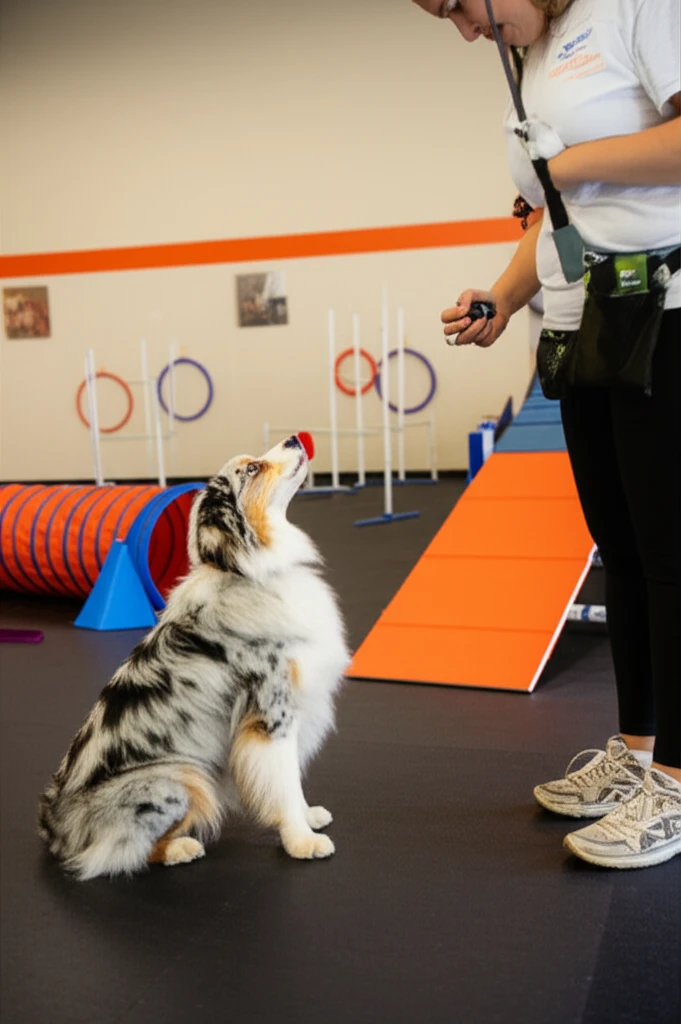
Why the Click Works
The method originated with marine mammal trainers in the 1960s. You can't pet a dolphin mid-backflip--but you can click at the precise moment they hit the apex. Dog trainers adopted the technique, and it transformed modern training methodology.
Dogs have approximately 1.6 seconds to connect a behavior with its consequence. If you're slow to reward, your dog may think they're being rewarded for sniffing the ground rather than sitting down.
The click solves this timing problem. It marks the exact instant the correct behavior happens--even if the treat arrives a few seconds later. The dog learns to associate the click with success, and the click with the reward.
This is called a "bridge" or "marker." The click bridges the gap between the behavior and the reinforcement, giving you precision you can't achieve with your voice alone.
How It Differs from Voice Markers
You can use a word like "Yes!" instead of a clicker. It works. But the clicker has advantages:
- Consistency. The click sounds exactly the same every time. Your voice varies in tone, volume, and enthusiasm depending on your mood.
- Distinctiveness. Dogs hear human speech constantly. The click is unusual--it stands out from background noise.
- Neutrality. The click carries no emotional charge. A frustrated "yes" sounds different from an excited one. A click is just a click.
For most training, either works. For precision work--shaping complex behaviors, trick training, competition obedience--the clicker's consistency pays off.
Loading the Clicker
Before training begins, your dog needs to understand that click means reward. This process is called "loading" or "charging" the clicker.
The method is simple: click, then immediately give a treat. Repeat 10-15 times. Do this a few times a day for a couple of days. Your dog will quickly learn that the click predicts something good.
You'll know the clicker is loaded when your dog's ears perk up or they look to you expectantly the moment they hear the click.
Using the Clicker in Training
Once loaded, use the clicker to mark correct behaviors:
- Cue the behavior (or wait for it to happen naturally).
- Click the instant the behavior occurs--not before, not after.
- Deliver the reward within a few seconds.
Timing is everything. A late click marks whatever your dog was doing when they heard it--which may not be what you wanted. Practice your timing without your dog first: click the moment a ball bounces, or when a friend claps.
Common Misconceptions
"My dog will only work for treats." Clicker training actually makes it easier to fade treats. Because the click precisely marks correct behavior, dogs learn faster. You can reduce treat frequency once the behavior is reliable--the click itself becomes reinforcing.
"The clicker is a cue." No. The clicker doesn't tell your dog what to do. It tells them they did something right. Think of it as a camera shutter capturing the moment of success, not a remote control.
"It's too complicated to hold leash, clicker, and treats." It takes practice, but becomes natural. Hold the leash and clicker in one hand, treats in the other. Once past the luring stage, you don't need treats in hand at all--they can be in your pocket or across the room.
"My dog is too old." Dogs of any age respond to clicker training. Older dogs often enjoy it--they're eager to figure out what earns the click, and the mental engagement is stimulating.
When Clicker Training Excels
Clicker training is particularly effective for:
- Puppies. The precision helps wiggly young dogs understand exactly what behavior you want.
- Shy or anxious dogs. The reward-based approach builds confidence without pressure.
- Complex behaviors. Shaping multi-step tricks or competition-level precision requires exact marking.
- Distance work. The click carries further than your voice and remains consistent.
The Bigger Picture
Clicker training is a tool within positive reinforcement methodology--not a separate system. The principle is the same: reward behaviors you want, ignore behaviors you don't. The clicker just makes the rewarding more precise.
The shift from correction-based training to positive reinforcement represents one of the largest changes in animal training philosophy over the past fifty years. Clicker training accelerated that shift by proving that precise, positive marking could teach complex behaviors faster and more reliably than punishment ever could.
Frequently Asked Questions
Can I use a clicker for puppies, or should I wait until my dog is older?
You can start clicker training as soon as your puppy comes home, typically around eight weeks old. Puppies pick up the click-reward association quickly because they are naturally curious and food-motivated. The clicker's precision is especially helpful with puppies, since their attention shifts rapidly and you need to mark the correct behavior in that brief window. Start with short sessions of two to three minutes, and keep the energy upbeat. Puppy classes at Zoom Room incorporate clicker basics so you and your pup build the skill together from the start.
What if my dog is scared of the clicker sound?
Some dogs are startled by the sharp click, especially sound-sensitive breeds. If your dog flinches or moves away from the sound, try muffling the clicker by holding it behind your back or wrapping it in a cloth. You can also use a softer marker like a retractable pen click or a tongue click. The goal is a consistent, distinct sound your dog associates with success. Once your dog connects the sound with treats, any initial hesitation usually fades. If the sensitivity persists, switch to a verbal marker like a short, bright "yes" -- it works on the same principle.
Do I need to use the clicker forever, or can I phase it out?
The clicker is a teaching tool, not a permanent fixture. Once your dog reliably performs a behavior on cue, you can transition to a verbal marker or simply reward intermittently without marking at all. Most trainers use the clicker heavily when introducing new behaviors or refining precision, then phase it out as the behavior becomes second nature. You can always bring it back when teaching something new. Think of it as scaffolding: essential during construction, removed once the structure is solid.
Ready to get started?
Find your nearest Zoom Room and learn clicker training techniques.
Find a Zoom Room