
Positive Reinforcement Dog Training
Positive reinforcement means rewarding your dog when she does what you want. No corrections, no punishment, no dominance--just rewards for the right behavior. The dog learns that good things happen when she performs the desired action, and she repeats it.
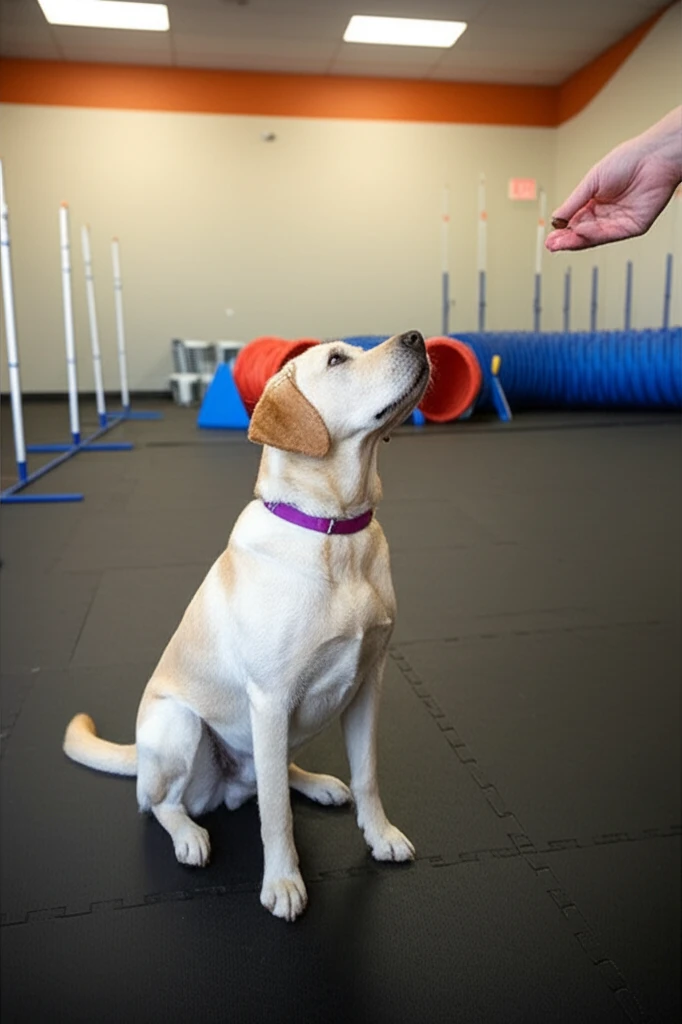
Why It Works
This isn't permissiveness. You still set rules and expectations. But you enforce them by rewarding compliance rather than punishing mistakes.
Dogs have about 1.6 seconds to connect a behavior with its consequence. That's a narrow window. Positive reinforcement gives you a precise way to mark the exact moment your dog does the right thing--through a treat, praise, or a clicker sound--so there's no confusion about what earned the reward.
Punishment, by contrast, often comes too late or gets associated with the wrong thing. A dog who gets scolded for chewing a shoe an hour ago doesn't connect the punishment to the chewing--she just learns that sometimes humans get angry unpredictably.
Dogs trained with positive reinforcement are consistently shown in behavioral research to learn faster, retain behaviors longer, and display fewer anxiety and aggression issues than dogs trained with aversive methods.
How It Works in Practice
When your dog does something you want--sits, comes when called, walks calmly on leash--you immediately reward it. The reward can be food, praise, play, or anything else the dog finds valuable.
When your dog does something you don't want, you don't punish. You either ignore the behavior (removing the attention that may be reinforcing it) or redirect to an incompatible behavior and reward that instead.
Example: Dog jumps on guests. Instead of yelling or pushing the dog off (which can feel like exciting attention), you ask for a sit. Dog sits, dog gets a treat. Over time, dog learns that sitting gets rewards and jumping gets nothing.
Clicker Training
A clicker is a small handheld device that makes a distinct clicking sound. It's used to mark the precise moment of a correct behavior--faster and more consistent than your voice.
The process:
- "Load" the clicker by clicking and immediately treating, about 20 times in a row. The dog learns click = reward is coming.
- When training, click the instant the dog performs the desired behavior, then treat.
- The dog quickly learns to repeat whatever earned the click.
Clickers are especially useful for shaping complex behaviors or for capturing quick movements that are hard to reward in time with treats alone.
Common Misconceptions
"Positive training is just bribery." No. Bribery is showing the treat first to lure behavior. In positive reinforcement, the reward comes after the behavior. Over time, rewards become intermittent while the behavior remains strong--just like how you don't need a paycheck every hour to keep showing up to work.
"It doesn't work for aggressive dogs." Actually, aversive methods often make aggression worse by increasing fear and anxiety. Positive reinforcement builds trust, which is the foundation for addressing aggression safely.
"You need to be the alpha." Dominance theory in dog training has been largely debunked. Dogs aren't trying to dominate you--they're trying to figure out what works. Reward what you want, ignore or redirect what you don't.
Positive Training and Socialization
Training teaches specific behaviors. Socialization builds general confidence and stability.
A dog who knows "sit" but panics in crowds isn't well-prepared for life. A dog who's calm and confident in new environments but doesn't know basic manners is hard to live with. You need both.
Positive reinforcement methods are especially important during socialization because they create positive associations with new experiences. A puppy who gets treats and praise while meeting strangers learns that strangers are good. A puppy who gets corrected for being nervous around strangers learns that strangers predict bad things--and becomes more fearful.
Why Every Family Member Can Participate
Positive reinforcement is simple enough that children, elderly family members, and first-time dog owners can all use it effectively. There's no physical strength required, no precise timing of corrections, no risk of accidentally escalating into conflict with the dog.
Everyone in the household uses the same approach: reward what you want, ignore what you don't. The dog gets consistent feedback from all family members, which accelerates learning.
Frequently Asked Questions
How do I handle dangerous behavior like running into traffic if I can only use positive reinforcement?
Positive reinforcement does not mean letting your dog do whatever they want. Management comes first: use a leash near roads, secure your yard, and prevent access to dangerous situations. Then train a reliable recall and emergency stop using high-value rewards so your dog responds quickly when it matters. The goal is to build such a strong reinforcement history for coming when called that your dog chooses to return to you. Prevention plus strong training is more effective and more reliable than relying on punishment after the fact.
How long does it take to see results with positive reinforcement training?
Most dogs show noticeable progress within the first few sessions. Simple behaviors like sit and down can be learned in a single session. More complex skills like loose-leash walking or reliable recall in distracting environments take weeks of consistent practice. The timeline depends on the dog's age, history, and the complexity of what you are teaching. Puppies who start early in a structured class environment often progress fastest because they have fewer ingrained habits to work around. The key factor is consistency from everyone in the household.
What kind of rewards work best for positive reinforcement training?
The best reward is whatever your dog finds most motivating, and that varies by dog. Small, soft, quick-to-eat treats are the go-to for most training because they deliver fast and keep the session moving. For dogs who are less food-motivated, a quick game of tug, a favorite toy, or enthusiastic praise can work just as well. Many trainers use a hierarchy: everyday kibble for easy tasks, high-value treats like cheese or chicken for challenging situations. The reward should match the difficulty of what you are asking. A reliable sit at home earns kibble; a recall away from a squirrel earns the good stuff.
Ready to get started?
Find your nearest Zoom Room and experience positive reinforcement training firsthand.
Find a Zoom Room