
Puppy Socialization
Socialization is more important than training. That might sound strange coming from dog trainers, but consider what people actually want in a dog. Nobody says "I want a dog who can sit and stay." They say they want a happy dog. A calm dog. A dog they can take anywhere without worry.
The Critical Window
That dog doesn't come from obedience commands. It comes from socialization--early, repeated, positive exposure to the world.
Puppies have a sensitive period for social development that begins around three weeks and starts closing around twelve weeks. By eighteen weeks, this window shuts for good.
During this period, puppies form their baseline attitudes about the world. Experiences during these weeks have an outsized impact on who your dog becomes. A puppy who meets lots of friendly strangers during this window tends to like strangers as an adult. A puppy who is isolated tends to be suspicious or fearful.
You cannot fully make up for missed socialization later. You can improve a poorly socialized adult dog, but you're working against the grain. Early socialization is the foundation.
What Socialization Actually Means
Socialization isn't just "playing with other dogs." It means exposing your puppy to the full range of experiences they'll encounter in life:
People. Men, women, children, elderly people. People in hats, uniforms, sunglasses. People of different sizes, shapes, and ethnicities. People using wheelchairs, walkers, canes.
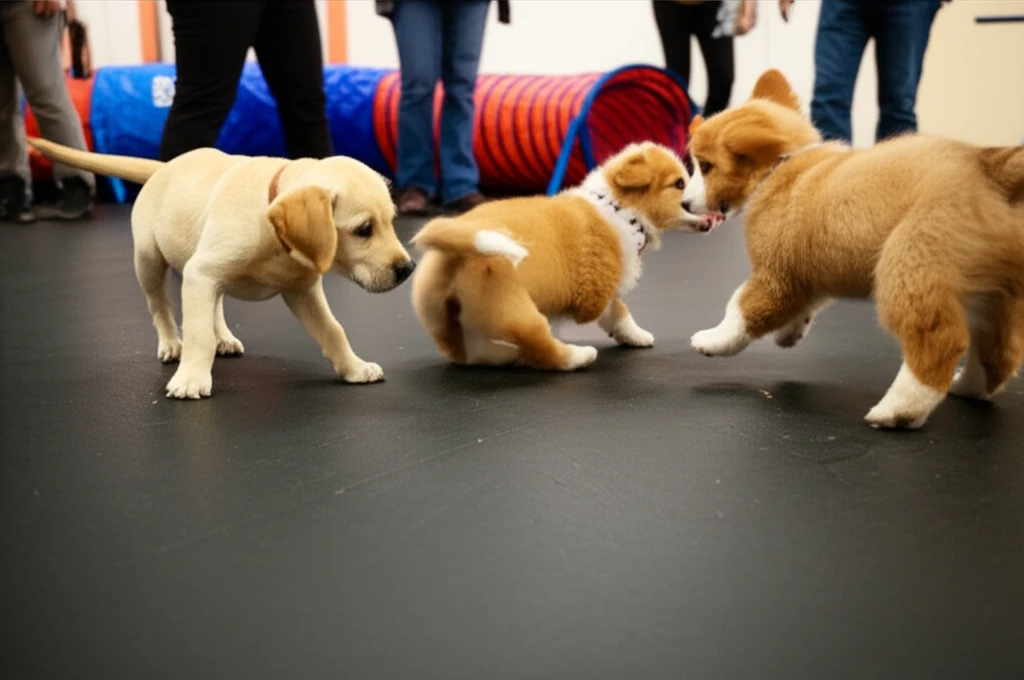
Dogs. Puppies their own age, calm adult dogs, dogs of different sizes and breeds. Supervised play that teaches appropriate social signals.
Environments. Different floor surfaces, stairs, elevators. Busy streets, quiet parks, parking lots. Cars, buses, shopping carts.
Sounds. Traffic, thunder, fireworks, vacuum cleaners, doorbells, crying babies.
Handling. Being touched on paws, ears, mouth, tail. Being picked up. Being restrained gently. Being examined by strangers.
The goal isn't just exposure--it's positive exposure. Every new experience should be paired with good things: treats, praise, play. The puppy should walk away thinking "that was fine" or "that was great," not "that was scary."
The Vaccination Question
For decades, owners were told to keep puppies indoors until their full vaccination series was complete--typically around sixteen weeks. This advice was well-intentioned but created a terrible tradeoff: protect against disease by sacrificing the critical socialization window.
The American Veterinary Society of Animal Behavior now takes a different position. Their official statement: puppies should receive socialization before they are fully vaccinated.
Modern vaccines (high-titer, low-passage) are more effective earlier than previous generations. A puppy with their first round of shots can safely attend well-run puppy classes where all participants are vaccinated, the facility is sanitized, and unknown dogs aren't present.
The behavioral risk of inadequate socialization is greater than the disease risk of controlled early exposure. Puppies who miss socialization are more likely to develop fear and aggression--problems that are far harder to fix than any illness.
What Doesn't Count as Socialization
Dog parks. Unscreened dogs, no supervision, unpredictable interactions. A bad experience at a dog park can set socialization back significantly. An indoor dog gym is a safer alternative. Wait until your dog is older and confident.
Overwhelming experiences. Flooding a puppy with too much too fast creates fear, not confidence. A puppy who is dragged into a crowd and held while strangers pet them learns that new situations are stressful.
Passive exposure. Carrying your puppy through a store isn't socialization. The puppy needs to engage--to approach, sniff, interact--on their own terms, with positive associations.
How to Do It Right
Go slowly. Let your puppy approach new things at their own pace. Don't force interactions.
Pair with rewards. New person appears, puppy gets treat. Strange sound happens, puppy gets treat. The math is simple.
Watch for stress. A puppy who is cowering, hiding, or trying to escape has had enough. End on a positive note and try again another day with less intensity.
Seek variety. One friendly stranger isn't enough. Your puppy needs to meet dozens of different people, in different contexts, over many weeks.
Use puppy classes. A well-run puppy class in a clean, controlled environment provides safe exposure to other puppies and new experiences under professional supervision. This is harder to replicate on your own.
Why This Matters More Than Commands
A dog who knows "sit" but panics in crowds isn't prepared for life. A dog who is calm and confident everywhere but doesn't know any commands is still a joy to live with.
Socialization creates the foundation. Training builds on it. If you only have time for one during your puppy's first months, choose socialization. The commands can come later. The critical window won't.
Frequently Asked Questions
When should I start socializing my puppy?
As soon as possible. The critical socialization window begins around three weeks of age and starts closing around twelve weeks. By eighteen weeks, it closes for good. Puppies with their first round of vaccinations can safely attend well-run puppy classes in clean, controlled environments where all participants are vaccinated. The American Veterinary Society of Animal Behavior recommends starting socialization before the full vaccination series is complete because the behavioral risks of waiting outweigh the disease risks of controlled early exposure.
Is a dog park a good place to socialize my puppy?
No. Dog parks have unscreened dogs, no supervision, and unpredictable interactions. A single bad experience at a dog park can set your puppy's socialization back significantly and create lasting fear. Structured puppy classes or supervised socialization sessions in clean indoor environments are far safer because every dog is screened, the space is sanitized, and a professional is guiding the interactions. Wait until your dog is older and confident before visiting a dog park.
My puppy seems scared of new things. Should I push through or back off?
Back off. Forcing a scared puppy into overwhelming situations creates fear, not confidence. If your puppy is cowering, hiding behind your legs, or trying to escape, they have had enough. End the session on a positive note with a treat and try again another day at a lower intensity. Socialization should always be at your puppy's pace. The goal is for every new experience to feel safe and rewarding, so your puppy builds positive associations rather than learning that new things are stressful.
Ready to get started?
Find your nearest Zoom Room and enroll in our puppy socialization program.
Find a Zoom Room