
How to Socialize an Adult Dog: A Realistic Guide
You adopted a two-year-old rescue who barks at every stranger, or your pandemic puppy grew into an adult who has never been comfortable around other dogs. You have heard that the socialization window closes at 16 weeks and you missed it. That is partly true. But the idea that an adult dog cannot learn to be more comfortable in the world is not true at all.
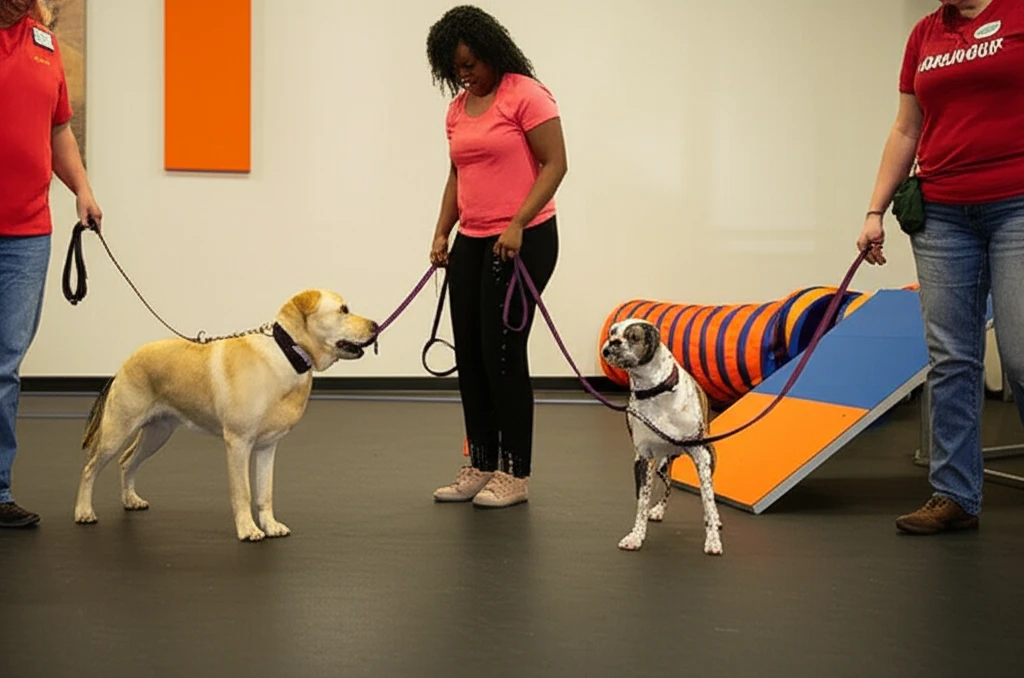
The Socialization Window: What It Means and What It Does Not
The critical socialization period in puppies runs roughly from three to 14 to 16 weeks of age. During this window, a puppy's brain is uniquely primed to absorb new experiences and categorize them as normal. Sounds, surfaces, people, other animals, and environments encountered during this period become part of the dog's baseline understanding of the world. Things not encountered during this window are more likely to be met with suspicion later.
This window is real and it is important. But it is not a cliff. The brain does not shut off its ability to form new associations on week 17. What changes is the ease and speed at which new associations form. A puppy exposed to 50 different people during their socialization period absorbs that experience almost effortlessly. An adult dog who has never been around strangers can still learn that unfamiliar people are safe, but the process is slower, more deliberate, and requires more repetitions.
Think of it this way: the socialization window is the period when the brain is writing its first draft of reality. After the window closes, the brain is still capable of revision, but each edit takes more effort. That does not mean the edits are not worth making. A dog who goes from panicking at the sight of another dog to being able to walk past one at 15 feet with a loose leash has made a meaningful, life-changing improvement, even if they never become the dog who plays comfortably at a dog park.
The rescue dog angle is important here. Many adopted dogs missed their socialization window entirely because they spent their early weeks in a shelter, on the street, or in a neglectful home. These dogs often arrive with a baseline of wariness toward the world. That is not a permanent sentence. It is a starting point.
Why Flooding Fails and Controlled Exposure Works
The most common mistake people make when trying to socialize an adult dog is flooding: throwing the dog into the situation they are afraid of and hoping they will adjust. Taking a dog-reactive dog to a crowded dog park, walking a stranger-fearful dog through a street festival, or forcing a sound-sensitive dog to sit next to a parade are not socialization. They are immersion therapy without consent, and they almost always make the fear worse.
Flooding fails because an overwhelmed brain does not learn. When a dog is above their stress threshold, they are in survival mode. Their cortisol is elevated, their fight-or-flight system is active, and no amount of treats, praise, or reassurance can penetrate the panic. What the dog takes away from the experience is confirmation that the scary thing really is as bad as they thought, plus the added lesson that their owner put them in that situation, which erodes trust.
Controlled exposure is the opposite approach. You identify the trigger, whether it is other dogs, strangers, new environments, or specific sounds, and you expose your dog to it at a level they can handle. This is called working below threshold. Below threshold means your dog can see the trigger, acknowledge it, and still take a treat, respond to a cue, or orient back to you. If your dog cannot do those things, you are too close, the trigger is too intense, or the environment has too many variables.
For a dog who is reactive to other dogs, controlled exposure might mean sitting in a parking lot 100 feet from a pet store entrance, feeding treats every time a dog walks in or out, and leaving before your dog's stress accumulates. For a dog who is afraid of strangers, it might mean walking in a quiet park where one person passes every few minutes at a comfortable distance, treating each time a person appears. The distance is the dial you control. Start far away. Close the gap only when your dog is genuinely comfortable at the current distance.
Practical Steps for Socializing an Adult Dog
Adult dog socialization is a project, not an event. It requires a plan, consistency, and realistic expectations about the pace of progress.
Start with observation, not interaction. Before you put your dog in any new social situation, spend time watching them in their current environment. What triggers a reaction? At what distance? What does the reaction look like, and how quickly do they recover? This baseline assessment tells you exactly where to begin your desensitization work.
Create a hierarchy of triggers, ranked from least to most intense. A dog who is nervous around strangers might rank a person at 50 feet as low intensity, a person at 20 feet as medium, and a person reaching toward them as high. Start your work at the lowest level and do not advance until your dog is visibly relaxed and actively looking to you for treats when the trigger appears.
Use high-value treats that your dog only gets during socialization exercises. Chicken, cheese, hot dogs, or whatever makes your dog's eyes light up. The treat needs to compete with the emotional weight of the trigger, so regular kibble is usually not enough. The treat appears when the trigger appears and disappears when the trigger disappears. You are building a Pavlovian association: scary thing predicts amazing thing.
Keep sessions short. Fifteen to twenty minutes is plenty. Longer sessions lead to stress accumulation, where your dog's tolerance gradually erodes even if individual moments seem fine. End every session on a success. If your dog handled three passes of a stranger at 30 feet without reacting, stop there. Do not push for 20 feet just because things are going well. Tomorrow is another session.
Vary the environments. A dog who is comfortable around strangers in your neighborhood park may react differently in a downtown setting with different sounds, surfaces, and crowds. Generalization, the ability to apply learned comfort to new contexts, requires practice across multiple environments. Each new setting is a partial reset, so expect the distance to increase when you change locations.
The Rescue Dog: Starting from Scratch
If you have adopted a rescue dog, you may be working with a dog who has gaps in their experience that you cannot fully identify. You do not know what happened to them before they reached you, and the behavioral patterns you see are the result of a history you were not part of. That uncertainty requires a patient, observational approach.
Give your rescue dog a decompression period before starting any socialization work. The commonly cited guideline is the rule of threes: three days to decompress, three weeks to start settling in, and three months to begin showing their true personality. During this period, keep life predictable and low-stress. Walk familiar routes, maintain a consistent schedule, and do not introduce a parade of new people, environments, or experiences. Your dog needs to feel safe in their new home before they have the emotional bandwidth to process the rest of the world.
Once the decompression period is over, begin your socialization work with whatever your dog shows you they need. Some rescue dogs are fine with people but reactive to other dogs. Others are confident outdoors but terrified indoors. Some have never walked on a hard floor, ridden in a car, or heard a television. Meet your dog where they are, not where you wish they were.
A fearful dog who has come through rescue may have learned that shutting down is the safest strategy. These dogs may not bark, lunge, or show obvious signs of distress. Instead, they freeze, avoid, or make themselves small. This can look like good behavior to an inexperienced eye, but it is actually a dog who has given up on communicating because their signals were not effective in the past. These dogs need especially patient socialization work, because you are not just teaching them that the world is safe. You are teaching them that their communication matters and that someone is listening.
Realistic Expectations and Long-Term Progress
Not every adult dog will become a social butterfly, and that is okay. The goal of adult dog socialization is not to turn your reactive rescue into a dog park regular. It is to expand your dog's comfort zone enough that daily life is manageable and enjoyable for both of you. A dog who can walk through a neighborhood without melting down at every trigger, who can tolerate a visitor in the home, and who can ride in a car to a training class without falling apart has achieved a quality of life that is worlds better than where they started, even if they never become the dog who greets every stranger with a wagging tail.
Progress is not linear. You will have breakthroughs where your dog handles something that would have terrified them a month ago, and regressions where an old fear seems to surface out of nowhere. Both are normal. Stress, illness, changes in routine, and trigger stacking can all cause temporary setbacks. The overall trend over weeks and months is what matters, not any single good or bad day.
Some adult dogs improve dramatically with consistent work. Dogs who seemed hopelessly reactive at adoption become reliable walking partners within six months. Others hit a ceiling where further progress is marginal, and the focus shifts from improvement to management. Both outcomes are valid. A dog whose ceiling is "can tolerate other dogs at 20 feet" still has a good life if the environment is managed to keep them below threshold.
Professional guidance accelerates the process and prevents the most common mistakes. A trainer experienced with fearful and reactive dogs can help you read your dog's threshold accurately, design a desensitization plan specific to your dog's triggers, and adjust the plan as your dog progresses. Leash reactivity, stranger fear, and environmental sensitivity all respond to structured training when the approach matches the dog. Find a Zoom Room near you to start working with a trainer who understands that every adult dog can improve, and that improvement starts with meeting your dog exactly where they are.
Frequently Asked Questions
Is it too late to socialize my adult dog?
No. The critical socialization window in puppyhood makes early exposure easiest, but the brain remains capable of forming new associations throughout a dog's life. Adult dogs can learn to be more comfortable around triggers through desensitization and counter-conditioning. The process is slower and more deliberate than puppy socialization, and the ceiling may be different, meaning your adult dog might never be as relaxed as a dog who was thoroughly socialized as a puppy. But meaningful improvement is realistic for the vast majority of adult dogs with consistent work and appropriate expectations.
Should I take my reactive adult dog to a dog park to socialize them?
No. Dog parks are uncontrolled environments with unpredictable dogs, and they are one of the worst possible settings for a reactive adult dog. The other dogs are off leash, the arousal level is high, and your dog has no ability to control the distance from triggers. For a reactive dog, this is flooding, which typically makes reactivity worse, not better. Instead, start socialization work at a distance from other dogs where your dog can observe without reacting, like across a parking lot from a pet store. Build comfort at distance before closing the gap, and always work in environments where you control the variables.
How do I socialize a rescue dog who is afraid of everything?
Start with decompression. Give your dog at least two to three weeks to settle into your home before introducing new experiences. Then begin with the mildest trigger and work at a distance where your dog can observe without shutting down. Use extremely high-value treats to build positive associations. Keep sessions short, around ten to fifteen minutes, and end on a success. Focus on one trigger category at a time rather than trying to address everything simultaneously. A dog who is afraid of everything needs a smaller, slower starting point than a dog with one specific fear. Professional guidance from a trainer experienced with fearful dogs can help you build a structured plan and avoid the common mistake of moving too fast.
Ready to Help Your Dog Feel More Comfortable?
Zoom Room's structured socialization classes and training programs give adult dogs the controlled exposure they need to build confidence at their own pace. Our trainers specialize in working with reactive and undersocialized dogs in a supportive indoor environment.
Find a Zoom Room