
Apartment Living with a Dog: Why It Works Better Than You Think
You do not need a yard to have a happy dog. Some of the best-trained, most well-adjusted dogs live in apartments because their owners cannot rely on a backyard to do the work for them. Apartment living with a dog is not a compromise. It is a different approach that rewards good training.
Why Apartments and Dogs Work Fine Together
The idea that dogs need a yard is one of the most persistent myths in dog ownership. A yard is convenient, but convenience and necessity are not the same thing. A dog left alone in a yard does not exercise themselves in any meaningful way. They stand at the fence. They bark at passersby. They dig holes. They patrol the perimeter and come back inside with the same pent-up energy they had when they went out.
Apartment dogs, by necessity, get walked. They get taken to parks. They get structured exercise that involves their owner. This means apartment dogs often get more meaningful physical and mental stimulation than yard dogs because every outing is intentional. You are not opening a door and hoping your dog entertains themselves. You are putting on a leash and going somewhere together.
The other advantage of apartment living is that it forces you to train. A dog who barks all day in a house may annoy the neighbors. A dog who barks all day in an apartment generates complaints. A dog who jumps on people in a house is embarrassing. A dog who jumps on people in an elevator is a genuine problem. The tight quarters and shared spaces of apartment life create a natural incentive to build the skills your dog needs, and that training benefits every aspect of your life together.
Managing Barking in an Apartment
Barking is the number one concern for apartment dog owners, and it is the behavior most likely to generate complaints from neighbors or your building management. The first step is identifying why your dog is barking. Alert barking at hallway sounds is different from boredom barking while you are at work, which is different from demand barking when you are home.
Alert barking is the most common issue in apartments because your dog can hear footsteps, doors closing, elevator dings, and conversations through thin walls. Every sound triggers an alert response. The solution is a combination of management and training. White noise machines or fans mask hallway sounds and reduce the number of triggers your dog hears. Moving your dog's resting area away from the front door and shared walls reduces their exposure. Desensitizing your dog to hallway sounds by pairing them with treats helps change the emotional response from "intruder alert" to "treat opportunity."
Boredom barking happens when your dog is left alone with nothing to do. An apartment dog who is home alone for eight hours without enrichment will find ways to entertain themselves, and barking is a common choice. Crate training, frozen Kongs, puzzle feeders, and midday dog walkers all help break up the day. If your dog has separation distress, that is a different issue that requires a specific protocol, not just more toys.
Whatever the cause, punishment does not solve barking. It may suppress it temporarily, but the underlying cause remains. A dog who is startled out of barking by a loud noise or a correction has not learned to be calm. They have learned to be anxious about barking, which often makes the anxiety-driven barking worse.
Exercise and Enrichment Without a Yard
A yard is a convenience, not an exercise plan. Without one, you become your dog's exercise plan, which is actually better for both of you. Structured walks, off-leash play at a park, training sessions, and enrichment activities provide more physical and mental stimulation than a backyard ever could.
Daily walks are the foundation. Two to three walks per day, with at least one being a longer outing of 30 to 45 minutes, meets the exercise needs of most adult dogs. Let your dog sniff during walks. Sniffing is mental exercise, and a 20-minute sniff walk can be as tiring as a 40-minute brisk walk. Vary your routes so your dog encounters new smells and environments regularly.
Inside the apartment, use enrichment to keep your dog's brain busy. Scatter feeding, where you sprinkle your dog's kibble across the floor or on a snuffle mat, turns mealtime into a foraging exercise. Puzzle toys and lick mats provide mental stimulation that reduces restlessness. Short training sessions throughout the day, even five minutes of practicing cues, burn mental energy and reinforce your relationship.
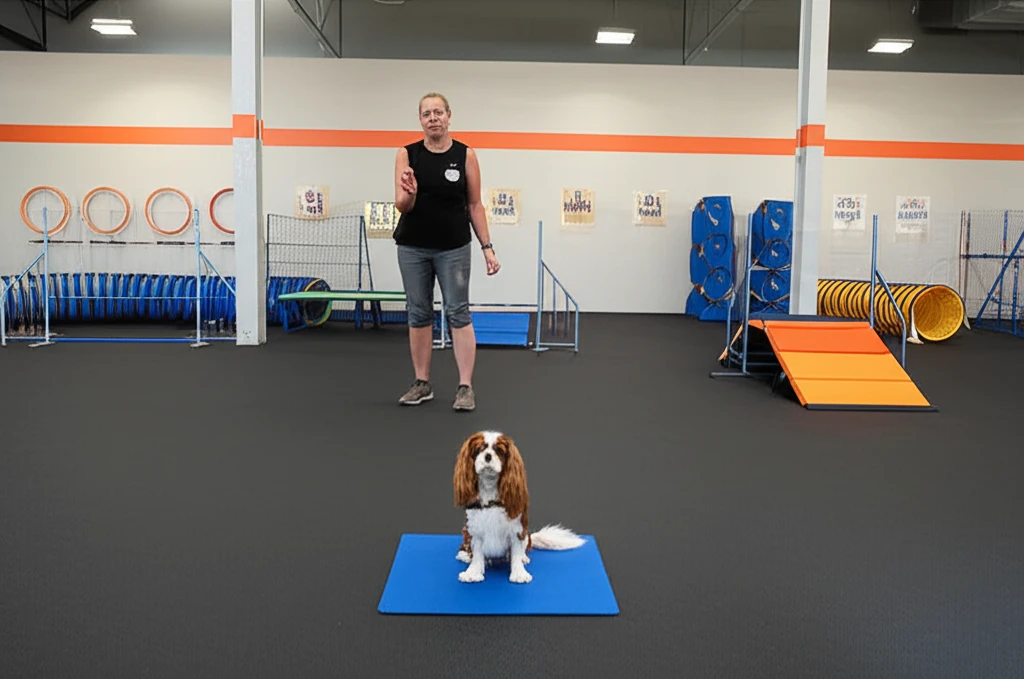
For high-energy dogs or breeds that need more than walks can provide, look for indoor play options. Structured socialization classes, agility sessions, and indoor gyms give your dog a chance to run, play, and work in a safe environment. These are especially valuable during extreme weather when outdoor exercise is limited.
Elevator Comfort and Shared Space Etiquette
Elevators are a daily reality for many apartment dogs, and they present a unique set of challenges. The tight space, the moving floor, the doors opening to reveal strangers, other dogs, or rolling luggage: all of these are potential stress triggers. If your dog is not comfortable in an elevator, every trip outside starts and ends with stress.
Elevator training starts with desensitization. Practice entering and exiting the elevator without riding it. Reward your dog for stepping in and stepping out calmly. Then take short rides, rewarding calm behavior the entire time. Gradually introduce the elements that make elevators challenging: riding with other people, riding with other dogs, riding when the elevator stops at multiple floors. Your dog should be able to sit or stand calmly in the elevator regardless of who gets on.
In shared hallways, lobbies, and common areas, your dog should be on a short leash and under control. Not everyone in your building is a dog person, and even dog lovers do not want to be jumped on in the lobby. Practice polite passing in hallways. If your dog is reactive to other dogs in tight spaces, create distance by stepping into an alcove or asking your dog to sit while the other dog passes. Building staff, delivery people, and maintenance workers are part of daily life in an apartment building. Your dog should be comfortable with their presence.
Pick up after your dog immediately, every time, including in the building's designated pet relief area. Carry waste bags on every outing. Clean up accidents in common areas thoroughly. Being a good neighbor with a dog is about being thoughtful and proactive, and it keeps your building's pet policy intact for everyone.
Choosing the Right Dog for Apartment Living
Any dog can live in an apartment with the right training and exercise plan. That said, some dogs make apartment life easier than others. Size matters less than temperament. A calm, 60-pound greyhound is a better apartment dog than a hyperactive, 15-pound terrier. Energy level, noise tendency, and adaptability are more relevant than breed or size.
If you are choosing a dog specifically for apartment living, look for breeds and individuals with moderate energy levels, a calm indoor demeanor, and lower barking tendencies. Meet the individual dog before committing, because breed generalizations only go so far. A lab who is mellow at three is a different apartment companion than a lab who is still bouncing off the walls at three.
If you already have a high-energy dog in an apartment, the answer is not rehoming. It is training and enrichment. A border collie in an apartment who gets two good walks, a training session, and a puzzle feeder every day is perfectly content. A border collie in a house with a yard who gets ignored is miserable. The environment matters less than what you do with it.
The foundation of successful apartment living with any dog is teaching calm behavior as a default. A dog who knows how to settle, who can relax in a crate or on a bed while life happens around them, and who saves their energy for walks and play sessions is the perfect apartment dog. That skill is built through training, not luck. Find a Zoom Room near you to build the skills that make apartment living with your dog easy and enjoyable.
Frequently Asked Questions
What are the best dog breeds for apartment living?
Temperament matters more than breed, but breeds often recommended for apartments include greyhounds, Cavalier King Charles spaniels, French bulldogs, basset hounds, and Shih Tzus. These breeds tend to have moderate energy levels and calm indoor demeanors. However, any breed can thrive in an apartment with adequate exercise, enrichment, and training. A high-energy breed with a dedicated owner who provides structured exercise and mental stimulation will do better in an apartment than a low-energy breed whose needs are neglected. Focus on the individual dog's energy level and temperament rather than breed alone.
How do I stop my dog from barking at hallway noises?
Start by reducing exposure. Move your dog's resting area away from the front door and shared walls. Use a white noise machine or fan to mask hallway sounds. Then work on changing your dog's emotional response to the sounds through desensitization. When your dog hears a hallway sound without barking, reward them with a treat. If they bark, calmly redirect them to an alternative behavior like going to their bed. Over time, hallway sounds become background noise rather than alarm triggers. Consistency is essential, and progress may take several weeks of daily practice.
How much exercise does an apartment dog need?
Most adult dogs need a minimum of 60 to 90 minutes of exercise per day, split across two to three outings. This should include at least one longer walk of 30 to 45 minutes. High-energy breeds and young dogs may need more. Mental enrichment such as puzzle toys, training sessions, and sniff walks counts toward the total and can partially substitute for physical exercise. Puppies need shorter, more frequent outings. Senior dogs may need less physical exercise but still benefit from daily mental stimulation. The right amount depends on your individual dog's breed, age, and energy level.
Apartment Living Made Easy
Zoom Room's training and socialization classes build the calm behavior, impulse control, and elevator skills that make apartment dogs great neighbors. Train in our indoor gym, no yard required.
Find a Zoom Room