
How to Train an Akita
An Akita is not a dog who will love everyone they meet, and that is not something to fix. It is something to understand and manage. This is a powerful, dignified breed with strong guardian instincts and a deep selectivity about who they trust. Training an Akita means working with that nature, not pretending it does not exist.
Socialization Is Not Optional With This Breed
Akitas were developed as guardians and large-game hunters in northern Japan. Their heritage includes generations of dogs who were expected to assess threats, protect their families, and make decisions about when to act. That means your Akita puppy comes pre-loaded with a tendency toward wariness of strangers and selectivity about other dogs. Without early, extensive, and ongoing socialization, those tendencies will harden into behaviors that severely limit your dog's life.
The critical socialization window for any puppy closes around 16 weeks, and with an Akita, what you accomplish during that window determines the trajectory of the next decade. Your Akita puppy needs positive exposure to a wide variety of people: different ages, body types, clothing, hats, umbrellas, wheelchairs. They need to meet other dogs of various sizes and temperaments in controlled settings. They need to experience different environments, surfaces, and sounds while those experiences are still novel rather than threatening.
Here is the part that differentiates Akitas from more naturally social breeds: socialization does not end at 16 weeks. An Akita who had excellent puppy socialization but then spent six months without meeting new people or dogs can regress. This breed requires ongoing social exposure throughout their life to maintain the skills they built during puppyhood. Regular group training classes serve double duty by keeping your Akita's obedience sharp and their social tolerance active.
Dog Selectivity: What It Means and How to Manage It
Many Akitas are dog-selective, meaning they do not enjoy or tolerate the company of all dogs equally. Some Akitas develop same-sex aggression. Others are fine with calm, respectful dogs but react strongly to dogs who approach with too much energy or rudeness. This is a breed tendency, not a training failure, and honest management is more effective than trying to make your Akita into a dog park dog.
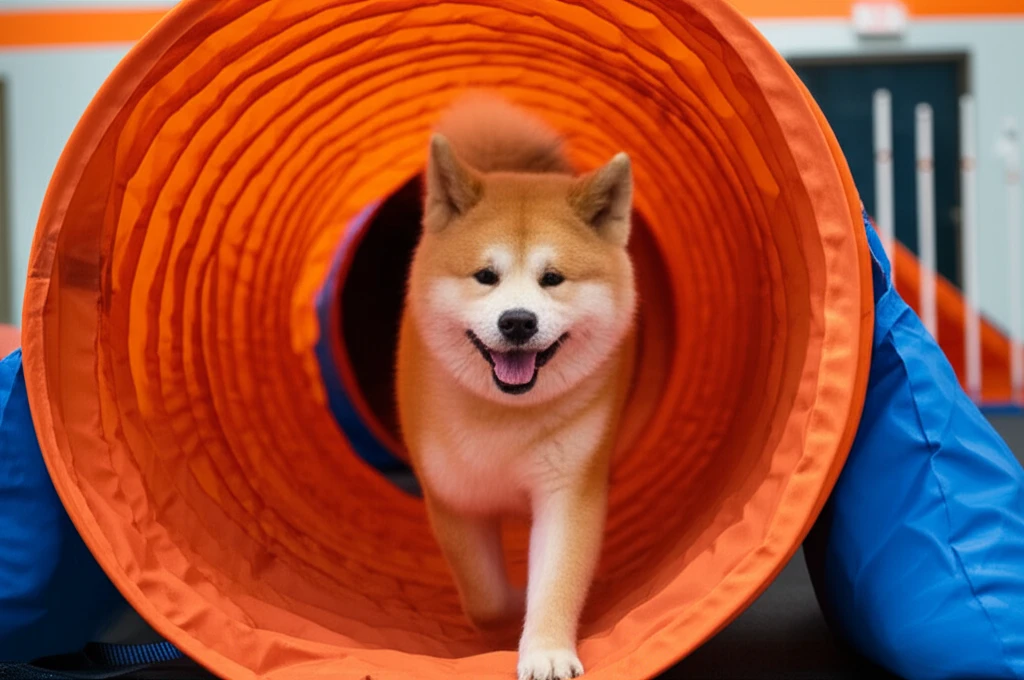
Dog selectivity means you need to be your Akita's advocate. Do not put them in situations that exceed their tolerance, like off-leash dog parks or crowded, unstructured social settings where unknown dogs can approach without warning. Instead, focus on controlled social experiences where you can manage distance, duration, and the quality of the interactions. An agility class or structured obedience class, where dogs work near each other but not in free-for-all play, is often a much better fit than open socialization for an adult Akita.
If your Akita is showing signs of leash reactivity toward other dogs, understand what is happening. In many cases, the reactivity is rooted in frustration or anxiety rather than aggression. A tight leash, close proximity to an unknown dog, and no ability to create distance is a stressful combination for a breed that prefers to assess situations on their own terms. Working with a professional trainer on desensitization and counterconditioning at appropriate distances produces far better results than forcing your Akita to tolerate situations that overwhelm them.
Building Trust Through Structure, Not Force
The internet is full of advice about needing to dominate your Akita, establishing alpha status, and showing this powerful breed who is boss. That advice is wrong, and with an Akita, it is genuinely dangerous. A confrontational approach with a guardian breed does not produce respect. It produces a dog who either shuts down or pushes back, and a 100-plus-pound Akita pushing back is a serious safety problem.
Akitas respond to fairness and consistency. They are observant dogs who notice whether rules apply all the time or just when you feel like enforcing them. An Akita who lives with clear, consistent structure relaxes into it. An Akita who lives with unpredictable rules becomes anxious and reactive, because they cannot trust that the environment makes sense.
Positive reinforcement is the training approach that builds the cooperative relationship an Akita needs. Reward the behaviors you want. Set your dog up to succeed by managing the environment. Be clear about expectations and consistent about following through. An Akita trained this way develops genuine trust in their handler, and that trust is the foundation for everything else. An Akita who trusts you will defer to your judgment in situations where their instincts say otherwise. That kind of trust cannot be forced. It is earned, session by session, over months and years of consistent, fair handling.
Impulse Control for a Powerful Breed
Your Akita is strong. Depending on the dog, they may weigh between 70 and 130 pounds, with a muscular build designed for physical work. Any impulsive reaction from a dog this powerful carries real consequences. A lunge on leash can injure your shoulder. A bolt through a door can knock someone down. Impulse control is not a nice-to-have with this breed. It is a safety requirement.
Start impulse control training early, while your Akita is still physically manageable, and maintain it as a permanent part of your training routine. Wait at every doorway before going through. Sit before meals. Stay with increasing duration and distraction. Leave-it exercises that teach your Akita to disengage from something interesting on cue. Each of these exercises builds the neural pathway for pausing before acting, and that pause is worth more than any individual obedience cue.
Loose leash walking deserves special attention with Akitas. A front-clip harness is strongly recommended because it mechanically reduces pulling by redirecting forward motion into a turn. Practice walking skills in low-distraction environments before working up to busier settings. With a breed this strong, every walk should feel like a collaboration, not a wrestling match. If your Akita has already developed a pulling habit, a structured leash-skills class in a controlled environment can reset the pattern far more effectively than battling it out on the sidewalk.
Living Well With an Akita
A well-trained Akita is one of the most loyal, dignified, and quietly devoted dogs you will ever own. They are not effusive. They do not perform for strangers. But the bond they form with their family runs deep, and the trust they place in a handler who has earned it is remarkable. Getting there requires honest assessment of what this breed needs and a willingness to provide it for the dog's entire life.
Akitas need regular exercise, but they are not high-energy in the way that herding breeds are. Daily walks, training sessions, and mental enrichment are usually sufficient. Puzzle feeders and enrichment activities engage their problem-solving abilities and provide the mental stimulation that keeps them settled at home. A bored Akita is a destructive Akita, not out of spite, but because a powerful, intelligent dog with nothing to do will find something to do.
This breed is not recommended for first-time dog owners, and that is not snobbery. It is honesty. Akitas require a handler who can read canine body language, manage a powerful dog in public, maintain a consistent training program, and make good decisions about social situations. If that describes you, an Akita will reward your investment with a partnership unlike anything a more biddable breed can offer. Find a Zoom Room near you and get started with trainers who understand what guardian breeds require.
Frequently Asked Questions
Are Akitas good with other dogs?
Many Akitas are dog-selective, meaning they tolerate some dogs but not others. Same-sex aggression is particularly common in the breed. Early, ongoing socialization improves your Akita's social tolerance, but it may not eliminate selectivity entirely. Manage your Akita's social life thoughtfully: choose controlled interactions with known, compatible dogs rather than off-leash dog parks. Structured group training classes, where dogs work near each other without forced interaction, are often the best social outlet for an adult Akita.
Are Akitas dangerous?
Akitas are powerful guardian dogs who take their protective instincts seriously. They are not inherently dangerous, but an Akita without proper socialization, training, and management can become a serious liability due to their size and strength. The difference between a well-adjusted Akita and a problematic one almost always comes down to early socialization, consistent positive training, and an owner who understands and respects the breed's nature. If you provide structure, fairness, and ongoing socialization, an Akita is a stable, devoted companion.
At what age should I start training my Akita?
Start the day your Akita puppy comes home, typically around eight weeks old. The socialization window is critical for this breed, and every week you wait narrows it. Begin with basic handling, name recognition, and positive exposure to new people, dogs, surfaces, and sounds. Formal puppy classes should start as soon as your veterinarian clears your puppy for group settings. With Akitas, early socialization is not just recommended. It is the single most important thing you will do for your dog's behavioral future.
Ready to Get Started?
Zoom Room's controlled indoor environment is ideal for Akitas who need structured socialization and professional guidance. Find a location near you and start building the foundation this powerful breed requires.
Find a Zoom Room