
How to Train an Aussiedoodle
Cross an <a href="/tips/breeds/australian-shepherd/">Australian Shepherd</a> with a Poodle and you get one of the most cognitively demanding dogs a family can own. Both parent breeds are among the smartest in the canine world, and your Aussiedoodle has inherited that combined intelligence along with the herding drive, energy, and need for engagement that comes with it. This is not a casual pet. This is a full-time thinking partner.
The Smartest Dog You Have Ever Underestimated
Australian Shepherds and Poodles are both consistently ranked among the most intelligent dog breeds. When you combine those genetics, you get a dog who learns at a speed that catches most owners off guard. Your Aussiedoodle will pick up patterns you did not intend to teach, memorize your routines down to the minute, and figure out how to open doors, cabinets, and gates that you thought were secure. That intelligence is thrilling when it is channeled and exhausting when it is not.
The owners who struggle with Aussiedoodles are not the ones with difficult dogs. They are the ones who underestimated how much mental engagement this cross requires. An Aussiedoodle who does not have enough cognitive stimulation will create their own projects, and those projects typically involve dismantling something, herding something, or developing obsessive behaviors that become increasingly hard to redirect. Excessive barking, pacing, shadow chasing, and destructive behavior are all symptoms of a brilliant mind with nothing to work on.
If you went into Aussiedoodle ownership expecting a fluffy, easygoing companion, adjust your expectations now. This cross needs daily mental work: training sessions that introduce new challenges, puzzle toys that require genuine problem-solving, and activities that engage both brain and body simultaneously. Physical exercise alone will not satisfy an Aussiedoodle. Running for an hour just builds a fitter dog with the same unmet cognitive needs. You need to tire the brain, not just the legs.
The Herding Drive That Showed Up Anyway
Many Aussiedoodle owners are surprised when their dog starts nipping at children's heels, circling joggers, body-slamming other dogs at the park to control their movement, or obsessively tracking every moving thing in the environment. That is herding drive, inherited directly from the Australian Shepherd parent, and it frequently shows up in the cross regardless of generation or Poodle influence.
Herding drive is not a behavioral problem. It is an operating system. Your Aussiedoodle's brain is wired to notice movement, organize it, and control it. You cannot train this out. You can redirect it. Activities that channel herding instinct productively — agility, urban herding with exercise balls, structured fetch with directional cues — give your Aussiedoodle a legitimate outlet for the drive. When the herding need is met through appropriate channels, the nipping, circling, and obsessive tracking typically decrease because the underlying itch has been scratched.
If your Aussiedoodle is nipping at your kids or chasing your cat, manage the situation immediately while you work on redirection. Use baby gates to separate the dog from the targets, teach a strong "leave it" cue for immediate interruption, and invest heavily in activities that give the herding drive somewhere productive to go. Punishing herding behavior without providing an alternative creates a frustrated dog with the same drive and no outlet, which always makes the problem worse.
Mental Enrichment: The Non-Negotiable Daily Requirement
Mental enrichment is not a bonus for an Aussiedoodle. It is a baseline requirement on the same level as food and water. A dog this smart needs their brain worked every single day, and the amount of mental stimulation required is significantly higher than for most other breeds or crosses.
Build a rotation of enrichment activities into your daily routine. Puzzle feeders that require your dog to manipulate levers, slide panels, or work through multiple steps to access food. Nose work games where you hide treats around the house or yard and let your Aussiedoodle track them down. Training sessions that introduce new skills or build complexity on existing ones. Scent work, trick training, and agility all provide the kind of multifaceted mental challenge this cross thrives on.
Vary the activities regularly. Aussiedoodles figure out puzzle toys quickly, and once the solution is known, the enrichment value drops. Rotate toys, change hiding spots, and keep the challenges escalating. If your Aussiedoodle is solving a puzzle feeder in two minutes, it is time for a harder one. The moment training becomes predictable, your Aussiedoodle will check out. Keep things novel, keep things challenging, and keep your dog in a state of active problem-solving rather than routine execution.
Impulse Control for a Dog With Two High-Drive Parents
Both Australian Shepherds and Poodles are reactive, alert dogs who respond quickly to environmental stimuli. Your Aussiedoodle has inherited that reactivity in stereo. They notice everything — movement, sound, changes in routine — and their default response is to act immediately. That hair-trigger awareness made both parent breeds excellent at their original jobs, but in a family home, it produces a dog who barks at every noise, chases every squirrel, and launches themselves at every visitor.
Impulse control training teaches your Aussiedoodle to insert a pause between noticing and reacting. Start with foundation exercises: wait for a release cue before eating, hold a stay while exciting things happen nearby, leave a treat on the floor until given permission. Build systematically from low-distraction environments to higher-distraction ones. Each successful repetition strengthens the neural pathway for pausing before acting.
The "look at me" cue is particularly valuable for Aussiedoodles because it gives you a tool for redirecting their attention before they lock onto a trigger. When your dog notices a squirrel, a runner, or another dog, asking for eye contact interrupts the arousal cycle before it escalates. Practice this cue extensively in low-distraction settings first, then gradually introduce it around mild distractions. Build toward using it in the real world where triggers are unpredictable. An Aussiedoodle with a strong default check-in habit is dramatically easier to manage than one who is constantly scanning and reacting to the environment.
Give Your Aussiedoodle the Job They Were Bred For
The happiest Aussiedoodles are the ones with a purpose. Both parent breeds were developed to work alongside humans on complex tasks, and that partnership drive runs deep in the cross. Your Aussiedoodle does not just want exercise. They want meaningful engagement that involves thinking, moving, and working with you toward a shared goal.
Agility is an outstanding choice. It combines physical athleticism, mental decision-making, and handler communication into a fast-paced activity that Aussiedoodles excel at. Nose work taps into the Poodle's scenting ability and the Aussie's focus, providing calm, concentrated mental work. Trick training gives your Aussiedoodle a constant stream of new challenges that keep their brain engaged. Rally obedience combines structure with variety in a way that suits the cross perfectly.
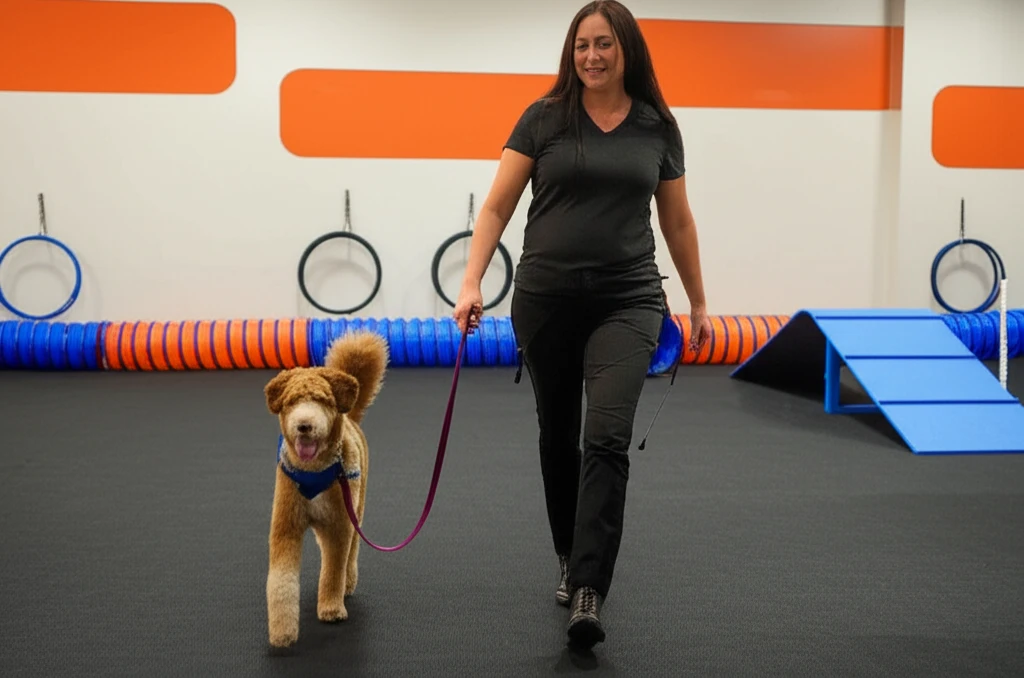
At Zoom Room, our training programs include agility, obedience, and enrichment activities designed for high-drive dogs like the Aussiedoodle. Our indoor environment keeps training consistent, our positive reinforcement approach works with your dog's intelligence rather than against it, and our group classes provide the social exposure that builds a well-rounded dog. Find a Zoom Room near you and give your Aussiedoodle the mental and physical outlet they have been demanding.
Frequently Asked Questions
Are Aussiedoodles easy to train?
Aussiedoodles are exceptionally fast learners, which makes them highly trainable but not necessarily easy. They pick up new cues rapidly, but they also pick up habits you did not intend to teach, learn to exploit inconsistencies in your rules, and become bored with repetitive drills. Training an Aussiedoodle requires variety, escalating difficulty, and consistent follow-through. Use positive reinforcement with high-value rewards, keep sessions short and engaging, and introduce new challenges regularly. An Aussiedoodle who finds training boring will find something more interesting to do on their own.
How much exercise does an Aussiedoodle need?
An adult Aussiedoodle needs at least one to two hours of daily activity, but the type of exercise matters more than the duration. Physical exercise alone will not satisfy this cross. You need to include dedicated mental stimulation: training sessions, puzzle toys, nose work, or a structured sport like agility. A thirty-minute training session that challenges your Aussiedoodle's brain is more settling than an hour of running. The ideal daily routine combines moderate physical exercise with substantial mental work. If your Aussiedoodle is restless, destructive, or barking excessively, they almost certainly need more mental engagement.
Do Aussiedoodles have herding instincts?
Many Aussiedoodles inherit herding drive from the Australian Shepherd parent, and it can show up as nipping at heels, circling people or other animals, body-slamming dogs at the park to control their movement, or obsessive tracking of anything that moves. This drive is genetic and cannot be trained out. It can be redirected. Provide appropriate outlets like agility, urban herding with exercise balls, or structured fetch games with directional cues. Manage the behavior in the home by separating your dog from targets when the drive is active, and invest in a strong leave it cue for immediate interruption.
Ready to Get Started?
Zoom Room's training programs are built for high-drive dogs like the Aussiedoodle. Find a location near you and give your dog the mental challenge, physical activity, and structured socialization they need to thrive.
Find a Zoom Room