
How to Train a Belgian Malinois
The Belgian Malinois is the most demanding breed in mainstream pet ownership. That is not hyperbole. This is a dog bred for serious professional work, and their drive, intensity, and need for structured activity exceed what most households can realistically provide. If you already have one, this guide is for you. If you're considering one, read this first.
Honest Talk About This Breed
Belgian Malinois have surged in popularity, partly because of their impressive appearance in military and police work, and partly because social media makes their intensity look exciting. What those videos don't show is the eight hours of daily structure, the professional-level training, and the experienced handling behind every impressive clip. The Malinois you see clearing six-foot walls and apprehending suspects has a full-time job and a handler whose only job is managing that dog.
In a typical household, a Malinois without adequate outlets doesn't become a cool action hero. They become reactive, destructive, anxious, or all three. The breed's drive doesn't have a dimmer switch. It's either directed at something productive or it redirects at whatever is available: your furniture, your other pets, passing strangers, the leash, or you. This is not a behavioral problem. It's a working dog without work.
None of this means a Malinois can't succeed as a companion dog. It means success requires a level of commitment that is qualitatively different from what other breeds need. If you're prepared for that, the Malinois will give you a partnership unlike anything else in the dog world. If you're hoping they'll mellow out with age, they won't.
Impulse Control: Your First and Ongoing Priority
The Malinois operates at a baseline arousal level that would be over-threshold for most breeds. Everything is exciting. Everything triggers a response. A squirrel, a bicycle, a leaf blowing across the sidewalk, another dog at 100 yards: all of these can launch your Malinois from zero to full intensity in a fraction of a second. That speed is what makes them exceptional working dogs. It's also what makes them overwhelming companions without rigorous impulse control training.
Impulse control for a Malinois isn't a single skill you teach once. It's a daily practice woven into every interaction. Wait at every door. Settle on a mat during meals. Hold a stay while distractions intensify. Leave high-value items on cue. Check in with you voluntarily in stimulating environments. Each of these exercises builds your Malinois's capacity to pause before reacting, and that pause is the foundation every other behavior rests on.
The training approach matters. You cannot physically overpower a determined Malinois, and attempting to do so escalates their arousal rather than reducing it. Positive reinforcement paired with clear structure gives your Malinois a reason to choose self-regulation. The reward for impulse control should match the intensity of what they're giving up. A piece of kibble is not sufficient motivation to ignore a running cat. High-value rewards, play, and access to things they want are the currency that buys reliable impulse control from this breed.
Reactivity: What It Looks Like and Where It Comes From
Leash reactivity is one of the most common complaints from Malinois owners, and it develops quickly if the dog's needs go unmet. A Malinois who lunges, barks, and snaps at the end of the leash when they see another dog or person is not being aggressive in most cases. They're experiencing a combination of frustration, over-arousal, and barrier sensitivity that the leash intensifies.
The Malinois was bred to engage with environmental stimuli at high intensity. On a leash, that engagement has nowhere to go. The frustration builds, and the dog's learned response becomes: see trigger, explode. Every time that sequence plays out without intervention, it becomes more automatic. A Malinois with established leash reactivity has rehearsed the pattern so many times that it fires before the thinking brain can intervene.
Addressing reactivity in a Malinois requires systematic desensitization: working at a distance where the dog can notice the trigger without reacting, rewarding calm behavior, and gradually closing the distance over many sessions. This is not quick work, and it's not work you should attempt on public sidewalks where triggers appear unpredictably. A controlled indoor training environment where you can manage distance, exposure duration, and intensity is far more effective. If your Malinois is also showing signs of destructive behavior at home, the reactivity and the destruction are likely two symptoms of the same underlying problem: insufficient structured outlets for the breed's drive.
Structured Outlets: The Non-Negotiable
A Malinois without a job is a Malinois in crisis. This breed needs structured, purposeful activity every single day, not just physical exercise. Running your Malinois for an hour produces a fitter dog who is still over-threshold. The drive doesn't deplete with cardio. It depletes with focused, mentally demanding work that engages the whole dog.
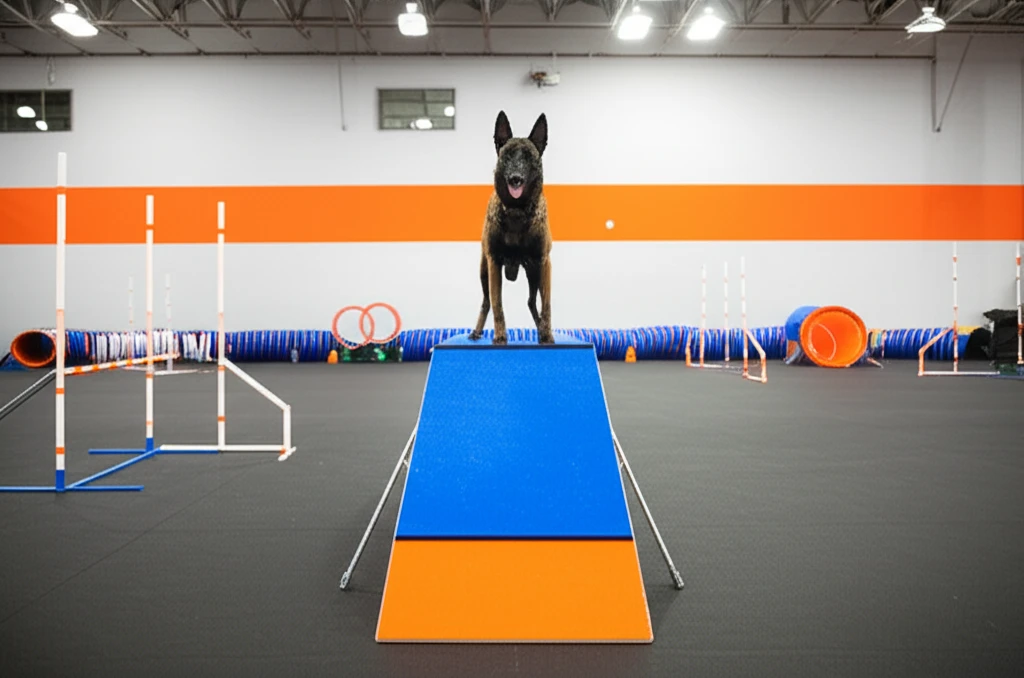
The best outlets for a Malinois combine physical exertion with mental challenge and handler interaction. Agility demands rapid decision-making, physical precision, and constant communication between handler and dog. Nose work and scent detection channel the breed's intensity into calm, focused searching. Advanced obedience training that builds complex behavior chains gives the Malinois the kind of problem-solving work their brain was designed for. Protection sports, if you have access to qualified instructors, provide the most breed-appropriate outlet available.
For Malinois owners who don't have access to professional-level sport training, daily life needs to be structured to include multiple training sessions, enrichment activities, and physical exercise. Two fifteen-minute training sessions per day is a minimum. Puzzle feeders for every meal. Nose work games in the house. Obedience practice incorporated into walks. A Malinois whose day includes consistent mental and physical challenges is a dramatically different dog than one who gets a walk and a yard.
This breed also benefits enormously from having a training partner, meaning a German Shepherd-experienced or working-breed-experienced trainer who understands high-drive dogs. Professional training programs designed for working breeds give you the guidance and structured environment that make the daily commitment sustainable rather than overwhelming.
Making It Work: Realistic Expectations
If you have a Belgian Malinois and you're committed to doing right by them, here's what realistic success looks like. Your Malinois will never be a dog you can leave in the yard and expect to self-manage. They will always need daily structured activity. They will always need clear rules and consistent handling. The work doesn't end after puppy class or after adolescence. It continues for the life of the dog.
But here's what you get in return: a dog whose focus, responsiveness, and willingness to work with you is unmatched. A Malinois who trusts their handler and has adequate outlets is breathtakingly engaged. They watch you with an intensity that borders on devotion. They respond to cues with a speed and precision that makes other breeds look casual. They bring an energy to the partnership that is genuinely thrilling when it's channeled well.
The owners who succeed with Malinois are not necessarily professional trainers. They're people who made a realistic assessment of what this breed needs, built a daily routine that meets those needs, and sought professional help when challenges exceeded their skill level. There is no shame in working with a trainer. With a Malinois, it's a sign of good judgment.
Find a Zoom Room near you to work with trainers who understand high-drive breeds and can help you build the structured routine your Malinois needs. The earlier you start, the more options you have and the fewer problems you'll need to undo later.
Frequently Asked Questions
Are Belgian Malinois good family dogs?
A Malinois can live successfully in a family, but it requires a significant and ongoing commitment that most families are not prepared for. This breed needs multiple hours of structured activity daily, rigorous impulse control training, and consistent management around children. Their intensity and arousal speed mean that rough play, running kids, and chaotic household moments can trigger over-excited responses including nipping and body-slamming. If your family is very active, experienced with working breeds, and prepared to make training a central part of daily life, a Malinois can work. If you're looking for an easy-going family pet, this is not the right breed.
How do I tire out my Belgian Malinois?
Physical exercise alone will not tire a Malinois in any meaningful way. You'll just build a better athlete. The key is mental exhaustion combined with physical activity. Training sessions that require focus and problem-solving, nose work that demands concentration, and structured activities like agility that engage both body and brain simultaneously are what actually produce a settled Malinois. Aim for multiple short, intense training sessions throughout the day rather than one long exercise block. Every meal should come from a puzzle feeder or be earned through training. The goal is a dog whose brain is as tired as their body.
My Belgian Malinois is reactive on leash. What should I do?
Leash reactivity in a Malinois typically stems from frustration and over-arousal rather than aggression. Start by increasing distance from triggers on walks, finding the point where your Malinois can notice a trigger without exploding and rewarding calm behavior at that distance. Avoid tightening the leash when you see a trigger approaching, because your tension travels directly to your dog. Work with a professional trainer in a controlled environment where you can manage exposure systematically. Simultaneously, evaluate whether your Malinois is getting enough structured mental and physical outlets. Reactivity often decreases significantly when the dog's overall drive needs are being met through appropriate activities.
Ready to Get Started?
Zoom Room's professional trainers understand high-drive breeds and can help you build the structured training routine your Belgian Malinois needs. Find a location near you and start channeling that intensity productively.
Find a Zoom Room