
How to Train a Bloodhound
A Bloodhound's nose contains approximately 300 million scent receptors, the most of any breed on the planet. When your Bloodhound drops their head and locks onto a trail, they have entered a state of focus so total that you effectively stop existing. Training this breed means accepting that reality and building your strategy around it.
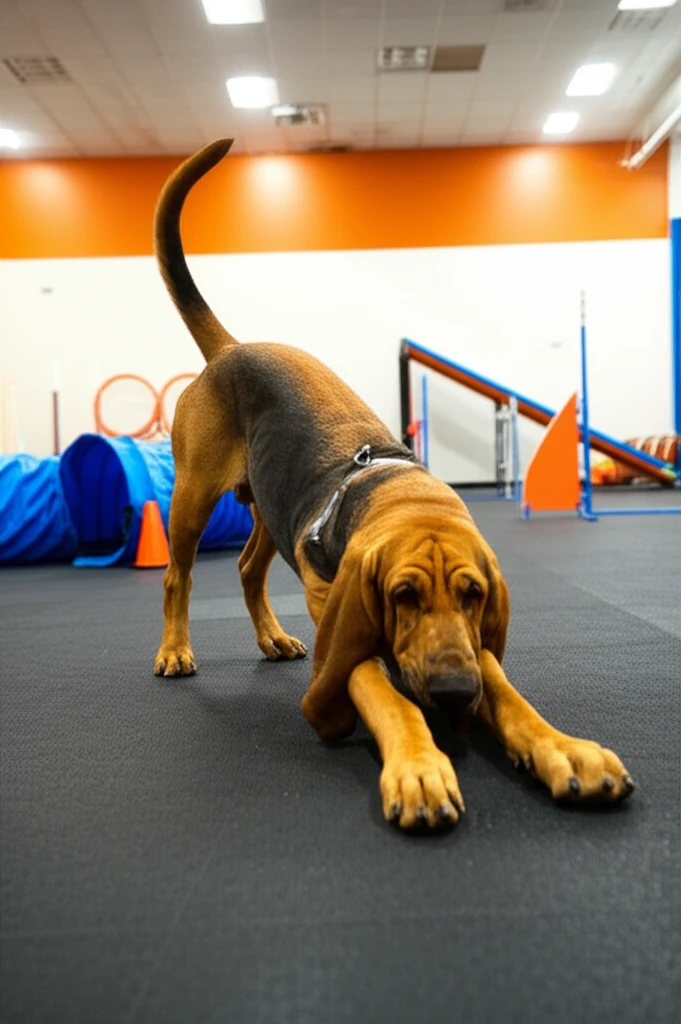
Scent Drive Is Not a Behavior Problem
Bloodhounds are the gold standard of trailing dogs. Law enforcement agencies use them to track missing persons across miles of terrain because no other breed can follow a scent trail with the same accuracy over the same distance and duration. That ability comes from the most powerful olfactory system in the canine world, combined with a drive to follow scent that overrides virtually everything else.
When your Bloodhound ignores your cue because they are deep in a scent trail, this is not stubbornness. It is the canine equivalent of trying to get a surgeon's attention during an operation. Your Bloodhound's brain is processing an enormous amount of complex scent data, and in that moment, that processing takes priority over everything else. Understanding this distinction changes how you approach training. You are not dealing with a defiant dog. You are dealing with a dog whose primary sensory experience of the world is so rich that competing with it requires serious strategy.
The most effective approach is to make the nose your ally rather than your enemy. Scent work turns your Bloodhound's overwhelming drive into a structured training activity. Instead of fighting the nose, you channel it. Your Bloodhound learns to use their scent ability on your terms, in a framework that includes cues, rules, and rewards. For a Bloodhound, scent work is not just enrichment. It is THE outlet, the activity that satisfies their deepest genetic programming in a way that nothing else can.
Recall: Be Honest About What Is Realistic
Building recall with a Bloodhound is a long-term project measured in months and managed with permanent safety protocols. A Bloodhound who catches an interesting scent and has freedom to follow it will follow it. Possibly for miles. This is not a breed where a few weeks of come-when-called practice produces reliable off-leash behavior in uncontrolled environments. Being honest about that keeps your dog alive.
Start recall training indoors where scent distractions are minimal. Use the highest-value rewards you can find. Real meat. Liverwurst. Whatever makes your Bloodhound's head snap up from the floor. Practice recall as a game, not a cue that ends fun. Every successful recall should be the best thing that happens to your Bloodhound in that moment. Gradually increase distractions, but do it slowly. The jump from a quiet living room to a backyard full of rabbit trails is enormous for this breed.
Outdoors, use a long line. Not as a temporary training tool, but as a permanent management strategy for any unfenced environment. A 30-foot long line gives your Bloodhound room to explore and sniff while keeping them connected to you. Many experienced Bloodhound owners use long lines for the life of the dog, and that is not a training failure. It is responsible breed ownership. A reliable off-leash recall in an uncontrolled setting is not a realistic goal for most Bloodhounds, and pretending otherwise puts your dog in danger.
Scent Work: The Activity Your Bloodhound Was Born For
If you own a Bloodhound and you are not doing scent work, you are leaving your dog's greatest talent completely untapped. Scent work gives your Bloodhound a job that uses their natural abilities in a structured, rewarding framework. It provides mental stimulation that physical exercise alone cannot match, and it builds a working partnership between you and your dog that transfers to every other area of training.
Scent work for a Bloodhound can start simple. Hide a treat under one of three cups and let your dog find it. Gradually increase the difficulty: more hiding spots, larger search areas, longer time between hiding and searching. Your Bloodhound will progress faster than almost any other breed because they already have the equipment and the drive. Your job is just to provide the structure.
Formal scent work classes and nose work trials take this further, giving your Bloodhound increasingly complex search problems in novel environments. The confidence and focus your Bloodhound builds through scent work spills over into other training. A Bloodhound who has a regular scent work outlet is calmer at home, more engaged during training sessions, and generally easier to live with because their most powerful drive is being satisfied rather than suppressed.
Enrichment activities at home can supplement formal scent work. Scatter feeding in the yard, snuffle mats, and hidden treat puzzles give your Bloodhound daily opportunities to use their nose in low-stakes settings. A Bloodhound whose scent drive is regularly channeled is a more settled, trainable dog overall.
Living With a Bloodhound: The Practical Realities
Bloodhounds are gentle, affectionate, and remarkably tolerant dogs. They are also messy. The long ears, deep facial folds, and pendulous lips that help funnel scent to their nose also produce drool. A lot of drool. After drinking, after eating, when they are excited, and sometimes just because. This is not a training issue, but it is a lifestyle reality that affects your daily routine. Keep towels handy. Protect furniture you care about. Accept that your car will never be truly clean again.
Those same long ears require regular attention. Check them frequently for signs of infection, since the warm, enclosed ear canal creates an ideal environment for bacteria and yeast. Body handling training, teaching your Bloodhound to accept having their ears examined, paws held, and mouth checked, should start in puppyhood. Pair every handling session with high-value treats so your Bloodhound develops positive associations with the kind of physical attention they will need throughout their life.
Leash manners are important to establish early. Bloodhounds are big dogs, typically 80 to 110 pounds, and a Bloodhound pulling toward a scent trail generates considerable force. A front-clip harness redirects pulling energy without putting pressure on the throat, which is especially important for a breed with loose skin around the neck. Practice leash walking in low-scent environments first, and build up to more challenging settings as your Bloodhound's leash skills improve.
Training a Bloodhound Takes Patience and Perspective
If you measure training success by how quickly your dog snaps to attention and performs on cue, a Bloodhound will frustrate you. If you measure it by the depth of partnership you build over time, a Bloodhound will reward you in ways few other breeds can. This is a dog who will never be flashy in obedience. They will, however, develop a quiet reliability and a trusting relationship with a handler who respects their nature.
Keep training sessions short, positive, and low-pressure. Bloodhounds are sensitive dogs who withdraw from confrontation. Harsh corrections do not produce compliance with this breed. They produce a dog who avoids the training situation entirely. Patience is not just a virtue with Bloodhounds. It is a requirement. Give your dog time to process, time to shift their attention from the scent world to the human world, and time to decide that working with you is worth their effort.
At Zoom Room, our training programs are built to work with every breed's unique wiring. For Bloodhound owners, that means an indoor environment where scent distractions are managed, sessions paced for a thoughtful breed, and trainers who understand that the nose comes first. Find a Zoom Room near you and start building a training relationship your Bloodhound will actually engage with.
Frequently Asked Questions
Are Bloodhounds hard to train?
Bloodhounds are not hard to train in the sense of being unable to learn. They are intelligent, capable dogs. The challenge is their scent drive, which is the most powerful of any breed and competes intensely with handler attention. Training requires patience, extremely high-value rewards, and an environment where scent distractions are managed. Short, positive sessions with clear rewards work far better than long drills. If you adjust your expectations to match the breed's wiring, Bloodhounds are responsive and willing partners.
Can Bloodhounds be off-leash?
Reliable off-leash behavior in uncontrolled environments is not a realistic goal for most Bloodhounds. Their scent drive is powerful enough to override recall training once they lock onto a trail. In securely fenced areas, Bloodhounds can enjoy off-leash freedom. In open environments, a long line is the safest approach and should be considered a permanent management tool rather than a temporary training aid. Accepting this limitation keeps your Bloodhound safe while still allowing them freedom to explore.
What activities are best for Bloodhounds?
Scent work is the number one activity for Bloodhounds, hands down. It channels their overwhelming scent drive into a structured, rewarding activity and satisfies their deepest genetic programming. Beyond formal scent work, enrichment activities like scatter feeding, snuffle mats, and hidden treat puzzles provide daily mental stimulation. Moderate walks with plenty of sniffing time are more satisfying for a Bloodhound than long runs. Think of your Bloodhound as a nose that happens to have a dog attached to it, and plan activities accordingly.
Ready to Get Started?
Zoom Room's controlled indoor setting lets your Bloodhound focus on training instead of every scent trail in the neighborhood. Find a location near you and discover what your Bloodhound can accomplish with the right environment and guidance.
Find a Zoom Room