
Border Collie Impulse Control: Training the Fastest Brain in Dogs
Your Border Collie sees a jogger and lunges to the end of the leash. A ball rolls across the floor and every muscle in their body fires at once. A bicycle passes and your dog is airborne before you can say a word. This is not a dog who refuses to listen. This is a dog whose brain processes movement faster than their self-control can keep up.
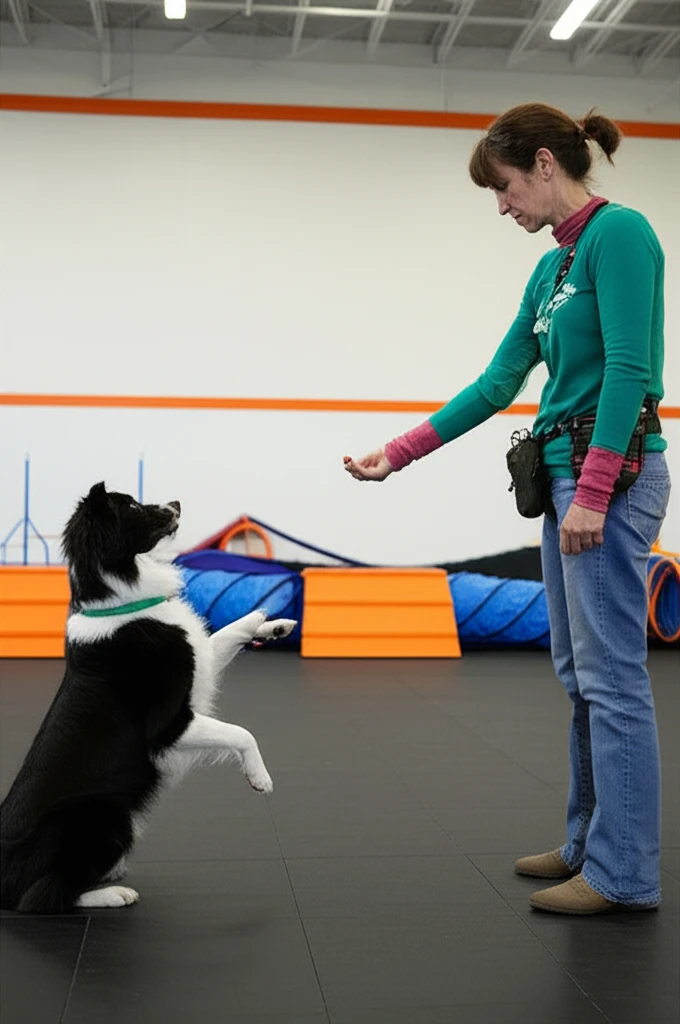
Why Impulse Control Shows Up Differently in Border Collies
Every dog benefits from impulse control training, but Border Collies need it more urgently than almost any other breed. They were built to react to movement instantly — a sheep breaks from the flock, and the dog responds in a fraction of a second without waiting for a cue from the handler. That lightning-fast reactivity was the entire point of the breed.
In your household, that same wiring means your Border Collie chases the cat, body-slams other dogs at the park to control their movement, fixates on shadows or reflections, and cannot hold a stay when anything interesting is happening. The standard impulse control exercises — leave it, wait at doors, settle on a mat — still apply, but they need to be taught differently for a Border Collie because the intensity of the drive is in a completely different category.
The other factor is obsessive focus. Border Collies do not just notice movement — they lock onto it. That fixed stare, the crouched body, the trembling intensity right before they launch — that is the "eye" that makes them extraordinary herding dogs, and it is the same mechanism that makes them extraordinarily difficult to interrupt once they have fixated on a trigger. Your impulse control training needs to address this fixation pattern specifically.
What Works for Border Collies Specifically
Catch the fixation early. Once your Border Collie is in a full lock — body low, eyes fixed, muscles trembling — they are past the point where verbal cues reach them. The skill is learning to interrupt before the lock sets in. Watch for the early signs: the head snap toward movement, the slight crouch, the sudden stillness. That is your window. Call their name, use a trained "look at me" cue, or redirect with a toy before they enter the stare. If you miss that window, physically move away from the trigger rather than trying to out-compete it verbally.
Use their brain against the problem. Border Collies thrive on complexity. Simple obedience bores them, and a bored Border Collie is an impulsive Border Collie. Build impulse control into cognitively demanding tasks. Teach behavior chains where your dog must perform a sequence — sit, then wait, then go to a mat, then hold a down — before getting access to the reward. This gives the thinking brain something to do that competes with the reactive brain.
Structured movement outlets. Agility is practically tailor-made for Border Collie impulse control because it requires your dog to sprint at full intensity while still listening to your directional cues. It teaches them that speed and self-control can coexist. Similarly, herding-breed-specific exercises that channel the drive into structured activities are far more effective than trying to suppress the drive entirely.
Reward the pause, not just the obedience. When your Border Collie notices a trigger and hesitates — even for a half-second — before reacting, that moment of hesitation is the skill you are building. Mark it immediately and reward generously. Over time, that half-second pause grows into a full second, then two, then a reliable check-in where your dog sees movement and looks at you instead of launching.
The Socialization Connection
Under-socialized Border Collies are impulse control nightmares in public. Every unfamiliar dog, person, or environment is a novel stimulus, and novel stimuli in a Border Collie trigger either fixation or frantic reactivity. Regular socialization in controlled settings teaches your dog that other dogs and people are part of the landscape, not targets to be managed.
Group classes are particularly effective because they expose your Border Collie to movement and distractions in a structured context where you can practice interrupting fixation and rewarding disengagement. A Border Collie who has practiced holding a stay while other dogs run an agility course has done real impulse control work under genuine pressure. That is dramatically more useful than practicing stay in your quiet kitchen.
Teaching calm in social environments is the ultimate Border Collie project. A Border Collie who can settle on a mat in a room full of moving dogs has genuinely mastered impulse control, and that skill transfers to every other situation — walks, the vet's office, guests arriving at your door.
At Zoom Room, our trainers work with Border Collies regularly and understand the difference between a dog who needs basic obedience and a dog who needs their herding intensity channeled into structured outlets. Find a Zoom Room near you to give your Border Collie the focused training their brain is asking for.
Frequently Asked Questions
My Border Collie fixates on shadows and light reflections. Is that an impulse control problem?
Shadow and light chasing in Border Collies can start as a normal fixation response but escalate into a compulsive behavior if reinforced. If your dog occasionally notices a reflection and moves on, that is normal. If they spend extended periods staring at walls, chasing shadows obsessively, or cannot be redirected away from light patterns, that has likely crossed into compulsive territory and you should consult a veterinary behaviorist. The impulse control exercises described above can help with mild cases, but established compulsive behaviors often need professional intervention that may include medication alongside training.
Will more exercise fix my Border Collie's impulse control?
Almost certainly not. More physical exercise without mental work just builds a fitter, faster dog who is still impulsive. Many Border Collie owners actually make impulse control worse by over-exercising their dogs, because the dog develops higher stamina and needs even more stimulation to settle. What Border Collies need is mental work: training sessions, puzzle feeders, nose work, and structured activities like agility that combine physical and cognitive demands. A fifteen-minute training session where your dog has to think hard will calm them more effectively than a two-hour hike.
Ready to Channel That Intensity?
Zoom Room's agility and advanced training programs are built for high-drive breeds like Border Collies. Give your dog the structured outlet their brain demands.
Find a Zoom Room