
How to Train a Brittany
Brittanys are soft dogs in fast bodies. They have the athletic drive of a serious field dog and the emotional sensitivity of a breed that crumbles under harsh correction. That combination is the central challenge of training a Brittany — you need to keep up with the energy while handling the temperament with care.
Why Harsh Correction Backfires Completely
This is the most important thing to understand about training a Brittany: they cannot handle rough treatment. A raised voice, a leash correction, a frustrated tone — any of these can shut down a Brittany mid-session. And once they've shut down, you're not getting them back that day. This isn't weakness. It's a feature of a breed that was developed to work in close, responsive partnership with a handler. A dog who is exquisitely attuned to your mood is also a dog who takes your frustration personally.
Brittanys trained with corrections often develop fear-based behaviors — cowering, avoidance, stress signals like lip-licking and yawning, or a reluctance to offer any behavior at all because trying something new might produce a negative result. These dogs aren't stubborn. They're scared. And the irony is that the correction-based approach usually gets labeled as the dog being "too soft" when it's the method that's too harsh.
Positive reinforcement isn't just the best approach for a Brittany — it's the only approach that produces a confident, willing training partner. Use treats, play, praise, and freedom as rewards. Mark desired behaviors with clear timing. Keep your voice warm and your energy relaxed. If a session isn't going well, ask for something easy your Brittany knows, reward it, and stop. A positive ending is worth more than a frustrated extra ten minutes. Your Brittany remembers how training felt long after they've forgotten the specific cue you were practicing.
Managing the Athletic Engine
Brittanys are athletes. They were bred for long days of running through fields, pointing game, and covering enormous amounts of ground without tiring. That stamina is still fully operational in your companion dog, and it means a Brittany without adequate physical outlet is a time bomb of restless, escalating energy. Under-exercised Brittanys pace, whine, spin, destroy household items, and develop compulsive behaviors — not because something is wrong with them, but because their bodies are screaming for movement.
Impulse control training is critical for channeling that athleticism. A Brittany who can't settle is a Brittany who hasn't learned that calm behavior is an option. Teach a reliable "place" cue — a mat or bed your dog goes to and stays on until released. Start with very short durations and build gradually. Reward the calm. A Brittany lying quietly on their mat is doing something genuinely difficult for them, and it deserves recognition.
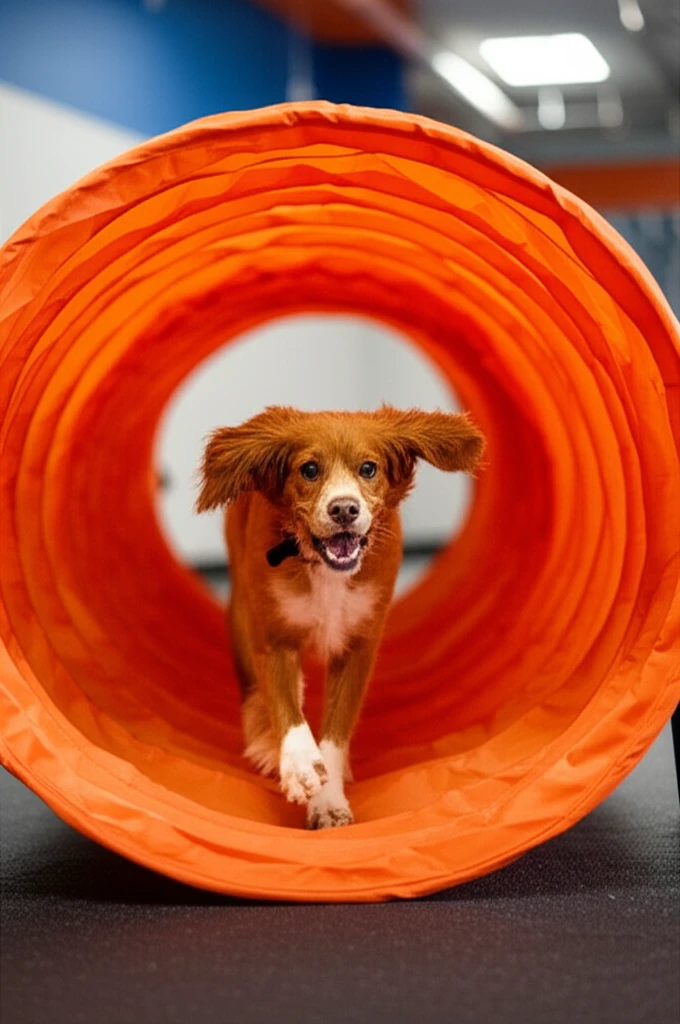
For physical outlet, variety works better than volume. Alternate running with hiking, structured fetch with free play, and training sessions that incorporate movement. Agility is practically tailor-made for Brittanys — it combines the speed they crave with the handler communication they're built for, and it channels their energy through a structured course rather than letting it scatter in every direction. Many Brittanys also excel at dock diving, flyball, and field trial activities that let the sporting drive express itself fully.
Recall in a Dog Who Was Born to Range
Brittanys were bred to work at distance from their handler, quartering back and forth across open fields to locate game. That ranging instinct means your Brittany has a natural inclination to cover ground — a lot of ground — and their focus shifts rapidly from one point of interest to the next. Building a reliable recall in a Brittany requires patience, consistency, and an understanding of what you're working against.
Start recall training early and make it the most reinforced cue in your Brittany's vocabulary. Use the highest-value rewards you have. Practice in low-distraction environments first, then gradually add complexity. The long line is your best friend during this process: it prevents your Brittany from self-rewarding by running off while you build the recall foundation.
The critical rule: never poison the cue. If you call your Brittany to come and then clip the leash for departure or do anything unpleasant, you've taught them that recall sometimes means the fun ends. Instead, call, reward generously, then release them to go play again. Your Brittany needs to learn that coming to you is always a good deal, even when distractions are competing for their attention.
A Brittany with a solid recall is a transformed dog. They can safely enjoy off-leash hikes and outdoor activities that match their athletic nature. Without reliable recall, those activities are risky, and your Brittany's life becomes smaller than it should be. The training investment pays for itself every outing.
Building Confidence in a Sensitive Breed
Brittanys can be environmentally sensitive — new places, unexpected sounds, unfamiliar people or objects can all produce hesitation or anxiety. This isn't universal in the breed, but it's common enough that building confidence should be a deliberate part of your training plan rather than something you hope happens on its own.
Confidence comes from successful experiences. Expose your Brittany to novel environments gradually and let them process at their own pace. If your Brittany hesitates at a new surface or an unfamiliar sound, don't force an approach and don't coddle them. Give them space, let them observe, and reward any movement toward the new thing. A Brittany who chooses to investigate is building real confidence. A Brittany who is dragged toward the stimulus is learning that scary things are as bad as they feared.
Group training classes in a controlled indoor environment are excellent for confidence-building because they provide repeated exposure to mild novelty — different dogs, different people, new activities — in a setting where nothing truly threatening happens. Over weeks and months, your Brittany learns that unfamiliar situations are interesting rather than dangerous. That generalized confidence then transfers to real-world environments.
If your Brittany is already showing significant fear-based behavior, work with a trainer who understands how to build confidence through systematic desensitization and counter-conditioning. Forcing a fearful Brittany to "deal with it" almost always makes the fear worse. The gentle, methodical approach is slower but produces lasting change.
The Brittany Thrives on Partnership
When the training approach matches the temperament, Brittanys are extraordinary partners. They're quick learners who retain cues well, they're deeply motivated by their handler's approval, and they bring genuine joy to every training session. A Brittany who trusts their person will work through challenges, push past mild discomfort, and offer new behaviors with tail-wagging enthusiasm. That willingness is a direct reflection of the relationship you've built through patient, positive training.
Brittanys are excellent candidates for competitive activities that celebrate the handler-dog bond. Agility showcases their athleticism and responsiveness. Rally obedience rewards precise handler communication. Field trials let them do the work their genetics prepared them for. Even therapy dog work can be appropriate for well-socialized Brittanys whose gentle nature makes them calming presences for others.
The common thread in everything a Brittany does well is partnership. This is not a breed that works independently or thrives with a hands-off owner. They need you — your presence, your guidance, your consistency, and your patience. In return, they give you an athletic, responsive, enthusiastic partner who will follow your lead wherever the training takes you.
Zoom Room's training programs are built on positive reinforcement — the approach Brittanys need to thrive. From puppy foundations to agility to advanced skills, every class respects the sensitive temperament while challenging the capable athlete. Find a Zoom Room near you and discover the partnership your Brittany is waiting for.
Frequently Asked Questions
Are Brittanys easy to train?
Brittanys are highly trainable when you match your approach to their temperament. They learn quickly, respond well to positive reinforcement, and genuinely enjoy the training process. The caveat is their sensitivity — a Brittany will shut down under harsh correction, and once trust is damaged, it takes time to rebuild. Keep sessions upbeat, use high-value rewards, and end on a positive note. If you work with their nature rather than against it, Brittanys are one of the most rewarding breeds to train. If you try to force compliance through corrections, you'll get a dog who is reluctant to try anything.
How much exercise does a Brittany need?
An adult Brittany needs at least one to two hours of daily activity, and they do best with a variety of exercise types. Running, hiking, swimming, structured fetch, and dog sports like agility all help meet their needs. Physical exercise alone is not enough — include mental stimulation through training sessions, puzzle feeders, or nose work. A Brittany who gets adequate physical and mental exercise is calm and content at home. A Brittany who doesn't will develop restless behaviors like pacing, whining, or destructive chewing. This is an athletic breed that needs real outlet, not a casual daily walk.
Why is my Brittany so nervous around new things?
Environmental sensitivity is common in Brittanys. Their attentive, handler-focused temperament means they notice changes in their environment more readily than less sensitive breeds, and some Brittanys process novelty as threat rather than curiosity. The solution is systematic confidence-building through gradual exposure. Let your Brittany observe new things from a comfortable distance and reward any calm or curious behavior. Never force your Brittany toward something that frightens them. Group training classes provide excellent confidence-building because they expose your dog to mild novelty repeatedly in a safe setting, teaching them that unfamiliar doesn't mean dangerous.
Ready to Get Started?
Zoom Room's positive reinforcement approach is exactly what Brittanys need — structured, supportive, and built on partnership. Find a location near you and give your Brittany the training that matches their temperament.
Find a Zoom Room