
How to Train a Bulldog (On Their Terms, Mostly)
The Bulldog's reputation for stubbornness is one of the most durable myths in dog training. They're not stubborn. They're efficient. A Bulldog will absolutely learn something new -- they just need a compelling reason, a comfortable temperature, and a session that ends before their breathing says it should.
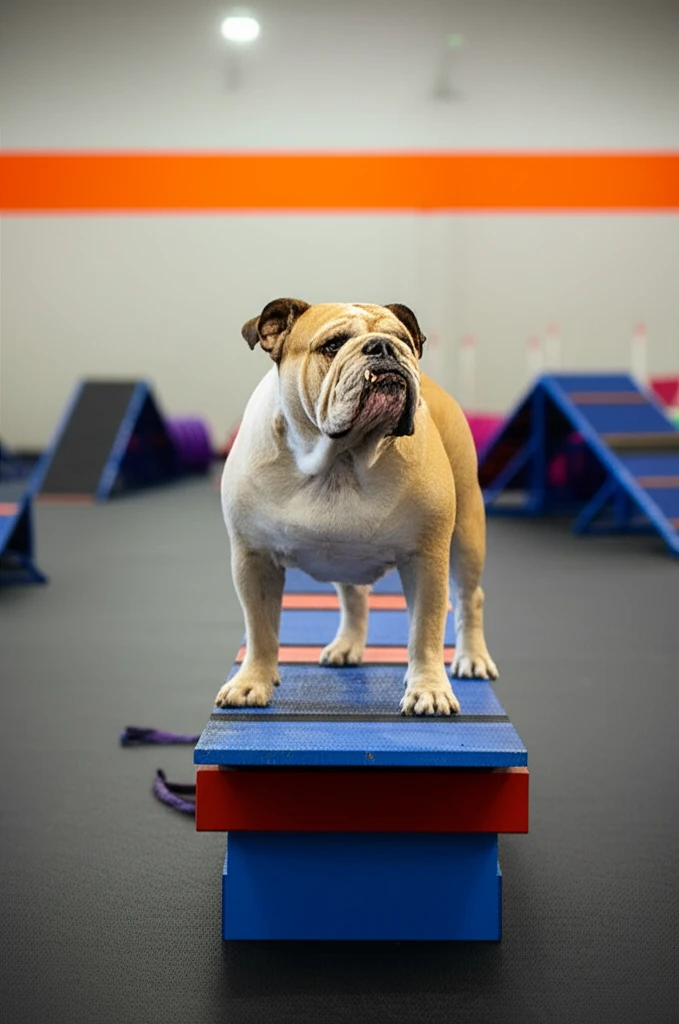
What Makes Bulldogs Different to Train
The single most important thing to understand about training a Bulldog is that they are a brachycephalic breed -- meaning their shortened skull and compressed airway directly affect how they breathe, how they regulate heat, and how long they can sustain physical or mental effort. This isn't a footnote. It's the foundation of every training decision you'll make.
Bulldogs overheat faster than most breeds. Their shortened airways make panting -- the primary cooling mechanism for all dogs -- significantly less efficient. A training session that's perfectly reasonable for a Labrador can become dangerous for a Bulldog, especially in warm weather. If your Bulldog is panting heavily, drooling excessively, or slowing down, the session is over. No exceptions. Positive reinforcement training isn't just the best approach for Bulldogs -- it's the only safe one, because stress and physical correction both increase respiratory effort in a dog that's already working harder to breathe.
Beyond the physical considerations, Bulldogs have a training style that's genuinely different from most breeds. They're not German Shepherds -- they won't repeat a behavior ten times in a row because you asked nicely. They're thinkers. They evaluate whether the reward is worth the effort, and they make that calculation faster than you'd expect. This isn't defiance. It's a breed that was never designed for repetitive task work and has no interest in pretending otherwise.
What Bulldogs do have is a deep orientation toward their people. They want to be near you, they want your attention, and they're more attuned to your mood than they often get credit for. That connection is your greatest training tool -- stronger, in many cases, than even food.
The Short-Session Rule
If there's one principle that defines Bulldog training, it's this: short sessions, high value, end on a win.
Five to ten minutes is a full training session for most Bulldogs. That's not a limitation -- it's an advantage. Research consistently shows that shorter, more frequent training sessions produce better retention than long marathon sessions, for any breed. Bulldogs just force you to follow best practices.
Within those five to ten minutes, every repetition needs to count. Use high-value rewards -- real meat, cheese, whatever makes your Bulldog's eyes light up. Kibble won't cut it. You're negotiating with an animal that has a strong internal cost-benefit calculator, and the currency needs to be worth the effort.
End every session while your Bulldog is still engaged. If you push past the point where they check out, the last thing they remember is "training is boring." If you stop while they're still earning rewards, the last thing they remember is "training is great." That memory carries into the next session.
Watch the temperature and your dog's breathing throughout. Indoor, climate-controlled environments like a Zoom Room gym solve the temperature problem entirely -- and that's not a small thing for a breed where outdoor training is off the table for significant portions of the year.
Where Bulldogs Typically Need Work
- Loose-leash walking. Bulldogs are compact and strong, and they pull with a low center of gravity that makes them surprisingly hard to redirect. Leash manners require patience and consistent reward for choosing to walk beside you rather than drag you toward the next interesting smell.
- Reactivity on leash. Some Bulldogs develop frustration-based reactivity because they can't get to other dogs fast enough. Their broad stance and forward-heavy build makes them look more aggressive than they feel. Structured socialization in a controlled setting teaches them that other dogs don't require a meltdown.
- Resource guarding. Bulldogs can develop guarding behavior around food, toys, or sleeping spots. This responds well to positive conditioning -- teaching the dog that a person approaching their food bowl predicts something better being added, not something being taken away.
- Housetraining. Bulldogs can be slower to housetrain than some breeds. Consistency, frequent opportunities to go outside, and generous rewards for eliminating in the right spot are more effective than any correction. Expect the process to take longer and plan accordingly.
- Over-excitement with guests. Bulldogs love people, and they express that love with their full body weight. Teaching a calm greeting protocol early prevents 50 pounds of enthusiasm from knocking your guests into the wall.
What Actually Works
Make it worth their while. Bulldogs are food-motivated, but they're discerning about it. Find what your individual Bulldog considers a jackpot reward and reserve it exclusively for training. If the training treat is the same thing they get for existing, there's no incentive to work.
Keep it cool. Literally. Train in air-conditioned spaces whenever possible. Early morning or late evening for outdoor practice. Always have water available. If you notice heavy panting, excessive drooling, or your Bulldog lying down mid-session, stop immediately. These are signs of heat stress, and in a brachycephalic breed, they escalate quickly.
Respect the "no." When a Bulldog disengages from training, they're communicating something -- they're tired, they're too warm, or the reward isn't motivating enough. Forcing the issue doesn't teach persistence. It teaches them that training is something to be endured. Take a break, adjust the value of the reward, or try again later.
Use their social nature. Bulldogs are people-oriented dogs, and praise, touch, and proximity are powerful reinforcers alongside food. A Bulldog who earns a treat and an enthusiastic "yes!" from their person is getting paid on two channels. Use both.
Socialize consistently. Bulldogs are generally friendly, but their physical appearance -- broad chest, flat face, heavy breathing -- can be misread by other dogs as confrontational. Early socialization helps your Bulldog learn appropriate body language around other dogs, and helps other dogs learn that the heavy-breathing tank walking toward them is actually friendly.
The Bigger Picture
Training a Bulldog requires you to abandon the idea that a good training session looks like a long one. It doesn't. A good Bulldog training session looks like five minutes of focused, well-rewarded work in a comfortable environment, repeated two or three times a day. Over weeks, those short sessions build a dog who walks politely, greets people calmly, and responds to cues reliably -- all without ever pushing past the physical limits that this breed's anatomy demands you respect.
The Bulldog owner who thrives is the one who works with the breed's design, not against it. Short bursts. High-value rewards. Climate-controlled environments. And the understanding that a dog who takes a moment to consider whether sitting is worth it isn't being difficult -- they're being a Bulldog. Your job is to make sure the answer is always yes.
Group classes in an indoor gym are ideal for this breed. The controlled temperature removes the biggest health variable, the structured environment keeps sessions focused and appropriately timed, and the presence of other dogs provides built-in socialization practice. It's exactly the kind of training setup Bulldogs were made for -- if anyone had thought to ask them.
Frequently Asked Questions
How long should a Bulldog training session last?
Five to ten minutes is the sweet spot for most Bulldogs. Their brachycephalic anatomy means they tire faster and overheat more easily than other breeds, so shorter sessions are both safer and more effective. The key is frequency over duration -- two or three short sessions spread throughout the day will produce better results than one long one. Always end while your Bulldog is still engaged and earning rewards, so they carry a positive association into the next session.
Are Bulldogs good candidates for group training classes?
Bulldogs are excellent candidates for group classes, especially in climate-controlled indoor facilities like Zoom Room. The structured format naturally keeps sessions short and focused, which suits the breed perfectly. Group classes also provide built-in socialization with other dogs, which helps Bulldogs learn appropriate social skills in a controlled environment. The indoor setting eliminates heat concerns that can make outdoor training unsafe for brachycephalic breeds.
Why does my Bulldog seem to ignore cues they already know?
Bulldogs evaluate whether a cue is worth responding to based on the reward being offered and how they're feeling in the moment. If your Bulldog ignores a known cue, check three things: Is the reward motivating enough? Is the environment too warm? Are they physically tired? Switching to a higher-value treat, moving to a cooler space, or taking a break often solves the problem immediately. This isn't defiance -- it's a breed that communicates clearly when conditions need adjusting.
Train in Climate-Controlled Comfort
Bulldogs do their best work indoors. Our gyms are kept cool, sessions are structured, and the treats are top-shelf.
Find a Zoom Room