
Cane Corso Dog Reactivity: Why Socialization Changes Everything
Your Cane Corso is not destined to be reactive. Reactivity in guardian breeds is not an inevitability written into their DNA — it is the predictable outcome when a naturally watchful dog does not get the structured socialization that teaches them which situations require vigilance and which do not.
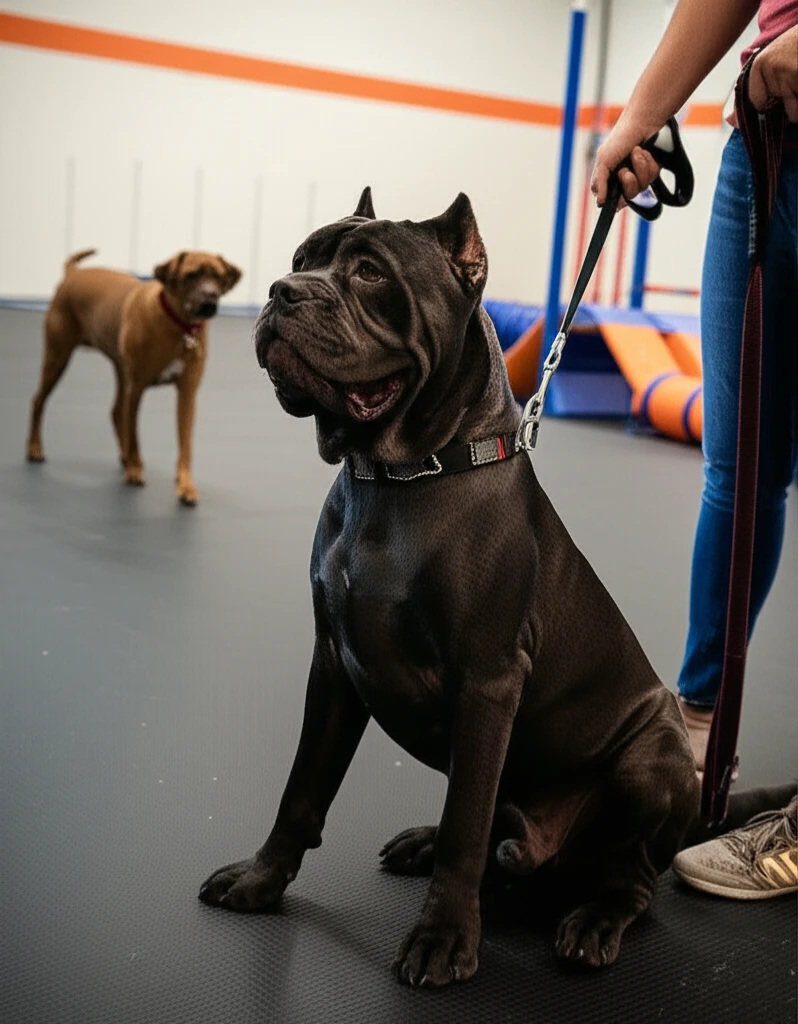
Why Reactivity Shows Up Differently in Cane Corsos
Cane Corsos were developed as guardian dogs. They are naturally observant, tend to assess situations before acting, and have a lower threshold for perceived threats than breeds developed for companionship or sport. None of this makes them dangerous. It makes them dogs who need education about what constitutes a real threat and what does not.
Without that education, a Cane Corso's natural watchfulness fills in the blanks with suspicion. An unfamiliar dog approaching on the sidewalk registers as a potential threat. A dog running in a park triggers the guardian instinct. A new dog in the neighborhood becomes something to monitor and warn away. The reactivity you see — the stiffening, the hard stare, the bark, the lunge — is your dog doing the job they think they have, because nobody taught them that most dogs are not threats.
Cane Corso reactivity tends to present differently than in higher-energy reactive breeds. Where a reactive Labrador might bark and spin and pull, a reactive Corso is often quieter and more controlled until the trigger crosses a proximity threshold, at which point the reaction can escalate quickly. This calm-before-the-storm pattern means owners sometimes miss how tense their dog actually is, because the dog looks composed right up until they do not. For a comprehensive look at how dog-directed reactivity works across breeds and the training principles that address it, see our full guide on dog reactivity and aggression.
What Works for Cane Corsos Specifically
The American Veterinary Society of Animal Behavior (AVSAB) has taken a clear position that dominance-based training methods are counterproductive and potentially dangerous, and this applies doubly to guardian breeds. Confrontational techniques — leash corrections, alpha rolls, intimidation — do not teach a Cane Corso to feel safe around other dogs. They teach a powerful dog that the world is adversarial and that conflict is the operating language. Positive reinforcement is not soft. It is the only approach that builds genuine behavioral change rather than temporary suppression driven by fear of the handler.
Start with threshold work. Identify the distance at which your Cane Corso notices another dog but can still respond to cues and accept treats. That is your working distance. Below that distance, your dog's brain shifts into reactive mode and no learning happens. At or beyond that distance, use counter-conditioning: every time your dog sees another dog, deliver high-value treats steadily. You are rewiring the emotional association. Other dogs used to predict tension. Now other dogs predict steak.
Cane Corsos are thoughtful dogs, and many respond well to a structured "look at that" protocol. Mark the moment your dog notices a trigger, reward them for the look, and then reward again when they choose to look back at you. Over time, this creates a behavioral chain: see dog, look at handler, get reward. The trigger becomes a cue for engagement with you rather than a signal to escalate.
Avoid dog parks entirely. Unstructured, high-arousal environments with unfamiliar dogs are the worst possible setting for a guardian breed working on reactivity. Your Cane Corso needs controlled, predictable exposure — not chaos. Similarly, avoid on-leash greetings with unfamiliar dogs during training. These forced, face-to-face meetings violate every social rule dogs naturally follow and are a primary trigger for reactive incidents. The Rottweiler reactivity guide covers a similar training approach for another guardian breed with comparable socialization needs.
The Socialization Connection
Socialization is the single largest differentiator between a Cane Corso who moves through the world calmly and one who reacts to every unfamiliar dog. Research on guardian breeds consistently shows that dogs who receive thorough, positive socialization during the critical developmental period — roughly 3 to 16 weeks — are dramatically less likely to develop reactivity as adults. This is not about changing who your Cane Corso is. It is about giving them the social education they need to make accurate assessments about what is and is not a threat.
A well-socialized Cane Corso has met dozens of different dogs in controlled, positive settings. They have learned that dogs come in all sizes, shapes, and energy levels, and that the vast majority are not threatening. They have practiced being near other dogs without needing to manage the situation. This body of experience gives them a database of normal social encounters to reference, so a new dog on the sidewalk registers as routine rather than alarming.
If your Cane Corso is past the puppy socialization window, adult socialization is still valuable and still effective. The timeline is longer and the process requires more careful management, but adult Corsos can absolutely learn new emotional responses to other dogs. The key is consistency: regular, positive exposure in controlled environments, always at a distance where your dog can stay calm, with gradual progression as confidence builds.
Group training classes in an indoor facility are the ideal setting for this work. Your Cane Corso practices being in a room with other dogs at managed distances, learning to focus on you while other dogs are present. The environment is predictable, the trainer manages the space, and every session builds on the last. Over weeks and months, the dog who tensed up at the sight of another dog begins to walk past them with a loose body and a relaxed face.
At Zoom Room, our training programs are built on positive reinforcement because it is what the science supports and what produces lasting behavioral change. Guardian breeds thrive when they can trust their handler and trust the process. Find a Zoom Room near you and start building the socialized, confident Cane Corso your dog is capable of becoming.
Frequently Asked Questions
Are Cane Corsos naturally aggressive toward other dogs?
No. Cane Corsos are naturally watchful and can be reserved with unfamiliar dogs, but reactivity and aggression are not predetermined by breed. The difference between a calm, well-adjusted Cane Corso and a reactive one is almost always socialization. Dogs who receive early, structured, positive exposure to a variety of other dogs develop the social skills to coexist calmly. Dogs who are isolated or who only experience unstructured, high-pressure encounters develop the defensive reactions that get labeled as aggression. The breed's guardian instinct means socialization needs to be more deliberate and thorough, but it absolutely works.
Should I use a prong collar or e-collar to manage my Cane Corso's reactivity?
No. The American Veterinary Society of Animal Behavior recommends against dominance-based and punishment-based training methods, and these tools are particularly counterproductive for reactivity in guardian breeds. A prong collar or shock collar suppresses the visible reaction through discomfort, but it does not change the underlying emotional response. Worse, the dog may associate the pain with the other dog, which intensifies the negative emotional response and can escalate the reactivity over time. Use a front-clip harness for management, and invest in positive counter-conditioning to change how your dog actually feels about other dogs. That is the only approach that produces lasting change.
Build a Confident Cane Corso
Zoom Room's positive reinforcement training gives your Cane Corso the structured socialization they need to move through the world calmly. Our indoor facility and experienced trainers make every session safe and productive.
Find a Zoom Room