
How to Train a Collie
Collies are one of the most naturally responsive breeds you'll ever train. They read your body language, anticipate your next move, and genuinely want to get it right. The challenge isn't motivation. It's managing the herding instincts and vocal tendencies that come built into the package.
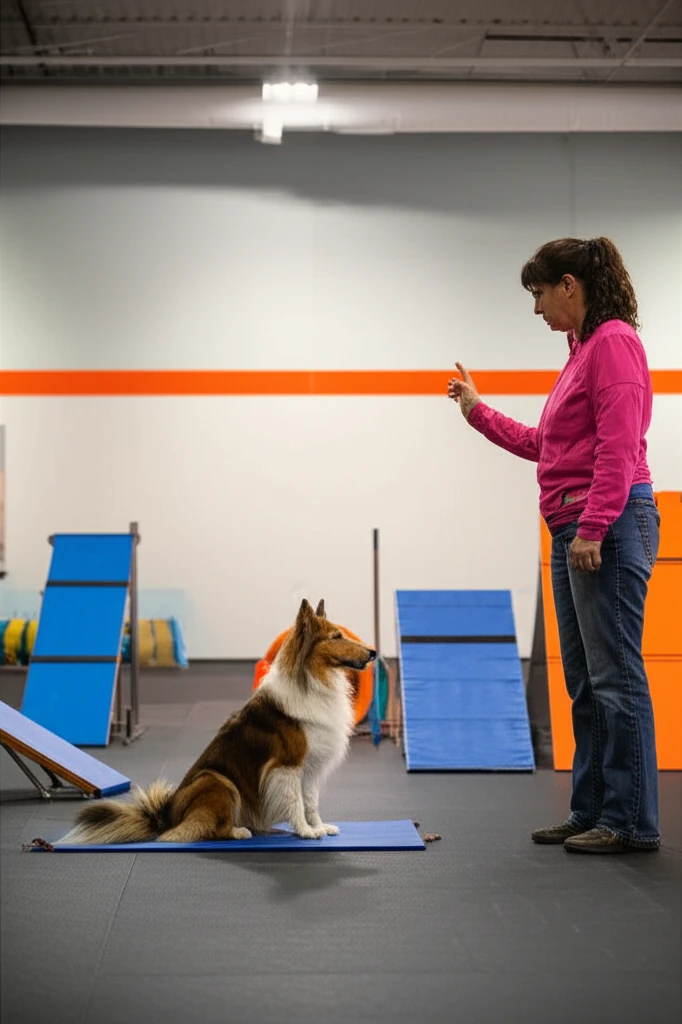
The Barking Is Not Optional (But It Is Manageable)
If you have a Collie, you have a barker. This is a breed that was developed to communicate across vast distances — alerting shepherds to predators, directing sheep with vocal cues, and signaling when something in the environment changed. Your Collie has inherited all of that vocal programming, and your suburban living room is full of things worth announcing: the mail carrier, a squirrel on the fence, the neighbor closing a car door, wind.
The barking isn't a behavior problem in the traditional sense. It's a breed feature operating in an environment it wasn't designed for. Punishing that instinct creates confusion and anxiety in a breed that's already emotionally sensitive.
Effective barking management for Collies uses an acknowledge-and-redirect approach. When your Collie alerts, calmly say "thank you" — you're accepting the report. Then cue a specific behavior: go to your bed, come to me, or settle. Reward the quiet that follows the redirect. Over time, your Collie learns the complete sequence: alert, acknowledge, redirect, reward. The barking gets shorter because your dog isn't stuck in a loop with no resolution. You've given the instinct a beginning, middle, and end.
Consistency across the household is critical. If one person yells at the barking while another ignores it, your Collie has no clear picture of what's expected.
Herding Drive: When Your Collie Manages Your Kids
Collies were bred to move livestock, and that instinct doesn't disappear because you don't own sheep. It redirects. The most common target? Your children. If your Collie nips at running kids' heels, circles them when they scatter in different directions, or blocks them from leaving a room, that's herding behavior. Your dog isn't being aggressive — they're doing their job on the only flock available.
This can be alarming, especially the nipping. But herding nips are not bites — they're precisely calibrated contact designed to redirect movement. That said, nipping still hurts and still scares children. For more on redirecting this behavior, see our guide on puppy biting and mouthing — the redirection techniques apply to herding nips as well.
The long-term solution is giving your Collie's herding drive an appropriate outlet. Structured games where your dog moves a ball on cue, agility courses that channel the desire to direct movement, and impulse control exercises that teach your Collie to watch moving things without chasing them all help. When the herding instinct has a sanctioned outlet, the unsanctioned herding of your family decreases because the underlying drive is being satisfied.
In the moment, interrupt herding behavior by redirecting to a toy or a cue they know well. Keep high-value treats accessible in rooms where kids play. The goal is to catch the impulse early — the stare, the crouch, the positioning — and redirect before the nip happens.
Sensitivity: Your Greatest Training Asset and Biggest Risk
Collies are among the most emotionally sensitive breeds. This sensitivity is what makes them such outstanding family dogs — they're attuned to your moods, gentle with children, and deeply invested in the household's emotional climate. It's also what makes harsh training methods genuinely harmful to this breed.
A Collie who is corrected too harshly doesn't bounce back. They shut down. A single sharp correction can set back weeks of progress because your Collie is now worried about making mistakes rather than focused on learning. You'll see it in their body language: averted eyes, lowered head, reluctance to offer behaviors. That's not a stubborn dog. That's a stressed dog.
This sensitivity also means your Collie is affected by household conflict, raised voices, and tension — even when it's not directed at them. Collies who live in chaotic or loud environments often develop anxiety-related behaviors like excessive barking, pacing, or fearfulness. Maintaining a calm household isn't just nice for your Collie; it's a prerequisite for behavioral stability.
The flip side is remarkable. A Collie trained with patience, clarity, and positive reinforcement becomes one of the most responsive partners in any discipline. They learn quickly, retain what they learn, and visibly enjoy the training process. Your Collie isn't just tolerating training — they're thriving on the communication and connection it provides.
Noise Sensitivity and Environmental Confidence
Many Collies are noise-sensitive, and without proactive management, that sensitivity can escalate into sound phobias. Thunderstorms, fireworks, construction sounds, and even household appliances like vacuums and blenders can trigger panic responses. A Collie in a noise panic may pace, drool, shake, hide, or try to escape — and these responses tend to intensify over time if the dog never learns to cope.
Build your Collie's noise tolerance gradually. During puppyhood, expose them to a range of sounds at low volume while pairing each exposure with treats and calm energy. Sound desensitization recordings played at barely audible levels during positive activities — mealtime, play, training — teach your Collie that these sounds are part of a safe routine. Increase the volume incrementally over weeks, never pushing faster than your dog's comfort allows.
For adult Collies who are already noise-reactive, the process is the same but slower. Find the volume at which your dog notices the sound but doesn't panic — that's your starting point. Pair that level with high-value rewards and progress gradually. If your Collie is showing severe noise phobia, talk to your veterinarian alongside your training plan.
If your Collie shares herding-breed traits with a Shetland Sheepdog, you'll notice the same noise sensitivity pattern. The approach is identical: gradual exposure, positive associations, and patience. Never force your dog to endure a sound that's causing them distress. Flooding doesn't build resilience — it builds deeper fear.
Bringing Out the Best in Your Collie
A well-trained Collie is something special. They're graceful, attentive, loyal, and genuinely joyful in the work of being a companion. They excel in obedience, agility, trick training, and therapy work — any discipline that lets them partner closely with their handler and use their intelligence in a structured way.
Training sessions should be upbeat and collaborative. Keep them short — ten to fifteen minutes of focused work is ideal. Use a warm tone and generous rewards. Your Collie will pick up new cues quickly, often within a few repetitions, so be ready to add complexity rather than drilling the basics endlessly.
Socialization should be ongoing, not just a puppy-phase project. Regular exposure to new people, environments, and dogs keeps your Collie's social confidence sharp. Group classes combine socialization with the structured learning environment this breed thrives in.
At Zoom Room, our training programs are designed for breeds like Collies who respond to positive, relationship-based methods. The indoor environment eliminates the noise and chaos that can overwhelm a sensitive dog, giving your Collie a space where they can focus, learn, and build confidence. Find a Zoom Room near you and discover how rewarding training with a Collie can be when the approach matches the breed.
Frequently Asked Questions
How do I stop my Collie from nipping at my children's heels?
Heel nipping in Collies is herding behavior, not aggression. Your Collie is trying to manage movement the way their ancestors managed sheep. The immediate fix is redirection — interrupt the herding sequence early (watch for the stare and crouch that precede the nip) and redirect to a toy or a known cue. The long-term solution is giving the herding drive an appropriate outlet through activities like agility, structured ball-herding games, or impulse control training. When the herding instinct has a sanctioned channel, the unsanctioned herding of your family naturally decreases.
Are Collies good for families with young children?
Collies are among the best family breeds. They're patient, gentle, and naturally protective of children. The two things to manage are herding behavior (nipping heels and circling running kids) and their sensitivity to noise and chaos. Teach your children not to scream or run wildly around the dog, which triggers herding instincts. Give your Collie a quiet retreat space when household energy gets high. With proper training to manage the herding drive and a reasonably calm home environment, Collies form deep, lasting bonds with children and take their role as family dog seriously.
Why does my Collie bark at every little sound?
Your Collie is an alert barker by breed heritage. They were developed to communicate across distances and to signal changes in the environment. In a home setting, every doorbell, car door, and bird on the windowsill triggers that alert response. You manage this by giving the barking a resolution: acknowledge the alert calmly, redirect to a specific behavior like going to a mat or coming to you, and reward the quiet. This teaches your Collie the complete sequence — bark, acknowledge, redirect, treat — so they're not stuck in an endless barking loop with no way to resolve it.
Ready to Get Started?
Zoom Room's calm, indoor training environment is ideal for sensitive breeds like Collies. Our positive reinforcement approach matches the way Collies learn best. Find a location near you.
Find a Zoom Room