
Corgi Nipping and Herding Children: How to Redirect the Instinct
Your Corgi is chasing your kids around the backyard, nipping at their ankles, and everyone is crying. This is not aggression. This is a cattle herding dog doing exactly what centuries of selective breeding designed them to do — in a living room instead of a pasture.
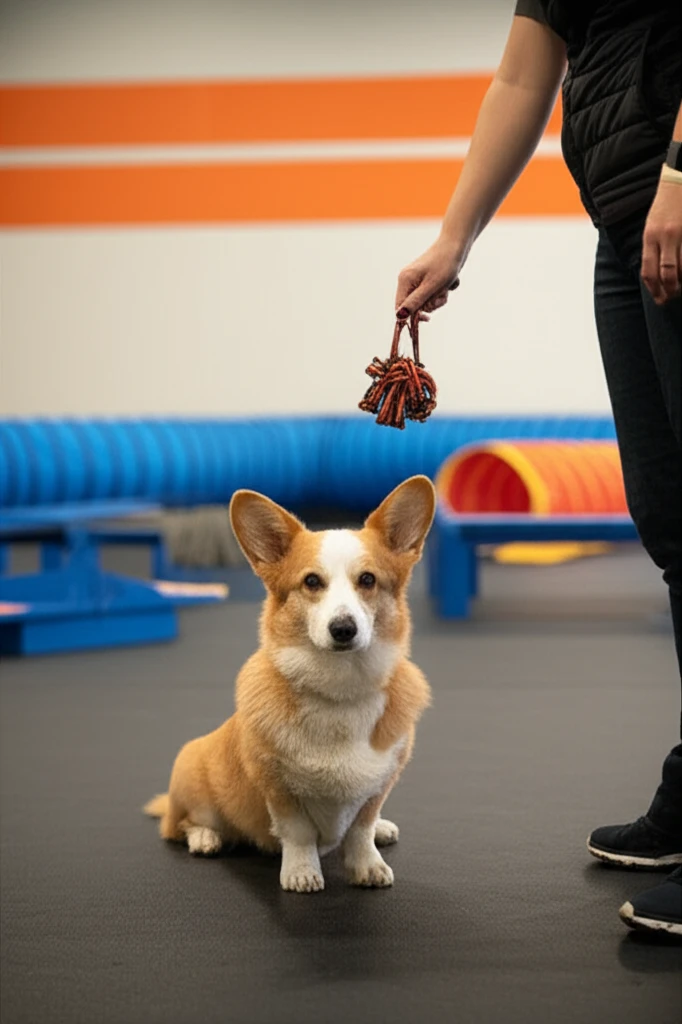
Why Nipping Shows Up Differently in Corgis
Pembroke Welsh Corgis were bred to move cattle by nipping at their heels. That is not a footnote in a breed history book. It is a behavioral program that is still running in your dog's brain. When your children run, scream, or move in unpredictable ways, your Corgi's herding drive activates. The nipping is purposeful and precise — aimed at ankles and heels, often accompanied by a low crouch and intense focus. Your Corgi is not being mean. Your Corgi is being a very good herding dog in a context where herding is unwelcome.
This matters because the typical response — yelling at the dog, pulling them away, or punishing the nip — does not address the underlying drive. You can suppress the behavior temporarily with enough corrections, but the instinct does not go away. It resurfaces during moments of excitement, when the kids are running, when guests arrive, when anything triggers that hardwired pattern. Punishment also risks creating anxiety around children, which is worse than the nipping.
The other factor unique to Corgis is their intensity in a compact package. People underestimate how strong the herding drive is because the dog weighs 28 pounds. But a Corgi's nip can leave bruises, draw blood from a small child, and create a cycle where kids become afraid of the family dog. Taking this seriously early is important. For more on the breed's overall temperament and training needs, see our full Pembroke Welsh Corgi training guide.
What Works for Corgis Specifically
You cannot train away a herding instinct, but you can redirect it. The goal is to give your Corgi an appropriate outlet for the drive and teach them that children are not livestock.
Teach a reliable "leave it" and recall. When your Corgi starts fixating on moving children, you need an interrupt that works. "Leave it" breaks the fixation, and recall brings them back to you. Both need to be trained to the point of reflex before you rely on them in real situations. Practice with low-value distractions first, then gradually increase difficulty. A Corgi who has a strong recall and leave-it has the tools to disengage from the herding impulse before the nip happens.
Redirect the drive, do not suppress it. Your Corgi needs to herd something. Treibball (a sport where dogs push large balls into a goal) is a perfect outlet for Corgis because it channels the herding instinct into a structured activity. Herding-style games with a flirt pole give your Corgi the chase-and-control satisfaction they are craving. A Corgi with an appropriate herding outlet is far less likely to herd your children because the itch is already scratched.
Manage the environment with children. Until the training is solid, do not leave your Corgi unsupervised with young children during high-energy play. This is not a comment on your dog's character. It is practical risk management. When kids are running and screaming, even a well-trained Corgi can slip into herding mode. Use baby gates or a tether to give your dog a front-row seat without access to moving targets. Reward calm behavior while the kids play. This teaches your Corgi that watching children play earns treats, while chasing them does not.
For more on redirecting mouthiness in general, our puppy biting guide covers the foundational techniques. Australian Shepherds share a similar herding-breed dynamic — our Aussie barking guide addresses how that same herding drive manifests differently in another popular breed.
The Socialization Connection
A well-socialized Corgi has better impulse control across the board, which directly reduces nipping. Socialization teaches your Corgi to regulate their arousal levels. A Corgi who has practiced staying calm around exciting stimuli — other dogs, new people, novel environments — has a better off-switch when the kids start running.
Structured group classes are especially valuable for herding breeds because they provide an environment with controlled movement and distractions. Your Corgi practices focusing on you while other dogs and people are active nearby. This is the exact skill they need in your living room: the ability to notice exciting movement and choose not to chase it.
Teaching your children how to interact with your Corgi matters too. Kids who stand still when the Corgi starts herding remove the trigger. Kids who can calmly ask the dog to sit give the Corgi an alternative behavior. This is a family training project, not just a dog training project. Everyone in the household learns how to manage the dynamic together.
Find a Zoom Room near you to start channeling your Corgi's herding drive into structured training where it can be an asset instead of a problem.
Frequently Asked Questions
Will my Corgi grow out of nipping?
No. Herding behavior is instinctive, not developmental. Puppies may nip more because they have less impulse control, but the underlying herding drive does not fade with age. Without training and redirection, most Corgis will continue to nip at moving targets throughout their lives. The good news is that the behavior responds well to training when you work with the instinct instead of against it. Providing an appropriate outlet and teaching a strong recall and leave-it can dramatically reduce nipping within weeks.
Is my Corgi being aggressive when they nip my kids?
Almost certainly not. Herding nips are controlled, targeted at ankles and heels, and accompanied by body language that looks very different from aggression. A herding Corgi crouches low, moves with purpose, and nips quickly without sustained biting. An aggressive dog shows stiffened body posture, hard stares, growling, and bites with more force and less precision. If you are unsure, have a professional trainer evaluate the behavior. In the vast majority of cases, Corgi nipping is herding instinct, not aggression.
Channel the Herding Instinct
Zoom Room's group classes help your Corgi learn impulse control around movement and distractions. Our trainers understand herding breeds and can help you redirect that drive into structured activities your whole family will enjoy.
Find a Zoom Room