
How to Train a Dachshund (They Have Opinions, and So Should You)
Dachshunds were bred to follow badgers into underground tunnels and fight them there. Let that sink in. This is a dog that weighs 16 to 32 pounds and was designed to pick a fight with an animal that has claws and an attitude problem. Everything about the Dachshund -- the boldness, the determination, the selective hearing -- makes sense once you understand that origin story.
What Makes Dachshunds Different to Train
Dachshunds are small dogs with a big-dog operating system. They're confident, independent, and surprisingly strong-willed for their size. When people describe them as "stubborn," they're identifying a real trait -- but the framing is wrong. A Dachshund who ignores a cue isn't defying you. They're evaluating whether the request is worth the effort, and they've decided it isn't. Your job through positive reinforcement training is to change the math.
The independent streak comes from their hunting heritage. Dachshunds worked underground, out of sight of their handlers, making their own decisions about how to approach prey. That independence was essential for the job and it's deeply wired. You won't train it out. You can, however, make cooperation more rewarding than going solo -- and that's where training gets interesting with this breed.
The other defining feature of Dachshund training is physical: that long back. Intervertebral disc disease (IVDD) is the most common serious health issue in the breed, and it directly shapes what safe training looks like. Jumping on and off furniture, running up and down stairs, and any high-impact activity puts stress on the spine. Training needs to account for this -- not by wrapping your Dachshund in bubble wrap, but by building habits that reduce spinal stress while still giving them the mental engagement they need.
Despite their reputation for being difficult, Dachshunds are actually quite food-motivated and eager for your attention. They bond deeply with their people -- sometimes a single person in particular -- and that attachment is a powerful training lever. A Dachshund who trusts you and enjoys working with you is a remarkably willing training partner. Getting to that point just requires patience, consistency, and an understanding that this breed operates on their own timeline.
Protecting the Back (Training That Keeps Them Healthy)
Every Dachshund owner needs to think about spinal health, and training is where you build the habits that prevent problems. The most important rules are straightforward:
- Teach "wait" at furniture edges. Instead of letting your Dachshund launch off the couch or bed, teach them to wait for you to lift them down. Use ramps or pet stairs for frequent access points. This single habit change can significantly reduce the cumulative spinal stress that contributes to IVDD.
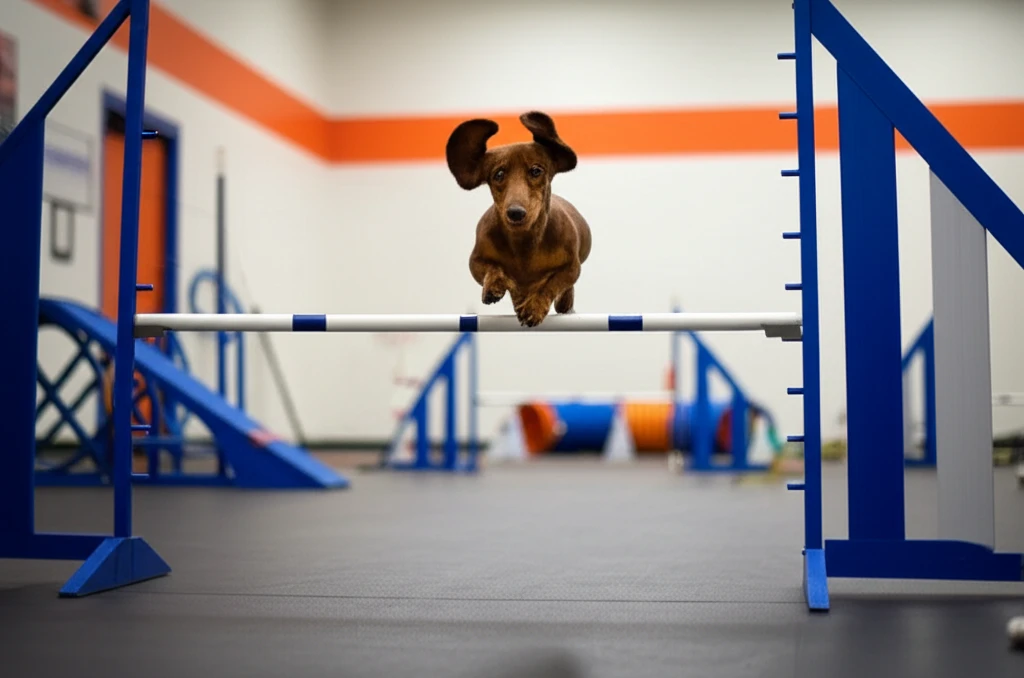
- Skip high-impact jumps. Standard agility jumps aren't appropriate for most Dachshunds. Low-impact versions -- ground-level tunnels, weave poles, low platforms -- give the mental stimulation of agility training without the spinal risk.
- Support the full body when lifting. Always support both the chest and hindquarters when picking up your Dachshund. Teach children in the household to do the same. A dangling Dachshund is a Dachshund whose back is under unnecessary strain.
- Keep them lean. Extra weight on that long spine accelerates disc problems. Treat-heavy training means you need to account for those calories in their daily food allotment. Tiny treats work just as well as large ones -- the Dachshund cares about the event, not the portion size.
Where Dachshunds Typically Need Work
- Housetraining. This is the most common challenge Dachshund owners report, and it's a real one. Dachshunds can be slow to housetrain for several reasons: small bladders, a low-to-the-ground perspective that makes indoor accidents feel less "wrong," and a genuine dislike of cold or wet weather that makes going outside unappealing. Expect the process to take longer than average. Consistency, frequent trips outside, and generous rewards for outdoor elimination are the path forward.
- Barking. Dachshunds are alert dogs, and they announce everything. The doorbell, a squirrel, a leaf -- all worthy of vocal commentary. Teaching a "quiet" cue and rewarding silence during trigger events helps manage the volume without trying to suppress the alert instinct entirely.
- Resource guarding. Some Dachshunds guard food, toys, or their favorite person with intensity that surprises people given the breed's size. Address this early through positive conditioning -- approach the food bowl to add something better, trade toys for higher-value rewards, and teach that sharing predicts good outcomes.
- Wariness with strangers. Dachshunds can be reserved or reactive with unfamiliar people, especially in their own space. Structured socialization that includes positive experiences with a variety of people builds confidence and prevents wariness from hardening into defensive behavior.
- Digging. Dachshund means "badger dog," and the breed retains strong digging instincts. If your yard is an option, provide a designated digging spot. If not, enrichment toys and scent games redirect the digging drive into something that doesn't destroy your garden.
What Actually Works
Make it their idea. Dachshunds respond far better to training that feels like a collaboration than training that feels like an order. Instead of drilling repetitions, present the behavior as a puzzle: "Can you figure out what earns the treat?" Shaping -- rewarding small steps toward the target behavior -- works exceptionally well with this breed because it engages their problem-solving instincts.
Use food strategically. Dachshunds are food-motivated, and that motivation is your primary training currency. But they also gain weight easily, so use tiny, high-value treats -- pea-sized pieces of chicken or cheese -- and reduce meal portions on heavy training days. The reward should be small enough that the session doesn't become a meal.
Be patient with housetraining. Take your Dachshund out more often than you think is necessary -- every hour for puppies, every two to three hours for adults during the training phase. Reward immediately after they eliminate outside, not when they come back in. In cold or wet weather, keep outdoor trips short and focused. Some Dachshund owners find that a covered outdoor area or a porch potty provides a useful intermediate step.
Socialize early and positively. Puppy socialization is critical for this breed. Dachshunds who don't get enough positive exposure to new people, dogs, and environments as puppies can become suspicious or snappy adults. The goal isn't to make them outgoing -- it's to make them confident. A confident Dachshund assesses a situation and relaxes. An unsocialized Dachshund assesses a situation and escalates.
Keep it short. Like their tunnel-hunting ancestors, Dachshunds are sprinters, not marathon runners. Ten-minute training sessions, two or three times a day, produce better results than one long session. End while they're still interested. If your Dachshund walks away mid-session, the session was too long -- take note and adjust.
The Bigger Picture
Dachshunds are small dogs who don't know they're small, and training them well means respecting that self-image while setting clear boundaries. The owner who tries to overpower a Dachshund -- through physical correction, raised voices, or sheer stubbornness -- will lose, because a Dachshund can out-stubborn anyone. The owner who outsmarts a Dachshund -- through well-timed rewards, creative training approaches, and genuine patience -- gets a companion who is loyal, entertaining, and far more cooperative than their reputation suggests.
The breed's physical needs add a layer of responsibility. Protecting that long back isn't a burden -- it's an opportunity to build good habits early that prevent painful problems later. Ramps, careful lifting, appropriate exercise, and lean body condition are investments in your Dachshund's long-term mobility and quality of life.
Group classes work well for Dachshunds because the structured environment provides socialization alongside training, the sessions are appropriately timed, and a trainer can help you read your dog's signals -- the difference between "I need a moment to think about this" and "I'm done for today." That distinction matters with a breed that communicates its boundaries clearly, if you know what to look for.
Frequently Asked Questions
How do I protect my Dachshund's back during training?
Focus on building habits that minimize spinal stress. Teach your Dachshund to wait at furniture edges so you can lift them down instead of letting them jump. Use ramps or pet stairs for regular access points like the couch or bed. Avoid high-impact agility jumps and opt for ground-level activities like tunnels and weave poles instead. Always support both the chest and hindquarters when picking them up, and keep your Dachshund at a lean weight since extra pounds put added pressure on that long spine.
Why is my Dachshund so hard to housetrain?
Dachshunds are one of the slower breeds to housetrain, and there are real reasons for it. Their small bladders mean they need to go out more frequently. Their low-to-the-ground build means indoor accidents don't feel as disruptive to them. And many Dachshunds genuinely dislike going outside in cold or wet weather. The solution is patience and consistency: take them out more often than you think necessary, reward immediately after outdoor elimination, and consider a covered outdoor spot or porch potty for bad weather days.
Can Dachshunds do agility training safely?
Dachshunds can absolutely enjoy agility-style training with modifications to protect their spine. Skip standard jumps and instead focus on ground-level activities like tunnels, low weave poles, and platform work. These provide the same mental stimulation and confidence-building benefits without the high-impact landings that put stress on the intervertebral discs. Many Zoom Room classes offer low-impact agility options that are perfect for Dachshunds and other long-backed breeds.
Big Training for Small Dogs
Dachshunds deserve real training, not shortcuts. Our group classes are built for every breed and every size.
Find a Zoom Room