
Dachshund Recall Training: Getting Your Dachshund to Actually Come When Called
You call your Dachshund's name. They glance at you, assess the situation, decide whether coming back is worth their time, and usually conclude that whatever they are sniffing is more interesting. This is not defiance. This is a scenthound doing a cost-benefit analysis, and you are losing.
Why Recall Shows Up Differently in Dachshunds
Dachshunds were bred to hunt badgers underground. Alone. In a dark tunnel. Without any human guidance whatsoever. The entire breed was selected for independent decision-making in high-stakes situations where listening to a handler was not only unnecessary but impossible. That is the genetic inheritance you are working with when you call your Dachshund at the park and get ignored.
Three factors make recall uniquely difficult with Dachshunds. First, their nose. Dachshunds have approximately 125 million scent receptors, and when they lock onto a smell, their brain is fully occupied. Your voice is competing against a sensory system that is processing an overwhelming amount of information. Second, their independence. Unlike breeds that were selected for handler-responsiveness (retrievers, herding dogs), Dachshunds were selected for self-reliance. Checking in with you is simply not their default operating mode. Third, their size. At six to ten inches off the ground, your Dachshund lives in a world of ground-level scents that you cannot even perceive. You are calling them away from a world that is far more vivid and interesting to them than it is to you.
None of this means recall is impossible with Dachshunds. It means the standard approach — call the dog, dog comes, give a treat — needs significant modification. Recall with a Dachshund is a long-term project, not a weekend skill.
What Works for Dachshunds Specifically
Make yourself worth more than the ground. Your recall cue has to predict something genuinely extraordinary. A piece of kibble is not going to compete with a rabbit trail. Find what your Dachshund values most — real meat, a squeaky toy, a specific game — and reserve it exclusively for recall training. This reward never appears at any other time. When your Dachshund hears that recall cue, their brain should light up with the expectation of something so good that even a fascinating smell is worth leaving.
Use a long line, not wishful thinking. Until your Dachshund's recall is genuinely reliable, train on a 15- to 30-foot long line. This is not a punishment. It is management that prevents your dog from practicing the behavior you do not want (running away after ignoring you) while you build the behavior you do want (returning when called). Every time your Dachshund ignores a recall cue and nothing happens, they learn that ignoring you is a valid option. The long line prevents that lesson. Off-leash reliability with Dachshunds takes months or longer of consistent practice.
Keep sessions short and varied. Dachshunds check out of repetitive training quickly. Five recalls in a row and your dog decides this game is boring. Practice two or three recalls per session, in different locations, at different times of day, with different distractions. Unpredictability keeps a Dachshund's interest. If they can predict the pattern, they will decide whether to participate on their own terms.
Never punish a recall. If your Dachshund finally comes to you after ignoring three calls, reward them. Enthusiastically. Even if it took two minutes and you are frustrated. Punishing a dog who eventually came teaches them that coming to you ends badly. With an already-independent breed, even one negative recall experience can set your training back significantly. Recall must always, without exception, be the best thing that happens to your Dachshund.
Also critical: never use the recall cue for things your Dachshund does not enjoy. Do not call them to come and then clip their nails, give them a bath, or put them in their crate for the night. If you need to do something your dog dislikes, go get them. Protect the recall cue as the most positive word in your dog's vocabulary.
The Socialization Connection
A Dachshund who is under-socialized treats every new environment as a sensory overload event, and a sensory-overloaded Dachshund has zero bandwidth for recall. Regular exposure to different places, people, and dogs in positive contexts builds the kind of environmental confidence that lets your dog actually hear you when you call.
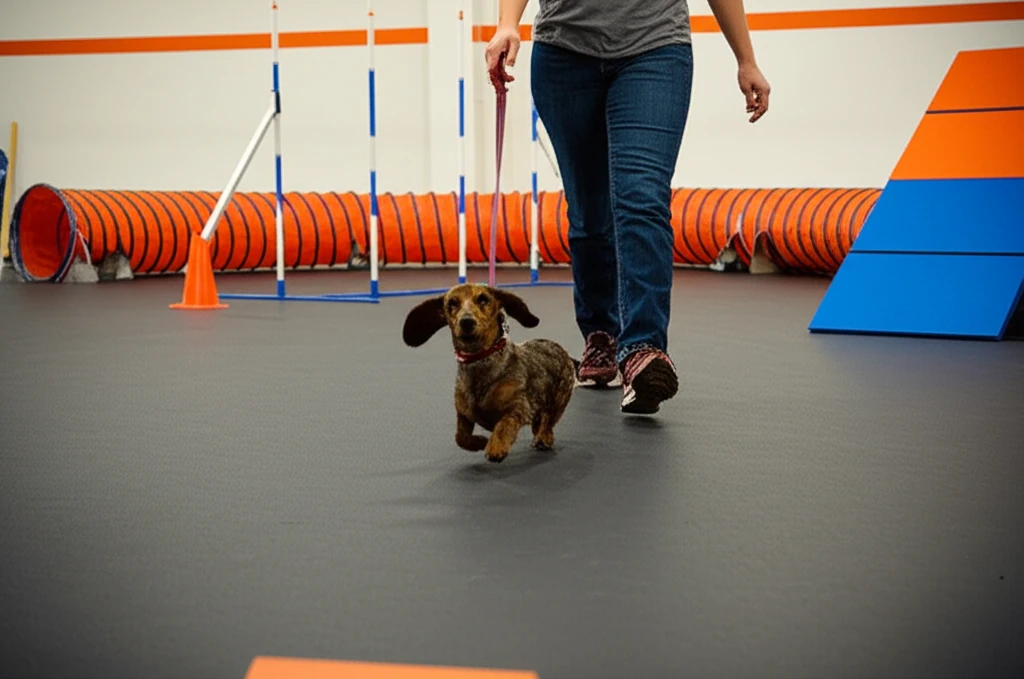
Group training classes also introduce a critical element: practicing focus around distractions. A Dachshund who has learned to check in with you while other dogs are moving, treats are on the ground, and new smells are everywhere has done the hardest version of recall training. That translates directly to better recall at the park, on walks, and in your yard.
Scent work classes are a particularly smart choice for Dachshunds because they channel the nose-to-the-ground drive into a structured activity where your dog works with you rather than ignoring you. A Dachshund who has learned that following scent cues from their handler leads to rewards is a Dachshund who sees handler-responsiveness as part of the game, not an interruption to it. Similar strategies work for other scenthound breeds who share the Dachshund's nose-first approach to the world.
At Zoom Room, our trainers understand that Dachshund recall is a different project than Labrador recall. Find a Zoom Room near you and start building a recall that actually competes with whatever your Dachshund is sniffing.
Frequently Asked Questions
Will my Dachshund ever be reliable off-leash?
Some Dachshunds develop solid recall in familiar, low-distraction environments, but most will never be truly reliable off-leash in unfenced areas with novel scents. This is not a training failure. It is a breed characteristic. A Dachshund nose that locks onto a scent trail can override even well-trained recall in the right conditions. For safety, many experienced Dachshund owners use long lines in unfenced areas permanently and reserve true off-leash time for securely fenced spaces. A reliable recall in your yard and on a long line is a realistic and genuinely useful goal.
My Dachshund comes when called inside but ignores me outside. What am I doing wrong?
Nothing wrong — this is a generalization gap, and it is extremely common in Dachshunds. Indoor recall is easy because the distractions are low and familiar. Outside, your dog's nose is flooded with information that does not exist inside your house, and their brain prioritizes that sensory input over your voice. You need to build recall in progressively more distracting environments. Start in your yard, then a quiet park, then a busier area, always on a long line. At each new location, lower your expectations and increase the value of your rewards. Your Dachshund is not being stubborn. They are being asked to perform a skill at a difficulty level they have not practiced yet.
Ready to Build a Better Recall?
Zoom Room's training programs include scent work, recall drills, and structured distraction training that work with your Dachshund's nose-driven nature, not against it.
Find a Zoom Room