
How to Train a Doberman Pinscher
Doberman Pinschers are among the most intelligent and trainable breeds you can own. They're also among the most sensitive, and that combination of sharp mind and emotional depth means your approach to training matters more with this breed than almost any other.
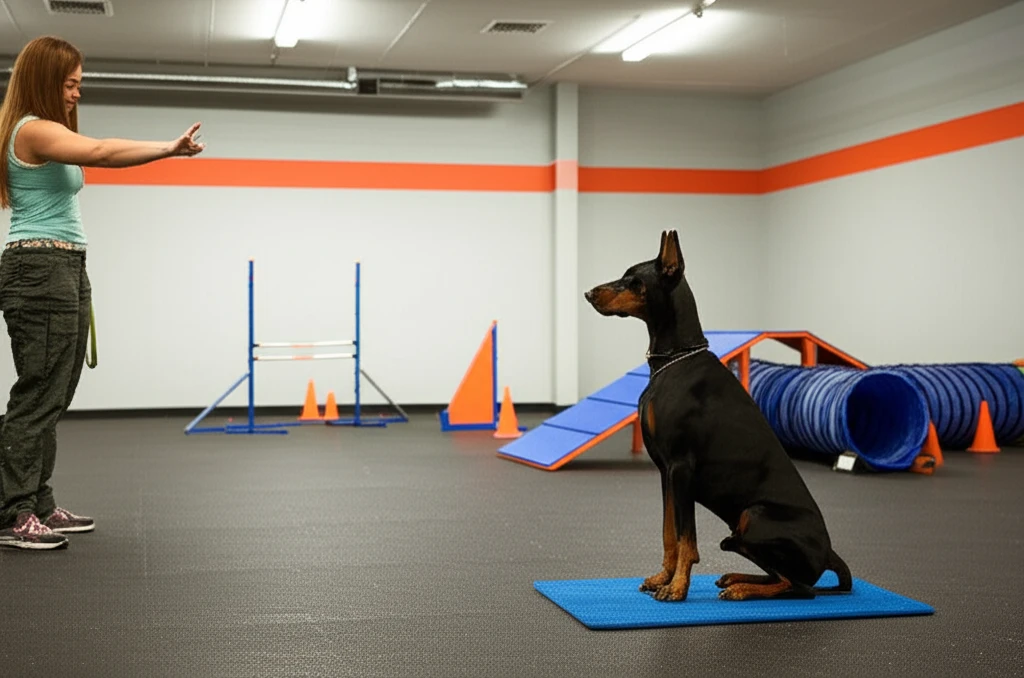
Fast Learners Who Get Bored Faster
A Doberman can learn a new cue in a handful of repetitions. That speed is impressive, but it creates a problem most training advice doesn't address: once your Doberman understands a cue, drilling it over and over doesn't build reliability — it builds disengagement. You'll see it happen in real time. The first three reps are sharp. By rep eight, your Doberman is looking at the ceiling.
The fix is to train in short, varied sessions that keep your Doberman guessing. Chain multiple cues together. Add new challenges once a behavior is solid. Rotate between obedience work, trick training, and problem-solving games. Positive reinforcement keeps a Doberman motivated, but the variety is what keeps them engaged. Think of training as a conversation, not a lecture — your Doberman has things to say, and the best training sessions leave room for that.
Socialization Is Non-Negotiable
Dobermans are a guardian breed. That means they have an innate tendency to assess situations and people, and without proper socialization, that assessment can default to suspicion. An unsocialized Doberman isn't a dangerous dog — it's a worried dog with a large body, and that combination creates problems for everyone.
Early, extensive socialization is the single most important thing you can do for a Doberman. This means positive exposure to a wide variety of people (different ages, body types, clothing, hats, uniforms), dogs (all sizes and energy levels), environments (sidewalks, stores, elevators, crowds), and sounds. The goal isn't to make your Doberman love everything — it's to build a dog who encounters novel situations with curiosity rather than concern.
If your Doberman is already showing wariness toward strangers or leash reactivity, structured exposure in a controlled environment is far more productive than forcing interactions in unpredictable settings. Group classes give your Doberman regular practice being around unfamiliar dogs and people with professional guidance and clear structure — exactly what this breed needs.
The Emotional Sensitivity Factor
Dobermans are deeply attuned to their owner's emotional state. If you're stressed, your Doberman knows it before you do — and they'll respond in kind. This isn't a breed you can train while distracted or frustrated. Your tension travels straight down the leash.
This sensitivity is actually a training asset when you use it intentionally. A calm, confident handler produces a calm, confident Doberman. Your body language, tone of voice, and energy level are all training tools. When you approach a new situation with relaxed confidence, your Doberman reads that and responds accordingly. When you tense up because another dog is approaching, your Doberman reads that too — and now you've confirmed that the other dog is something to worry about.
This emotional connection also means that training methods involving intimidation or harsh corrections are particularly damaging to Dobermans. A Doberman who doesn't trust their handler becomes either shut down or reactive, neither of which is the outcome you want. Build your relationship on clarity and consistency, and your Doberman will give you everything they've got. If you're working through challenges with fear-based behaviors, a professional trainer can help you read your Doberman's body language and adjust your own energy accordingly.
Mental Stimulation Beyond the Basics
A tired Doberman is a good Doberman, but physical exercise alone won't get you there. This breed needs mental work. A Doberman who gets a five-mile run but no mental stimulation will still find ways to entertain themselves — and you probably won't like what they choose.
Agility is an outstanding outlet for Dobermans. The combination of physical athleticism and handler communication plays directly to their strengths. They're fast, coordinated, and love working as a team. Nose work and scent detection games engage their brain in a different way and provide a calming, focused activity. Clicker training for advanced behaviors and trick chains gives your Doberman the mental puzzles they crave during indoor sessions.
Zoom Room's agility program is particularly well-suited to Dobermans. The indoor environment provides consistent, distraction-managed training sessions, and the course challenges both your Doberman's body and brain simultaneously. Explore our training programs to find the right fit for your Doberman's energy level and goals.
Structure and Consistency: What Dobermans Thrive On
Dobermans do best with clear expectations and consistent routines. This isn't about rigid control — it's about giving your Doberman a framework that makes the world predictable. When your Doberman knows what's expected in a given situation, they can relax into it instead of trying to manage it themselves.
Set household rules and stick to them. If the couch is off-limits, it's always off-limits. If your Doberman needs to sit before meals, that happens every meal. Inconsistency confuses this breed more than most because they're paying such close attention to patterns. They'll notice if the rules change on Tuesdays.
If you're bringing a Doberman into a home with other dogs, structured introductions are essential. Dobermans can coexist beautifully with other dogs, but they need clear social rules and a proper introduction process. Find a Zoom Room near you to work with trainers who understand the specific needs of guardian breeds and can help you build the kind of structure your Doberman thrives on.
Frequently Asked Questions
Are Doberman Pinschers difficult to train?
Dobermans are actually one of the easiest breeds to train in terms of learning speed — they consistently rank among the most intelligent dog breeds. The challenge isn't their ability to learn; it's keeping them engaged. Dobermans get bored with repetitive drills and need varied, mentally stimulating training sessions. They also require an owner who can remain calm and consistent, since they're highly sensitive to human emotion. With the right approach, a Doberman is one of the most responsive training partners you'll ever work with.
How much socialization does a Doberman Pinscher need?
More than most breeds. As a guardian breed, Dobermans have a natural tendency toward wariness with unfamiliar people and situations. Without extensive socialization during puppyhood and continuing into adulthood, this wariness can develop into reactivity. Aim for positive exposure to new people, dogs, and environments multiple times per week during the critical socialization period. After that window closes, ongoing socialization through group classes and varied outings keeps those skills sharp. Think of socialization as a lifelong practice, not a puppy-phase checklist.
Do Doberman Pinschers do well in group training classes?
Dobermans excel in group classes when the environment is structured and well-managed. The group setting provides exactly what this breed needs most: practice being calm and focused around unfamiliar dogs and people. A well-run class gives your Doberman regular socialization in a controlled environment with professional guidance. Indoor facilities are ideal because they eliminate the unpredictable variables of outdoor settings. Start with basic obedience to build your communication foundation, then consider agility or advanced classes to keep your Doberman mentally challenged.
Ready to Get Started?
Zoom Room's structured, indoor training environment is built for breeds like Doberman Pinschers who thrive with consistency and mental challenge. Find a location near you.
Find a Zoom Room