
How to Train an English Springer Spaniel
English Springer Spaniels are field dogs living in living rooms. That tireless energy, that nose glued to the ground, that tail going nonstop — it all traces back to a dog bred to cover ground, flush birds, and retrieve all day without quitting. If you don't channel that drive, your Springer will find an outlet on their own, and it usually involves your shoes, your garden, or your sanity.
The Energy Is Not a Phase
New Springer owners often assume the energy will calm down with age. It won't — not meaningfully, and not soon. English Springer Spaniels were developed to work full days in the field, flushing game from dense cover, sprinting through brush, swimming across ponds, and retrieving on cue. That endurance is built into every cell of your dog's body. A young Springer who doesn't get adequate physical and mental outlet isn't just restless — they're a destruction engine with a wagging tail.
Physical exercise is necessary but not sufficient. A Springer who runs for an hour will be physically tired for about twenty minutes, then ready for more. What actually settles this breed is combining physical activity with mental engagement. A training walk where your Springer practices check-ins, responds to directional cues, and processes environmental information is worth more than twice the distance covered at a mindless trot.
Nose work is one of the most underrated activities for Springers. This breed has an exceptional sense of smell — they were literally bred to find hidden things. Scent-based games and training tap into that drive in a way that produces deep mental fatigue. Hide treats around the house, teach your Springer to find specific objects by scent, or enroll in a structured nose work class. Twenty minutes of focused scent work can settle a Springer more effectively than an hour at the dog park.
Recall: The Skill That Changes Everything
If you train your English Springer Spaniel to do one thing reliably, make it recall. A Springer with a solid recall is a dog who can enjoy off-leash freedom safely. A Springer without one is a dog who disappears into the nearest hedgerow the moment an interesting scent crosses their path, deaf to your increasingly desperate calls.
The challenge with recall training for Springers is competing with their nose. Once a Springer locks onto a scent trail, the rest of the world effectively ceases to exist. That's not disobedience — it's a field dog doing exactly what generations of breeding optimized them to do. You're asking your dog to override their strongest instinct, which means the recall needs to be conditioned so thoroughly that it operates almost as a reflex.
Build recall in layers. Start indoors with zero distractions. Use an absurdly high-value reward — real meat, not kibble. Call your Springer's name plus your recall cue, and reward the instant they arrive. Practice dozens of times until indoor recall is automatic. Then move to a fenced yard. Then to quiet outdoor spaces on a long line. Then to environments with moderate distractions. Each level needs to be solid before you move to the next. Rushing to off-leash recall before the foundation is secure teaches your Springer that the cue is optional when something interesting is happening.
Never call your Springer to come for something unpleasant. If recall sometimes predicts fun ending, your Springer will start gambling on whether this particular recall is worth responding to. Make coming to you the best thing that happens in your dog's day, every single time.
Separation Anxiety: When Velcro Becomes a Problem
English Springer Spaniels bond deeply with their people, and that attachment can tip into separation anxiety if it's not managed from the start. A Springer with separation anxiety doesn't just miss you — they panic. Symptoms include destructive behavior focused on exit points (doors, windows, crates), excessive vocalization that starts the moment you leave, house soiling from a dog who is otherwise reliable, and physical stress signs like panting, drooling, or pacing.
Prevention is dramatically easier than treatment. From your Springer's first day home, practice brief separations. Leave the room for thirty seconds, return calmly, and don't make a production of it. Gradually extend the duration. Teach your Springer that your absence is temporary and boring, not catastrophic.
Give your Springer something to do when you leave. A food-stuffed puzzle toy or a long-lasting chew creates a positive association with your departure and occupies their brain during the critical first fifteen minutes, which is when anxiety peaks. If your Springer is already showing separation distress, work with a trainer on a structured desensitization protocol. Separation anxiety responds well to systematic treatment but worsens without intervention.
The Mouthy Springer: Redirect, Don't Suppress
Springer Spaniels are mouthy dogs. They were bred to carry birds in a "soft mouth" — gentle enough not to damage the game, persistent enough to hold it all the way back to the handler. That oral fixation is still very much present, and it shows up as a puppy who mouths your hands, carries objects everywhere, steals socks and shoes, and always has something in their mouth.
This is a feature, not a flaw. Give the mouthiness a productive channel. Teach a formal retrieve — your Springer will take to it naturally. Provide a rotating selection of appropriate chew items so there's always something sanctioned to carry. When your Springer grabs something they shouldn't have, trade for something better rather than chasing them, which turns the situation into the best game your dog has ever played.
For puppy mouthiness on skin, calmly remove your hand and redirect to a toy. If mouthing escalates during play, briefly pause the interaction by turning away. Resume when your Springer is calmer. The goal isn't to stop your Springer from using their mouth — it's to teach them what their mouth is for.
If you've had experience with a Cocker Spaniel, you'll recognize the oral fixation, but Springers tend to be more physically intense about it. The same principles apply, but expect the Springer to require more structured outlets and a longer period of consistent redirection before the mouthiness is fully channeled.
Channeling the Springer Spirit
An English Springer Spaniel who gets the right training is one of the most versatile, joyful, and capable dogs you'll ever work with. They're enthusiastic learners who respond beautifully to positive reinforcement, and their eagerness to engage means training sessions are genuinely fun for both ends of the leash. The trick is matching your training to what this breed was designed to do.
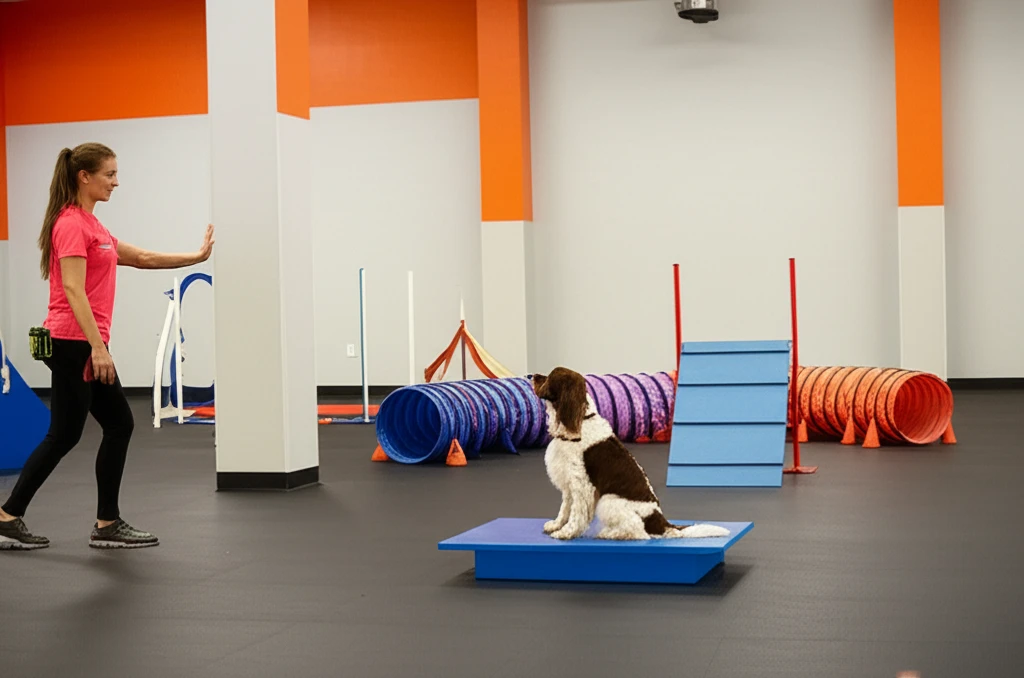
Springers excel at activities that engage their nose, their athleticism, and their desire to work cooperatively with a handler. Nose work is a natural fit. Agility lets them burn physical energy while making rapid decisions. Rally obedience gives them the handler partnership they crave. Even dock diving appeals to the many Springers who are natural water dogs. The common thread is engagement — a Springer doing something purposeful with their person is a Springer at their best.
Socialization classes are valuable for Springers not because they're typically wary, but because their enthusiasm needs boundaries. A Springer who loves every dog they meet but has no social skills is the dog who bowls over smaller dogs, play-bows in another dog's face, and doesn't take "no" for an answer. Group classes teach your Springer to coexist politely with other dogs while maintaining focus on you — a skill that makes every off-leash outing safer and more enjoyable.
Find a Zoom Room near you and discover what your Springer is capable of when that field dog energy has somewhere productive to go. This is a breed that rewards your training investment with an enthusiasm and partnership that's hard to beat.
Frequently Asked Questions
How much exercise does an English Springer Spaniel need?
An adult Springer needs one to two hours of daily activity, but the quality of exercise matters as much as the quantity. A Springer who runs for an hour without mental engagement will recover quickly and still be restless. Combine physical exercise with activities that engage their brain: training walks with check-ins and cue practice, nose work games, fetch with directional cues, or structured activities like agility. Nose work is especially effective for Springers because it taps into their strongest natural drive and produces genuine mental fatigue. A mix of physical and mental activity each day keeps a Springer satisfied and well-behaved.
Do English Springer Spaniels get separation anxiety?
Springers are more prone to separation anxiety than many breeds due to their strong attachment to their people. Signs include destructive behavior targeting exit points, vocalization when left alone, house soiling from an otherwise reliable dog, and physical stress symptoms. Prevention is key: practice short separations from day one, gradually increase duration, keep departures and returns low-key, and provide a food puzzle or long-lasting chew when you leave. If separation anxiety is already established, a structured desensitization program with a trainer is more effective than management alone. The condition responds well to systematic treatment when addressed early.
Why does my Springer Spaniel steal everything?
Your Springer was bred to find things and carry them back. The stealing is a retriever instinct with no sanctioned outlet. Rather than trying to stop the behavior entirely, redirect it. Teach a formal retrieve so your Springer has a productive way to use their mouth. Keep appropriate carry items available and trade generously when your dog picks up something off-limits. Chasing your Springer when they grab a shoe turns it into a game and guarantees they'll do it again. Instead, offer something better in exchange and reward the trade. Over time, your Springer learns that bringing things to you produces rewards, while running off with them produces nothing interesting.
Ready to Get Started?
Zoom Room's indoor training facility offers the structured activities that English Springer Spaniels thrive on — nose work, agility, obedience, and socialization in a controlled environment. Find a location near you.
Find a Zoom Room