
How to Train a French Bulldog (They Heard You -- They're Just Thinking About It)
French Bulldogs get called stubborn more than almost any breed alive. It's the first word out of every vet's mouth, every breeder's disclaimer, every internet forum. And it's wrong -- or at least, it's the wrong word. Your Frenchie isn't refusing to listen. They're deciding whether what you're offering is worth the effort. That's not stubbornness. That's an opinion. And training a dog with opinions requires a different approach than training a dog who lives to comply.
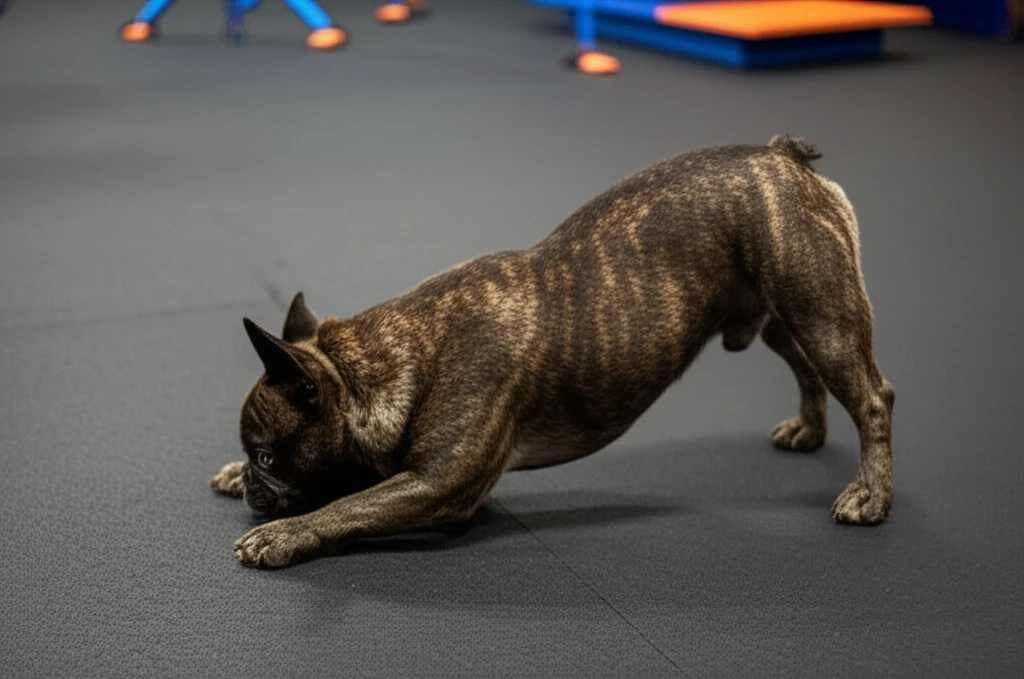
What Makes Frenchies Different to Train
Most popular training advice is built around breeds that were developed to work -- retrievers, shepherds, sporting dogs whose entire genetic history rewards taking direction from humans. French Bulldogs have a completely different resume. They were bred as companions in 19th-century Paris. Their job, for generations, was to sit near people and be pleasant company. They're very good at that job. They are less naturally inclined to perform repetitive obedience drills on request.
Selective, not stubborn. A Frenchie who ignores your "sit" cue in the park isn't broken. They understood the cue. They performed it perfectly in the kitchen this morning. What changed is the context: the park is more interesting than a piece of kibble, and your Frenchie has made a rational calculation about where to direct their attention. The fix isn't louder cues or firmer corrections -- it's better motivation and more proofing in varied environments.
Short snouts mean real physical limits. French Bulldogs are brachycephalic -- flat-faced, with compressed airways that make breathing harder, especially during exertion or heat. This isn't cosmetic trivia. It directly shapes how you train. Sessions that run long, outdoor work on warm days, or anything that gets a Frenchie heavily panting puts them at genuine risk of overheating. Heavy panting, glazed eyes, or a dog who lies down mid-session isn't being lazy. They're telling you they need to stop. Listen.
Sensitive and perceptive. Frenchies are emotional readers. They notice your frustration before you've said a word, and they respond to it -- not by trying harder, but by disengaging. A sharp tone of voice doesn't motivate this breed. It shuts them down. You'll see the ears flatten, the body turn away, the unwillingness to try again. Positive reinforcement isn't just a preference with French Bulldogs. It's the only method that consistently produces a dog who stays engaged and eager to participate.
Clever in their own way. Frenchies won't top any obedience competition rankings, and they don't care. But they're sharp problem-solvers when they want something -- opening cabinet doors, finding treats you thought you hid, figuring out exactly which family member is the softest touch. That intelligence is there. The training challenge is channeling it toward what you need, which means making compliance more interesting than the alternatives.
Social to the bone. This breed wants to be where you are, doing what you're doing, at all times. That deep attachment is what makes Frenchies extraordinary companions. It's also what makes alone time genuinely difficult for many of them. Their sociability is a training asset when you're present -- they want to interact with you -- and a vulnerability when you're not.
Common Challenges
Frenchie owners tend to run into the same handful of issues. None of them are breed flaws. All of them make sense when you understand what's driving the behavior.
- Pulling on walks. Don't let the small frame fool you. French Bulldogs are dense, muscular dogs who can pull with surprising force for their size. They see something interesting and they lean into the harness with their entire 25 pounds of compact determination. Loose-leash walking requires teaching them that forward progress only happens when the leash is slack. Stop when they pull. Walk when they don't. They figure out the pattern, though it may take more repetitions than it would with a more eager-to-please breed.
- Separation anxiety. A breed developed over centuries to be a human's constant companion does not naturally enjoy being home alone. Many Frenchies vocalize, chew destructively, or have housetraining regressions when left by themselves -- not out of defiance, but out of genuine distress. If your Frenchie panics when you pick up your keys, that's not a behavior problem you can punish away. It's an emotional response that needs patient, gradual desensitization.
- Overheating during activity. This limits training duration and intensity in ways that surprise first-time Frenchie owners. A ten-minute training session on a 75-degree day can be too much. Always train in climate-controlled spaces when possible, keep water within reach, and build rest breaks into every session. If your dog is panting hard, training is over. No exceptions.
- Food guarding. French Bulldogs can be food-possessive. When a treat or a meal appears, some Frenchies tense up, eat faster, or growl if approached. This behavior isn't aggression in the way most people think of it -- it's a communication that says "I'm worried about losing this." The fix is teaching that your approach predicts more good things, not fewer. Walk past their bowl and drop something even better into it. Over time, a person walking toward their food becomes something to look forward to, not guard against.
- Over-excitement with people. Frenchies adore humans. Every human. Immediately and without reservation. This makes doorbell ringing and guest arrivals chaotic -- a small, snorting tornado of enthusiasm hurling itself at anyone who walks in. Teaching a default sit for greetings takes repetition, but the food motivation helps enormously. Sitting politely gets the attention. Jumping gets nothing.
What Actually Works
Keep sessions short -- genuinely short. Five minutes is a real training session for a French Bulldog. Three minutes is fine. Two or three short sessions spread across the day will produce better results than one 20-minute session where your Frenchie mentally clocked out at minute six. This also protects their airways -- short sessions mean less panting, less overheating, and a dog who associates training with feeling good rather than feeling winded.
Upgrade your rewards. Kibble is not going to win the negotiation with this breed. When you're teaching something new or working in a distracting environment, you need treats that actually compete with whatever else has your Frenchie's attention. Small pieces of chicken, freeze-dried liver, cheese -- find what makes your specific dog light up and save it exclusively for training. The difference between a Frenchie working for dry biscuits and a Frenchie working for diced hot dog is the difference between a bored employee and an engaged one.
Don't repeat cues. If you say "sit" and nothing happens, saying "sit, sit, SIT" teaches your dog that the cue is actually "sit-sit-sit" and the first one can be safely ignored. Give the cue once. If they don't respond, wait a beat, then change something: lure with a treat, reduce the distraction, or try again later. Frenchies are smart enough to learn that they only need to respond on the third ask, and they will absolutely do that if you let them.
Respect the independent streak. When a Frenchie isn't responding, they're giving you information. Maybe the reward isn't high-value enough. Maybe the session has run too long. Maybe they're too warm. Maybe the environment is too stimulating. Instead of pushing harder -- which will get you nowhere with this breed -- ask what you could change about the setup. The most effective Frenchie trainers are the ones who adjust the conditions rather than trying to override the dog's opinion.
Socialize early and deliberately. French Bulldogs are naturally social, but natural friendliness isn't the same as socialization. Without structured, positive exposure to different dogs, people, environments, sounds, and surfaces during the critical window before 16 weeks, a Frenchie's natural confidence can narrow into anxiety or reactivity around unfamiliar situations. Puppy classes in a controlled setting -- where interactions are supervised and positive, where the environment is safe and novel -- build the kind of broad social confidence that makes a Frenchie easy to take anywhere for the rest of their life.
Build alone time gradually. If your Frenchie follows you from room to room and melts down when you leave the house, start small. Close the bathroom door for 30 seconds. Come back without fanfare. Build to a minute, then five, then ten. Reward calm behavior, not the ecstatic reunion when you return. This is slow, undramatic work, and it's one of the most important things you can do for a breed that bonds this deeply.
The Bigger Picture
French Bulldogs are one of the best apartment dogs in the world. They don't need a yard. They don't need a five-mile run. They don't need a flock of sheep to manage. They need a person who understands that training this breed is a conversation, not a monologue -- and who's willing to make that conversation worth having.
The training itself doesn't need to be complicated. Fifteen minutes a day, broken into two or three short sessions, with treats your dog actually cares about, in a space where they're comfortable. That's it. Consistency matters more than intensity. A Frenchie who gets five minutes of engaged, positive training every day will outperform one who gets an hour-long session once a week, because daily repetition builds habits and weekly marathons build resentment.
Group classes are particularly well-suited to French Bulldogs because they combine short, varied training exercises with built-in socialization -- other dogs, other people, new distractions -- in an indoor, climate-controlled environment. That last detail is not a nice-to-have for this breed. It's essential. A Frenchie who is comfortable and breathing easily is a Frenchie who can actually focus on learning. Take the temperature variable off the table and you remove the single biggest obstacle to productive training with this breed.
Your Frenchie doesn't need to be a competition obedience dog. They need reliable basics -- coming when called, walking without dragging you, greeting people without losing their composure, being comfortable when you leave the house. Those skills, taught with patience and the right rewards, are well within every Frenchie's ability. The breed isn't the limitation. The approach is what makes the difference. Work with who they are, and they'll surprise you with how much they're willing to give back.
Frequently Asked Questions
How long should training sessions be for a French Bulldog?
Three to five minutes per session is ideal for a French Bulldog. Their brachycephalic (flat-faced) anatomy means they overheat faster than other breeds, and extended sessions lead to heavy panting and disengagement. Two or three short sessions spread throughout the day will produce better results than one long one. Always train in a cool, climate-controlled space, and if your Frenchie starts panting hard or lies down, end the session immediately. Short, positive sessions keep them eager to train again next time.
Are French Bulldogs good with other dogs and children?
French Bulldogs are naturally social and tend to get along well with both other dogs and children, especially when they receive structured socialization early on. Puppy classes and positive exposure to different dogs, people, and environments before 16 weeks build the broad social confidence that makes a Frenchie a great family dog. Their compact size and affectionate nature make them wonderful companions for kids, though interactions should always be supervised to ensure both the child and the dog are comfortable and safe.
Why does my French Bulldog ignore cues they already know?
Your Frenchie likely understands the cue perfectly but has decided the reward isn't worth the effort in that particular moment. This is classic Frenchie decision-making, not defiance. The fix is to upgrade your rewards for challenging environments, practice the cue in gradually more distracting settings, and give the cue only once rather than repeating it. If they don't respond, change something about the setup -- a better treat, fewer distractions, or a shorter session. Frenchies respond to motivation, not pressure.
Small Dog, Big Personality
French Bulldogs thrive in our indoor, climate-controlled training gyms -- short sessions, real results, no overheating.
Find a Zoom Room