
How to Train a Goldendoodle
Goldendoodles are a cross between a Golden Retriever and a <a href="/tips/breeds/poodle/">Poodle</a>, and what you get from that combination is less predictable than most people expect. Your Goldendoodle might have the Golden's easy sociability or the Poodle's sharper independence. They might pull on the leash like a retriever or problem-solve like a Poodle. Training a Goldendoodle means training the specific dog in front of you.
Why Temperament Varies More Than You Were Told
Goldendoodles are a cross between two distinct breeds, each with their own behavioral tendencies, energy levels, and training characteristics. Golden Retrievers are generally eager to please, socially confident, and highly food-motivated. Poodles are exceptionally intelligent, can be more independent in their thinking, and are often more sensitive to handling and environment. When you cross these two breeds, the puppies can land anywhere along that spectrum, and even littermates can be remarkably different from each other.
This variability is not a flaw. It simply means you need to train the individual dog rather than training to a breed standard. Some Goldendoodles are classic retrievers in temperament: mouthy, enthusiastic, socially bulletproof, and motivated by anything edible. Others lean more toward the Poodle side: quicker to learn, more sensitive to corrections, and more observant of environmental changes. Many fall somewhere in between, blending traits from both parents in combinations that are genuinely unique.
The practical implication is that you should assess your Goldendoodle's temperament early and adjust your training approach accordingly. If your dog is sensitive and shuts down under pressure, you need the gentler handling that works for Poodles. If your dog is a social bulldozer who drags you toward every person and dog in sight, you are dealing with retriever exuberance and need the impulse control work that breed requires. Watch your dog, respond to what you see, and resist the temptation to train based on what the internet told you Goldendoodles are like.
Leash Pulling: The Number One Goldendoodle Complaint
If there is one training challenge that Goldendoodle owners report more than any other, it is pulling on the leash. This makes sense when you consider the genetics: Golden Retrievers are enthusiastic, forward-moving dogs who want to get to the next interesting thing as fast as possible, and Poodles have enough energy and athletic ability to sustain that pulling for the entire walk. Combine those tendencies in a dog that often weighs 50 to 75 pounds, and you have a walking experience that many owners describe as exhausting.
Loose leash walking should be a training priority from the first walk. Use a front-clip harness, which redirects forward pulling into a turn and mechanically reduces the force without any discomfort to your dog. Pair the harness with positive reinforcement: reward your Goldendoodle with treats and forward movement when the leash is loose, and stop moving when the leash goes tight. Your dog learns that pulling does not get them where they want to go, and that walking beside you is what keeps the adventure moving.
Consistency is everything with leash training. If pulling sometimes works — because you are in a hurry, because you gave up, because someone else in the household does not enforce the rule — your Goldendoodle will keep trying it. The behavior persists because it is intermittently reinforced, which is the strongest reinforcement schedule there is. Every family member needs to follow the same protocol on every walk. The investment in consistency now produces a dog who is a pleasure to walk for the next twelve to fifteen years.
Socialization: More Important Because Temperament Is Less Predictable
With purebred dogs, you have a reasonable baseline for social temperament. Golden Retrievers are generally confident and social. Poodles are often more reserved and observant. A Goldendoodle puppy could land at either end of that range or anywhere in between, and you will not know exactly where your dog falls until they start encountering the world. This uncertainty makes thorough early socialization even more critical than it would be for either parent breed alone.
A Goldendoodle who inherits Poodle-side caution needs deliberate, gentle exposure to a wide range of people, dogs, environments, and experiences during the critical socialization window. Without it, that caution can develop into wariness or reactivity. A Goldendoodle who inherits Golden-side exuberance needs structured social experiences that teach appropriate greeting behavior, because unstructured friendliness at 60 pounds creates its own set of problems.
Either way, the prescription is the same: get your Goldendoodle into positive social experiences early and keep them going. Group training classes in a controlled, indoor environment provide exactly the right combination of social exposure and structure. Your dog meets new people and dogs regularly in a setting where the interactions are managed and the outcomes are positive. Over time, this builds a socially confident, well-adjusted dog regardless of which parent's social tendencies dominate.
Impulse Control and the Goldendoodle Brain
Goldendoodles are smart dogs, and smart dogs with energy need impulse control training to channel that intelligence productively. Without it, your Goldendoodle's brain and body will conspire to create chaos: counter surfing, jumping on guests, stealing objects, and finding increasingly creative ways to get what they want without waiting to be asked.
Build impulse control through daily exercises that reward waiting. Ask for a sit before meals, before going through doorways, and before greeting people. Practice "leave it" with treats on the floor, starting easy and building to higher-value distractions. Teach your Goldendoodle that calm, patient behavior is the fastest route to the things they want. These exercises are simple but profoundly effective because they reshape your dog's default approach from "grab first, think later" to "wait and good things come."
Mental enrichment is equally important. A Goldendoodle who gets plenty of physical exercise but no mental challenge is like an honors student with nothing to study — they will find their own curriculum, and you will not like the syllabus. Puzzle toys, training sessions that introduce new skills, nose work, and agility all engage your Goldendoodle's intelligence in productive ways. The combination of impulse control training and regular mental enrichment produces a dramatically calmer, more focused dog.
Building a Training Plan for Your Specific Goldendoodle
The best approach to training a Goldendoodle is to forget the label and focus on the dog. Observe how your Goldendoodle responds to new situations. Notice whether they are bold or cautious, food-driven or play-driven, socially confident or socially uncertain. Those observations will tell you more about how to train your specific dog than any breed guide can.
If your Goldendoodle is a sensitive soul who wilts under pressure, use a gentle approach with high-value rewards and short, positive sessions. If your Goldendoodle is a confident social butterfly who pulls toward every distraction, invest heavily in impulse control and leash manners. If your Goldendoodle seems anxious or reactive, prioritize slow, systematic socialization and confidence-building exercises. The positive reinforcement framework works for all of these profiles — you are simply adjusting the intensity and focus based on your dog's individual needs.
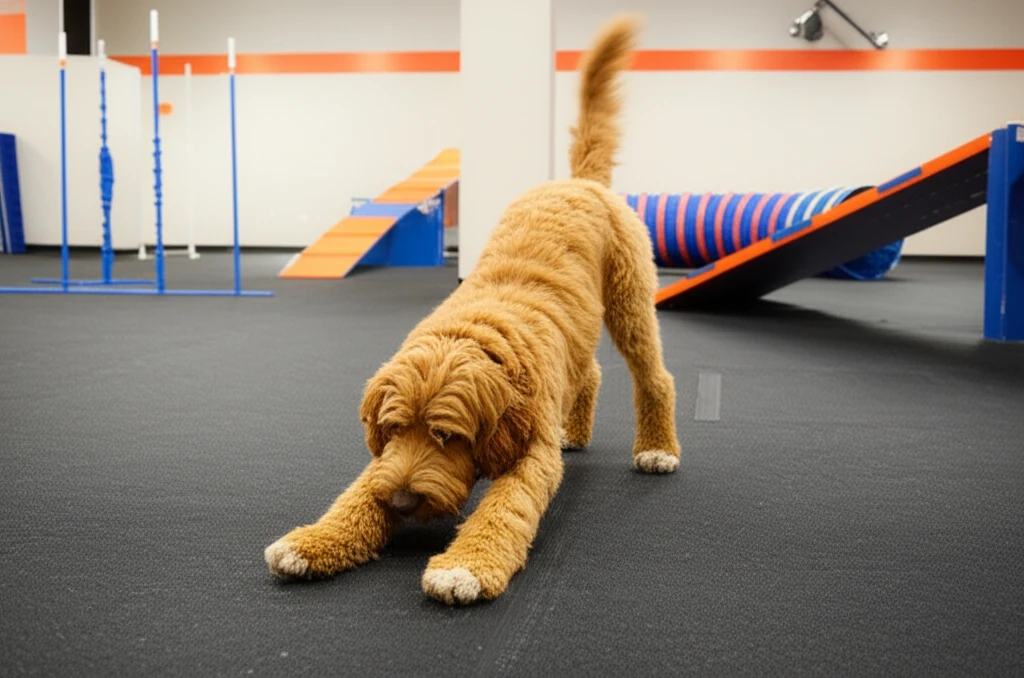
At Zoom Room, our training programs meet your dog where they are. Our trainers work with your Goldendoodle's specific temperament, not a one-size-fits-all breed protocol. Group classes provide the socialization that every Goldendoodle needs, and our indoor environment keeps the variables manageable while your dog builds skills. Find a Zoom Room near you and start training the specific Goldendoodle you actually have.
Frequently Asked Questions
Are Goldendoodles easy to train?
Most Goldendoodles are highly trainable because they inherit intelligence from both parent breeds and are generally motivated by food, praise, or play. The ease of training depends on which parent's temperament dominates. A Goldendoodle with strong Golden Retriever traits will be eager to please and forgiving of training mistakes. One with stronger Poodle traits may be quicker to learn but also more sensitive to handling and more independent in their thinking. Either way, positive reinforcement with clear, consistent expectations produces excellent results. The most common training challenge is not learning ability but impulse control, especially leash pulling and jumping.
Why does my Goldendoodle pull so hard on the leash?
Leash pulling is the most common Goldendoodle training complaint, and it comes directly from the breed cross. Golden Retrievers are naturally forward-moving, enthusiastic dogs, and Poodles have the energy and athleticism to sustain that pulling. Combined in a 50-to-75-pound dog, the result is a walk that feels more like a sled ride. Use a front-clip harness to reduce pulling mechanically, reward your dog for walking beside you, and stop moving every time the leash goes tight. Every family member needs to follow the same protocol. Inconsistency is the biggest reason leash pulling persists.
Do Goldendoodles need a lot of socialization?
Yes, and arguably more than either parent breed alone. Because Goldendoodles are a cross, their social temperament is less predictable. Some are naturally confident and outgoing, while others inherit Poodle-side caution and can develop wariness without adequate exposure. Early socialization with a wide variety of people, dogs, environments, and experiences is critical for building a well-adjusted adult. Group training classes in a controlled environment provide excellent ongoing socialization. Start early, keep it positive, and continue social experiences throughout your Goldendoodle's first two years.
Ready to Get Started?
Zoom Room's trainers work with your Goldendoodle's individual temperament, not a generic breed template. Find a location near you and get started with a training approach that fits the specific dog you have.
Find a Zoom Room