
How to Train a Havanese
The Havanese wants to be wherever you are, always. That devotion is the breed's greatest quality and its biggest training challenge, because a dog who cannot tolerate being away from you is a dog whose world falls apart every time you leave the room.
The Velcro Dog Problem
Havanese were bred as companion dogs for Cuban aristocracy. Their entire purpose, for centuries, was to be near their person. That history produced a breed with an intense attachment style that, without early training, can develop into full-blown separation anxiety. If your Havanese follows you from room to room, panics when you pick up your keys, or destroys things when left alone, you are seeing a breed predisposition playing out in a modern context.
The work starts before there is a problem. From the first week in your home, practice brief separations. Step behind a baby gate for thirty seconds, then return calmly. Build the duration gradually. The goal is teaching your Havanese that your departure is boring and your return is no big deal. Avoid dramatic goodbyes and excited reunions, both of which amplify the emotional weight of the separation.
Crate training, when done properly with positive reinforcement, gives your Havanese a safe, defined space that becomes associated with calm rather than isolation. A crate is not a punishment. It is a den. Many Havanese who struggle with being left alone in a whole house do fine in a well-introduced crate with a stuffed Kong.
Training a Havanese: What Works
Here is the good news: Havanese are remarkably responsive to training when you understand what motivates them. For most Havanese, the primary reinforcer is you. Your attention, your praise, your engagement. Treats help, but the real reward is being part of something you are doing together.
This makes Havanese excellent candidates for trick training and complex behavior chains. They enjoy the learning process itself, and they will repeat behaviors that produce an enthusiastic response from you. Short, upbeat training sessions with lots of interaction work far better than long, formal drills. A Havanese who senses you are having fun will work harder than one who senses you are going through the motions.
Clicker training pairs well with the Havanese learning style. The marker gives them clear information about exactly which behavior earned the reward, and Havanese tend to experiment with new behaviors when they understand the game. This makes shaping, where you reward successive approximations of a target behavior, both effective and genuinely entertaining with this breed.
One caution: Havanese are sensitive to tone. They will shut down if training sessions become tense or frustrated. If you feel yourself getting impatient, end the session on a positive note and come back later. A Havanese who associates training with stress will start avoiding it.
Socialization: Building Confidence, Not Just Friendliness
Havanese are generally friendly dogs, but friendliness and confidence are not the same thing. A Havanese who has not been adequately socialized can become timid, nervous, or clingy in new environments. The breed's attachment to their owner can become a crutch: they are fine as long as you are right there, but fall apart when asked to navigate something unfamiliar independently.
Structured socialization for a Havanese should focus on building independence alongside exposure. That means letting your Havanese explore new surfaces, sounds, and social situations with your support but without your constant physical contact. Practice having other people handle and reward your Havanese. Let them interact with unfamiliar dogs in controlled settings where the experience stays positive.
Watch for signs of fear-based behavior developing. A Havanese who hides behind your legs at every new experience is not being cute. They are telling you their confidence needs work. The earlier you address timidity with systematic positive exposure, the easier it is to build a dog who can handle the world with composure.
Potty Training the Havanese
Havanese have a reputation for being difficult to potty train, and there is some truth to it. Small breeds have small bladders and faster metabolisms, which means they need to go out more frequently than larger dogs. Add the Havanese dislike of cold or wet weather, and you have a dog who may decide that the bathroom rug is a perfectly reasonable indoor alternative.
Consistency is everything. Take your Havanese out on a regular schedule, reward immediately when they go outside, and manage their indoor access so accidents do not become habits. If your Havanese is avoiding going outside in bad weather, consider a covered outdoor area or teach them to use an indoor grass patch as a backup. Avoid scolding for accidents. Your Havanese will not connect the punishment to the behavior. They will connect it to you, and that damages the trust that makes this breed so trainable.
Beyond Basics: What Havanese Excel At
Do not let the small size fool you. Havanese are surprisingly athletic and capable of far more than sitting in a lap. They are natural candidates for therapy dog work because of their gentle temperament and responsiveness to human emotion. Many Havanese earn therapy dog certification and do meaningful work in hospitals, schools, and care facilities.
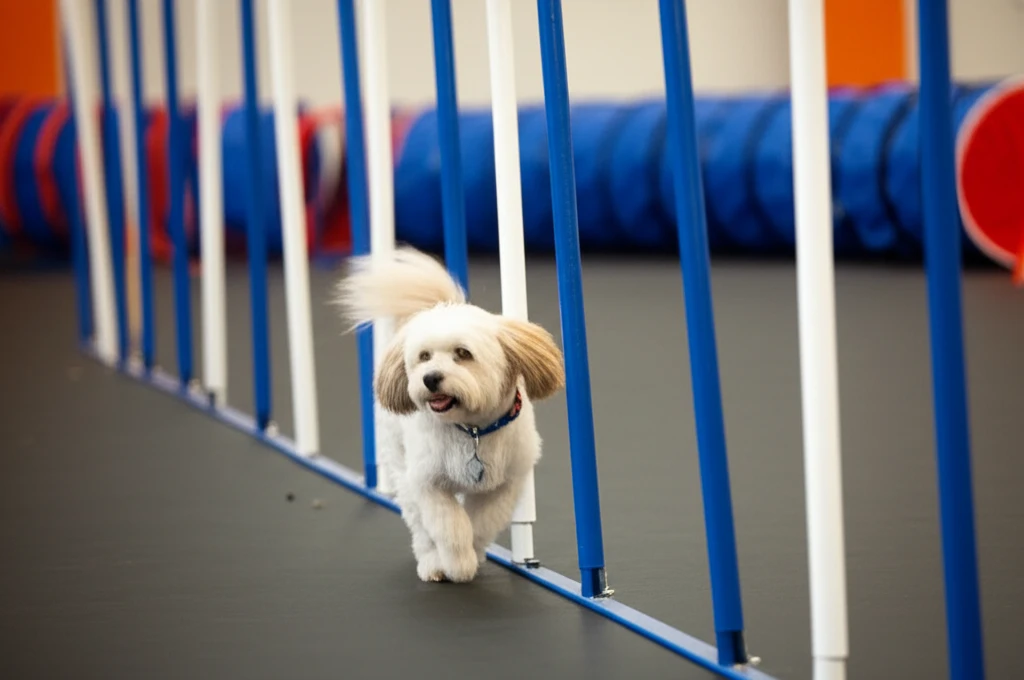
Agility is another area where Havanese often surprise their owners. They are quick, agile, and enjoy the mental challenge of navigating a course. The combination of physical activity and teamwork in agility satisfies the Havanese need to do things with you, which makes it one of the most effective activities for this breed.
Working toward a Canine Good Citizen certification gives your Havanese training structure and a concrete goal. The CGC test covers exactly the real-world skills that matter: greeting strangers politely, walking on a loose leash, and staying calm in distracting environments. For a breed that thrives on partnership, having a shared project strengthens your bond and builds your dog's confidence. Find a Zoom Room near you to start training with a breed that genuinely wants to learn.
Frequently Asked Questions
How do I prevent separation anxiety in my Havanese?
Start practicing brief separations from day one, before anxiety has a chance to develop. Use a baby gate or closed door to create short, low-stress separations while you are still home. Start with seconds and gradually build to minutes. Pair departures with a high-value chew or stuffed Kong so your absence predicts something good. Avoid making arrivals and departures emotionally charged. Crate training gives your Havanese a secure space that becomes associated with calm. If anxiety is already established, work with a trainer to build a structured desensitization plan rather than simply leaving your dog to cry it out.
Are Havanese easy to train?
Yes, Havanese are among the more trainable small breeds because they are genuinely motivated by their relationship with you. They learn quickly with positive reinforcement, enjoy trick training, and thrive on the interaction that training provides. The main challenge is their sensitivity. Havanese will shut down if they sense frustration or tension, so keeping sessions short, positive, and fun is essential. They also need proactive work on independence and separation tolerance, which is a different kind of training than teaching cues but equally important for this breed.
Do Havanese get along with other dogs?
Havanese are generally friendly with other dogs when properly socialized. Their temperament tends toward playful and non-confrontational, which makes them good candidates for group classes and social settings. The main thing to watch is that their small size can make them vulnerable in play with much larger dogs, so manage play group composition accordingly. Some Havanese develop a preference for human company over canine company, which is fine but should not become a reason to skip socialization entirely. Regular positive exposure to other dogs helps maintain social skills throughout their life.
Ready to Get Started?
Zoom Room's group classes, agility courses, and therapy dog prep are ideal for the Havanese who wants to do everything with you. Train alongside your dog in a clean, indoor gym with professional guidance.
Find a Zoom Room