
Husky Recall Training: Building a Come Cue for the Breed That Was Born to Run
You call your Husky. Your Husky glances back, considers the offer, and keeps running. This is not a training failure. It is a breed doing exactly what hundreds of years of selective breeding optimized it to do.
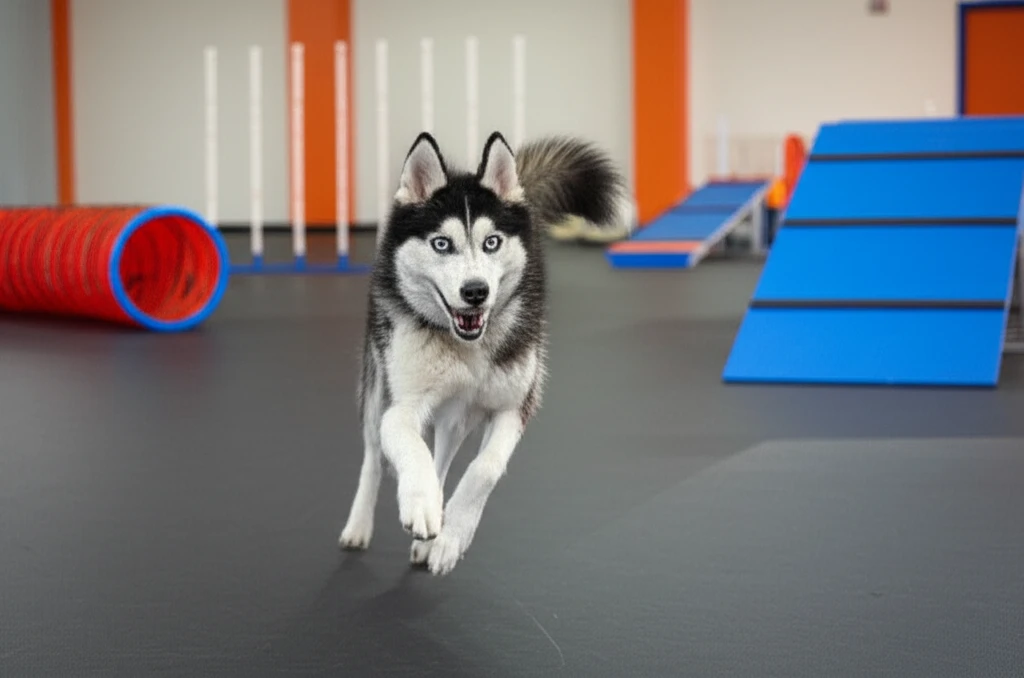
Why Recall Is the Hardest Cue for a Husky
Most breeds were developed to stay close to a handler. Siberian Huskies were developed to do the opposite. Sled dogs run miles ahead of the musher, making independent navigation decisions in real time. Layer on top of that a strong prey drive, extraordinary endurance, and an escape-artist skill set, and you have a dog who is genetically wired to move away from you, fast, and not look back.
Standard recall training advice assumes your dog has some baseline desire to stay near you. With a Husky, you are building that desire from scratch. The good news: it is entirely possible. The honest news: your Husky will probably never have the effortless off-leash recall of a Labrador Retriever. But you can build a recall that is reliable in controlled settings and genuinely lifesaving in emergencies.
What Works for Huskies Specifically
Forget treats alone. Huskies are often food-motivated, but not food-obsessed, and a squirrel in motion will outrank any treat in your pocket. You need to become more interesting than the environment, and that means using movement, play, and unpredictability as your recall rewards.
Run the other direction. When you call your Husky, turn and sprint away from them. Huskies are chase-driven. A person running away triggers pursuit instinct far more reliably than a person standing still waving a treat. When they catch you, throw a party.
Build an emergency recall that is separate from your everyday cue. Pick a unique word or whistle you never use in any other context. Pair it exclusively with the highest-value reward your dog knows, whether that is a chunk of roast chicken, a game of tug, or a chance to chase you. Practice it only a few times per week so it never becomes background noise. This is your break-glass cue.
Use a long line, not trust. A 30-foot long line gives your Husky a feeling of freedom while keeping you connected. Practice recall on the long line in gradually more distracting environments. Do not graduate to true off-leash work until your Husky is responding reliably with the line dragging, and even then, only in fully fenced areas.
Never poison the cue. If you call your Husky and then do something they find unpleasant, such as ending a play session, putting on a leash, or going inside, you are teaching them that coming to you ends the fun. Go get your Husky for those moments instead of calling them.
The Socialization Connection
A Husky who is well-socialized in structured environments learns something critical: checking in with you is part of the fun, not the end of it. In a group training class, your Husky practices recall around the exact kind of distractions that cause failures in the real world, including other dogs, new smells, and exciting movement, but in a safe, enclosed space where the stakes are low.
Regular socialization also helps your Husky develop better impulse control around triggers. A Husky who has positive, structured experiences with other dogs is less likely to bolt toward every dog they see on a walk. That reduced reactivity makes your recall cue more likely to land, because you are not competing against a full-body adrenaline response.
If your Husky is also struggling with focus around other dogs, structured socialization addresses the root cause while recall training addresses the symptom. You need both. Beagle owners face a similar recall challenge driven by scent rather than prey drive, and the socialization strategy is just as important for them.
Frequently Asked Questions
Can a Husky ever be trusted off-leash?
In fully fenced areas where you have practiced extensively, many Huskies can develop reliable recall. In unfenced, uncontrolled environments, the honest answer for most Huskies is no. Their prey drive and running endurance create a risk that training alone cannot fully eliminate. Long lines and secure fencing are your best tools for giving your Husky freedom safely. Focus on building the strongest possible recall for emergency situations rather than aiming for casual off-leash walking.
Why does my Husky come when called at home but ignore me outside?
Indoors, you are the most interesting thing in the room. Outdoors, you are competing against squirrels, scents, other dogs, and wide-open space, which is everything a Husky was bred to pursue. This gap is normal and does not mean your training is broken. Bridge it gradually by practicing recall in increasingly distracting environments while keeping your Husky on a long line. Build the difficulty slowly and always reward generously when your Husky chooses you over the environment.
Build a Recall That Could Save Your Husky's Life
Zoom Room's indoor training environment lets you practice recall around real distractions without the risk of your Husky disappearing over the horizon. Work with a trainer who understands what makes this breed tick.
Find a Zoom Room