
How to Stop Your Labrador from Jumping: Training Calm Greetings for the Friendliest Breed Alive
Your Lab sees a person and launches. Paws on chest, face licking, tail going so hard their entire back half wags. They are not being bad. They are being a Lab, and that is the problem. At 65-plus pounds, this level of enthusiasm can knock people down, scare children, and make visitors dread your front door.
Why Jumping Is the Number One Lab Complaint
Labrador Retrievers were bred to work in close physical partnership with people. Retrieving birds from water, delivering game to hand, working side by side in the field: the breed was developed for maximum human orientation and enthusiasm for interaction. That is why Labs top the popularity charts decade after decade. It is also why they throw their entire body at every person who walks through the door.
Three breed traits converge to make jumping a bigger problem in Labs than in most breeds. First, they are genuinely, intensely social. A Lab's desire to greet people is not casual. It is a deep-seated drive. Second, they mature slowly. A Lab's brain is still puppy-level impulsive well past their first birthday, sometimes past their second. Third, they are big enough to do real damage. A jumping French Bulldog is a minor inconvenience. A jumping Lab is a liability.
The reason this behavior persists is almost always accidental reinforcement. When your Lab jumps and the person pets them, talks to them, or even pushes them down while making eye contact, jumping worked. The dog got what they wanted: attention and physical contact. Every reinforced jump makes the next one more likely, and Labs learn fast.
What Works for Labs Specifically
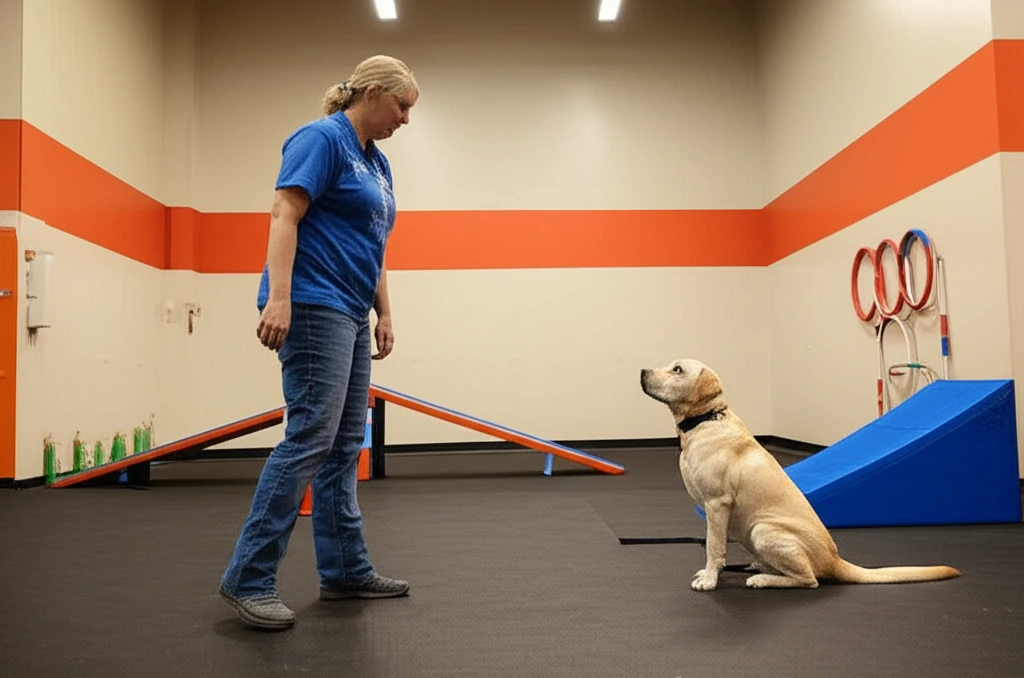
Teach an incompatible behavior, not just "don't jump." Labs need something to do with their greeting energy. A dog cannot jump and sit at the same time, so a rock-solid sit-to-greet becomes your replacement behavior. But here is the Lab-specific nuance: do not just train a sit. Train a sit that is more rewarding than jumping. That means the sit must reliably produce the thing your Lab wants most, which is human attention and physical contact.
The protocol: When your Lab sits, the person immediately engages: petting, talking, all the social reward your dog craves. The instant paws leave the floor, the person turns away and goes silent. No eye contact, no talking, no pushing. Attention vanishes. When the sit returns, attention returns. Labs are smart enough to connect these dots within a few repetitions if every person in the household is consistent.
Manage the environment. Keep your Lab on leash when guests arrive. Station them on a mat or behind a baby gate until the initial excitement fades. Give them a high-value chew to redirect that oral energy. These management tools prevent your Lab from practicing jumping while you build the replacement behavior. Impulse control exercises, including wait at doors, leave-it, and settle on a mat, build the general self-regulation skills that support calm greetings.
Exercise before social situations. A Lab who has had a good training session, a game of fetch, or a swim before guests arrive has significantly less explosive energy to launch with. This does not solve the problem, but it makes the training dramatically easier to execute.
Get everyone on the same page. The biggest challenge with Lab jumping is inconsistency from humans. If one family member allows jumping and another does not, your Lab will keep trying because it works sometimes. Jumping that is reinforced on an intermittent schedule is actually harder to extinguish than jumping that is reinforced every time. Boxer owners face the same consistency challenge with a similarly exuberant breed.
The Socialization Connection
Labs do not typically need socialization in the traditional sense of learning to be comfortable around people and dogs. They are already comfortable, almost too comfortable. What they need is socialization that teaches them how to be polite in their enthusiasm.
Group training classes are the ideal environment for this because your Lab practices greeting people and being around other dogs with structure and rules in place. They learn that calm behavior earns interaction, and that losing composure means the fun pauses. Over time, your Lab generalizes this pattern: social settings have a protocol, and the protocol involves keeping four paws on the floor.
The full Labrador Retriever training guide covers the broader picture, including exercise needs, mouthiness, and the slow maturation timeline that affects every aspect of Lab training. For greeting manners across all breeds, that guide breaks down the underlying training mechanics in more detail.
Frequently Asked Questions
At what age do Labs stop jumping?
Without training, many Labs continue jumping well into adulthood. Labs mature more slowly than most breeds, and some do not hit full behavioral maturity until age two or three. Waiting for them to grow out of it is not a strategy. Every jump that earns attention reinforces the behavior, so a three-year-old Lab who has been jumping successfully for years has a deeply ingrained habit. The good news is that Labs are highly trainable and food-motivated, so a consistent sit-to-greet protocol can produce visible results within a few weeks.
Should I use a knee to stop my Lab from jumping?
No. Kneeing a jumping dog is an outdated technique that can injure your dog and does not address the motivation behind the behavior. Your Lab is jumping because they want social contact. Physical corrections teach them that greeting people is unpredictable and sometimes painful, which can create anxiety around new people. Instead, remove the reward that drives the jumping: turn away, withdraw attention, and wait for four paws on the floor. Then give your Lab the attention they want. This teaches them that calm behavior is the key to getting what they are after.
Teach Your Lab That Calm Gets the Party Started
Zoom Room's group classes give your Labrador exactly what they need: structured social interaction with people and dogs, where the rules of polite greeting are practiced consistently. Your Lab learns that four on the floor is the fastest path to attention.
Find a Zoom Room