
Belgian Malinois Impulse Control: Training a High-Drive Dog to Settle
Your Belgian Malinois does not have an off switch. They are pacing the house, fixating on every sound, vibrating with energy even after a five-mile run, and you are beginning to wonder if you adopted a dog or a furry missile. You did not get the wrong dog. You got a dog who needs a very specific kind of training.
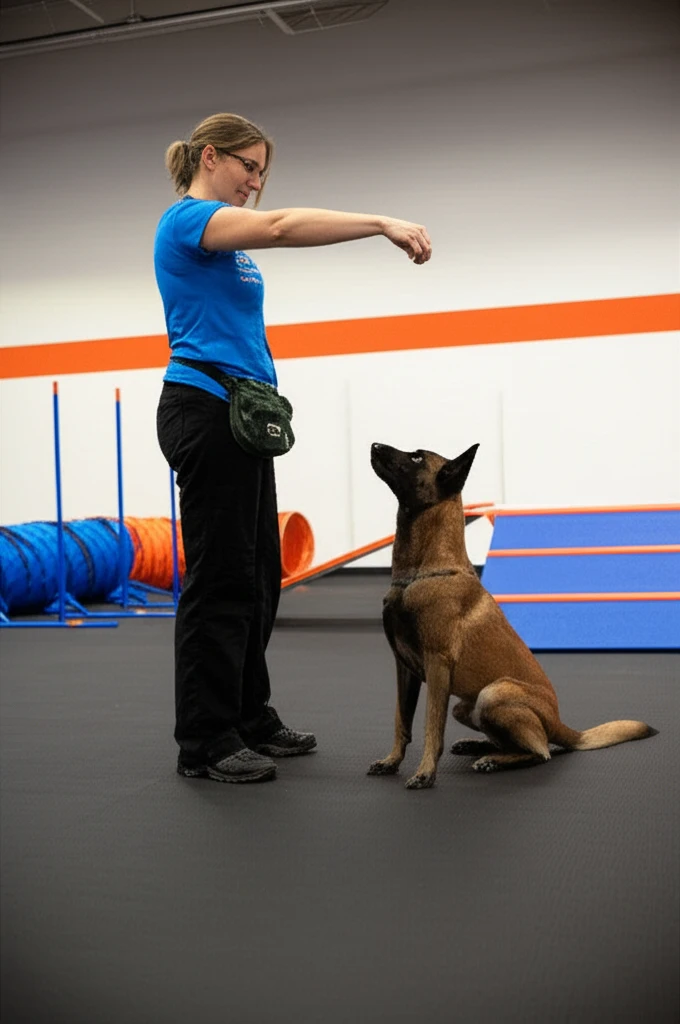
Why Impulse Control Shows Up Differently in Belgian Malinois
Belgian Malinois were bred for work that demands instant reactivity: chasing suspects, detecting explosives, responding to handler cues in milliseconds. That hair-trigger responsiveness is not a bug. It is the breed's defining feature. But in a household context, that same wiring produces a dog who cannot settle on the couch, who launches at the window every time a leaf blows past, and who seems to exist at a permanent intensity level of nine out of ten.
The Malinois is different from other high-energy breeds in an important way. A Lab who lacks impulse control is annoying. A Malinois who lacks impulse control is destructive, relentless, and sometimes dangerous — not because they are aggressive, but because they have the physical speed and drive to act on every impulse before you can intervene. A Malinois who decides to chase something is already gone. A Malinois who fixates on a trigger is nearly impossible to redirect without training.
The number one mistake Malinois owners make is trying to exercise the energy away. You will not out-run this breed. A Malinois who gets two hours of physical exercise per day does not become calm. They become a fitter, faster dog who needs three hours tomorrow. What actually produces a calm Malinois is structured mental work and explicit training in the skill of doing nothing. For broader context on how impulse control works across all breeds, see our impulse control training guide.
What Works for Belgian Malinois Specifically
Teach an explicit "off" cue. Most dogs learn to settle organically. Malinois do not. You need to actively train a down-stay on a mat with the same rigor you would train any other skill. Start with one second of calm on the mat, mark it, reward it. Build to five seconds. Then fifteen. Then a minute. Then five minutes. This is tedious, and that is why most Malinois owners skip it. But a Malinois who can hold a 20-minute down-stay on a mat is a different dog than one who has never been taught to be still. Make the mat a high-value location by feeding meals on it and giving long-lasting chews there. The mat becomes the off-switch you currently lack.
Use their drive as a reward, not a problem. The Malinois drive to chase, bite, and work is not something to eliminate. It is your most powerful training currency. A game of tug, a thrown ball, or a short chase sequence can be worth more than any treat to a Malinois. Use that. Ask for impulse control — a sit, a wait, eye contact — and then release into the drive activity as the reward. This teaches your dog that self-control is the gateway to the thing they want most. Over time, the pause before the action becomes automatic.
Structure every transition. Malinois struggle most during state changes: waking up, coming inside, the doorbell, someone picking up a leash. These are the moments where impulse control breaks down because arousal spikes. Build a protocol for each transition: sit before the leash goes on, wait at the door, settle on the mat when guests arrive. Every transition that has a rule becomes predictable, and predictability calms a Malinois brain.
Border Collies share a similar high-drive impulse control challenge — our Border Collie impulse control guide covers how the same principles apply to another intense working breed.
The Socialization Connection
A Malinois with poor impulse control in a social setting is a liability. They fixate on other dogs, they strain at the leash, they escalate from zero to sixty in a heartbeat. Socialization does not just teach your Malinois to be friendly. It teaches them to regulate their arousal around exciting stimuli, which is the exact skill they are missing.
Structured group classes are essential for this breed because they provide what unstructured social time cannot: controlled intensity with clear rules. Your Malinois practices being around other dogs and people while maintaining focus on you. They learn that the environment is full of interesting things and that their job is to check in with their handler, not to react to everything. This is a fundamentally different skill than what they learn at a dog park, where there are no rules and the reward for impulsive behavior is instant access to play.
For Malinois owners considering off-leash reliability, impulse control is the prerequisite, not recall. A Malinois with a great recall but no impulse control will come when called — eventually, after they have finished chasing the thing. A Malinois with strong impulse control will check in with you before chasing the thing in the first place. Train the impulse control first, and the off-leash reliability follows. See our full Belgian Malinois training guide for the breed's broader training roadmap.
Find a Zoom Room near you where trainers understand high-drive breeds and can help you build the structure your Malinois needs.
Frequently Asked Questions
Is a Belgian Malinois right for a first-time dog owner?
In most cases, no. Malinois require a level of training commitment, mental stimulation, and management that goes significantly beyond what most first-time owners expect. This is a breed that was developed for professional working roles and needs a job to be happy. Without structured training and adequate outlets for their drive, Malinois frequently develop destructive behaviors, anxiety, and reactivity. If you already have a Malinois and feel overwhelmed, professional training support is not optional — it is essential. A good trainer can help you build the structure your dog needs.
How much exercise does a Belgian Malinois actually need?
The question is misleading because physical exercise alone will not produce a calm Malinois. What this breed needs is a combination of moderate physical exercise (45 to 60 minutes of walking, running, or play) plus substantial mental work (training sessions, puzzle feeders, nose work, or structured activities like agility). A Malinois who gets an hour of physical exercise and 30 minutes of mental work per day will be calmer than one who gets three hours of running and no mental stimulation. Focus on the brain, not just the body.
Give Your Malinois a Job
Zoom Room offers agility, obedience, and socialization classes that give high-drive breeds the mental and physical challenge they need. Our indoor gym is built for dogs who need to work, with trainers who know how to channel intensity into focus.
Find a Zoom Room