
How to Train a Maltese
The Maltese has spent centuries perfecting the art of getting their way. That's not a character flaw — it's a breed that was literally developed to be a companion, and companions who are charming, persistent, and good at reading human emotions tend to get what they want. Training a Maltese means being the first person in the household who doesn't fold.
Potty Training: The Breed's Biggest Challenge
Let's address this directly: Maltese are one of the most difficult breeds to housebreak. This is the most common complaint from Maltese owners, and it persists well beyond the puppy phase if it's not handled correctly from the start. A Maltese who is unreliable about house training at six months will still be unreliable at two years without a structured intervention.
Several factors work against you. Maltese are tiny, which means their bladders are tiny, and they need to go out more frequently than larger breeds. Their small accidents are easy to miss — a puddle behind the couch might not be discovered for hours, meaning the dog self-rewards for indoor elimination without consequence. And Maltese dislike going outside in cold, wet, or windy weather, making the outdoor option less appealing than finding a quiet indoor spot.
The fix requires structure and patience. Take your Maltese outside on a consistent schedule — after every meal, every nap, every play session, and before bed. That might mean eight to ten trips outside per day for a puppy. Reward outdoor elimination immediately and enthusiastically. Supervise closely indoors and confine to a small, clean space when you can't watch directly. Clean every indoor accident with an enzymatic cleaner, because a Maltese who can smell a previous spot will use it again.
Consistency above all else. The owners who succeed with Maltese housebreaking are the ones who commit to the schedule without exception for the first several months.
Separation Anxiety: The Companion Breed Trap
Maltese were bred for one job: being with their person. That's it. No herding, no hunting, no guarding — just companionship. The result is a breed with an exceptionally strong attachment to their owner and a correspondingly low tolerance for being alone. Separation anxiety is one of the most common behavioral issues in Maltese, and it often develops because the very bond that makes the breed so appealing is never given healthy boundaries.
The pattern starts innocently. Your Maltese follows you room to room, sits on your lap whenever you're still, sleeps pressed against you. None of this feels problematic — until you leave the house and come back to a dog who has been barking for three hours, has torn up the crate bedding, and has eliminated on the floor despite being reliable when you're home. That's not a housebreaking issue. That's a dog in genuine distress because their entire world walked out the door.
Prevention means building independence from day one. Practice brief separations while you're home — close a door between you for thirty seconds, return without fanfare. Give your Maltese a food puzzle in another room while you're in the kitchen. Resist the urge to carry your dog everywhere; let them walk on their own feet and build the confidence that comes from navigating the world independently. If your Maltese is already showing separation distress, start a systematic desensitization protocol: leave for durations so short they don't trigger anxiety, and gradually build from there.
Small Dog Syndrome Is an Owner Problem
A Maltese who growls at strangers, snaps when picked up by anyone but their owner, and guards their food bowl isn't displaying "small dog syndrome." They're displaying the result of an owner who never set behavioral expectations because the dog was small enough to manage physically.
The logic goes like this: a growling Maltese is easier to scoop up than to train. A barking Maltese can be silenced with a treat from the table. A Maltese who snaps at a guest is simply removed from the room. None of these responses addresses the behavior. All of them teach the dog that the behavior works. Over time, the behaviors intensify because they've been consistently rewarded.
Your Maltese needs the same behavioral expectations as a German Shepherd. Growling at guests isn't acceptable just because the dog weighs seven pounds. Resource guarding needs the same early intervention it would get in a large breed. The only difference is that the consequences of ignoring these behaviors in a Maltese are less physically dangerous — but a small dog who bites still bites, and a dog who lives in constant reactivity is a stressed, unhappy dog regardless of their size.
Socialization is the single most effective preventive measure. A Maltese who has been exposed to a wide variety of people, dogs, environments, and experiences during their critical development period grows into a confident adult who doesn't need to bark, growl, or guard because they've learned that the world isn't threatening. Let your Maltese walk on their own feet, interact with appropriate dogs at ground level, and experience new things without being scooped up at the first sign of uncertainty.
Training a Dog Who Reads You Better Than You Read Them
Maltese are remarkably perceptive about human emotion. They know when you're pleased, when you're frustrated, and when you're about to give in. That emotional intelligence is part of what makes them such effective companion dogs — and such effective manipulators. A Maltese who has learned that looking pathetic produces treats and that refusing to walk results in being carried has trained their owner without the owner realizing it.
Effective training means being warm but consistent. Use positive reinforcement generously — treats, praise, gentle play. Keep sessions to five minutes of focused work rather than fifteen minutes of a Maltese ignoring you. Use rewards your Maltese genuinely cares about. Many Maltese are less food-motivated than other breeds. For some the motivator is a specific treat. For others it's a favorite toy. For many, genuine social attention — eye contact, a warm voice, a moment of connection — is the most powerful reward available.
Avoid repeating cues. If you say "sit" four times before your Maltese responds, you've taught them that "sit" means "eventually sit after the fourth ask." Give the cue once, wait, and if nothing happens, help them into position or try again in a different context. Maltese are smart enough to learn quickly and smart enough to figure out which cues they can safely ignore.
The Maltese Who Gets Real Training
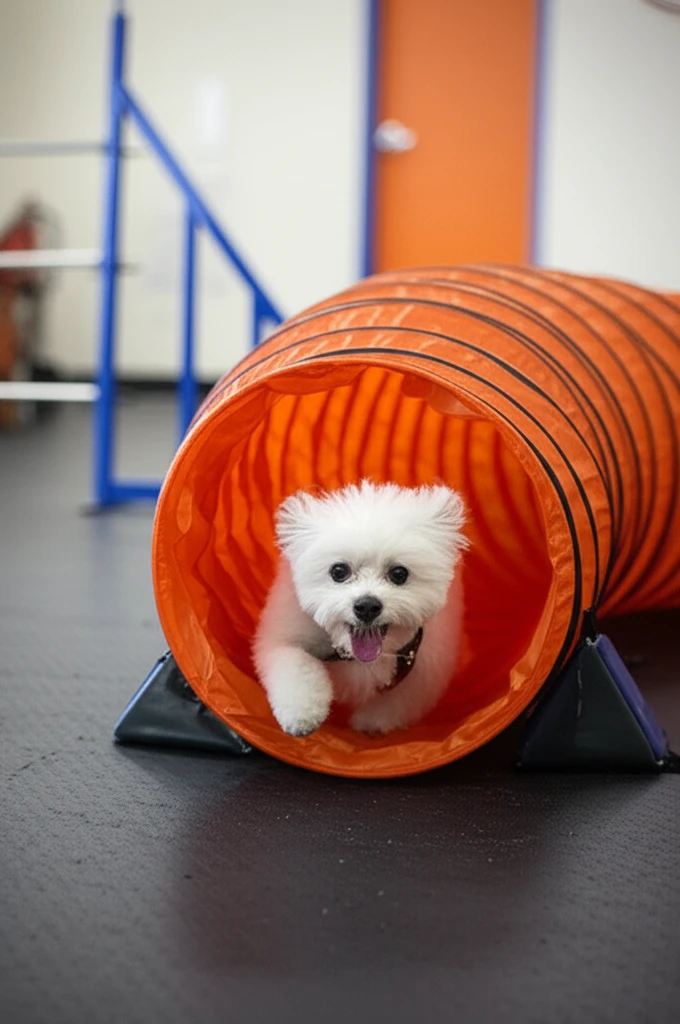
A Maltese with genuine training and proper socialization is a different animal from the stereotypical yappy lapdog — poised, confident, adaptable, and surprisingly capable. Maltese can earn obedience titles, enjoy agility courses scaled for small dogs, and handle therapy dog visits with calm composure. The breed has the intelligence and temperament for all of it. They just need an owner who sees past the size.
Structured socialization programs are particularly valuable for Maltese because they counteract the isolation that small dogs often experience. A Maltese who only interacts with their owner and the immediate household lacks the social skills to handle the wider world. Group classes put your Maltese on the ground with other dogs, practicing the skills they need to be comfortable in any situation — not carried through it.
The investment pays dividends throughout your Maltese's life. A well-trained Maltese is a dog you can take to outdoor dining, to friends' homes, on trips — anywhere — without worrying about barking, snapping, or meltdowns. That's the dog your Maltese can be. It takes an owner willing to treat them like a real dog.
Find a Zoom Room near you and start building the foundation your Maltese needs. Our positive reinforcement classes welcome every size, and our trainers understand the specific challenges — and genuine potential — of companion breeds.
Frequently Asked Questions
Why is my Maltese so hard to potty train?
Maltese are consistently ranked among the most difficult breeds to housebreak, and several factors contribute. Their tiny bladders require more frequent trips outside than larger breeds. Their small accidents are easy to miss indoors, allowing the habit to self-reinforce. And many Maltese dislike going outside in unpleasant weather, making indoor elimination the path of least resistance. Success requires a rigid schedule of frequent outdoor trips, immediate and enthusiastic reward for outdoor elimination, close indoor supervision, confinement when unsupervised, and enzymatic cleaning of every indoor accident. The owners who succeed are the ones who maintain the schedule without exception for the first several months.
How do I stop my Maltese from barking at everything?
Excessive barking in Maltese usually stems from under-socialization, anxiety, or learned behavior that has been inadvertently rewarded. Start by identifying what triggers the barking. If it's strangers or other dogs, the underlying issue is likely insufficient socialization, and the solution is gradual, positive exposure to the triggers at a distance your dog can handle. If it's attention-seeking, make sure barking never produces the result your Maltese wants — no treats, no picking up, no verbal response. Instead, reward quiet behavior proactively. If the barking is connected to separation or anxiety, address the underlying emotional state rather than the symptom.
Do Maltese get along with other dogs?
Maltese who have been properly socialized generally get along well with other dogs. The problems arise when a Maltese has been sheltered from normal dog-to-dog interactions — carried past other dogs, picked up at the first sign of tension, or only socialized with dogs in the household. These Maltese often react to unfamiliar dogs with barking, lunging, or snapping, not because they're aggressive but because they never learned appropriate social skills. Group socialization classes are the most effective way to build these skills. Your Maltese practices interacting with other dogs at ground level, in a supervised setting where the intensity is controlled and positive experiences are ensured.
Ready to Get Started?
Zoom Room's positive reinforcement classes are designed for dogs of every size — and our trainers understand the specific challenges that companion breeds like the Maltese bring to the table. Find a location near you.
Find a Zoom Room