
How to Train a Newfoundland
Newfoundlands have a reputation as the gentle giants of the dog world, and that reputation is mostly earned. But gentle does not mean trained, and a 150-pound dog with no manners is a problem regardless of how sweet their temperament is. The work you put in while your Newfie is still a manageable puppy defines the next decade of life together.
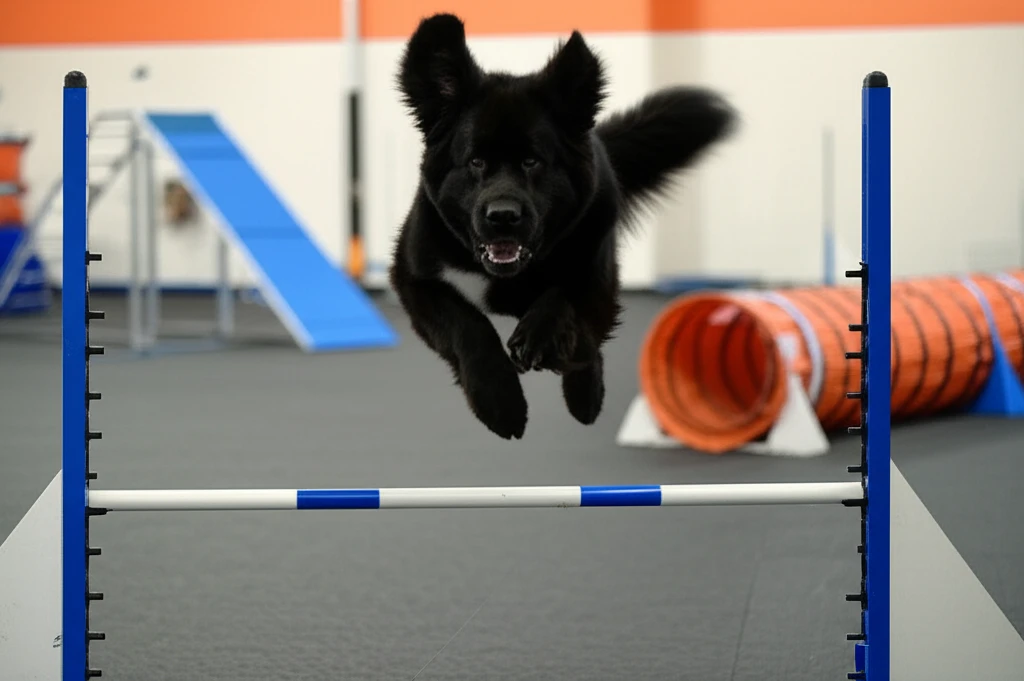
Size Management Starts Now
A Newfoundland puppy gains weight at a pace that changes the training equation every month. At eight weeks, your puppy is a manageable ball of fur. By six months, they may weigh 60 to 80 pounds. By a year, they are approaching or exceeding 100 pounds. Every behavior you think is manageable now becomes a physics problem later, and the transition happens faster than most owners expect.
Jumping is the most urgent priority. Newfoundlands are affectionate dogs who want to be close to your face, and jumping is the fastest route there. A 20-pound puppy jumping gets laughs. A 130-pound adolescent jumping knocks people down, frightens visitors, and becomes a genuine liability. Teach a default sit for every greeting from day one. Every person who interacts with your Newfie follows the same rule: ignore the jump, reward four feet on the floor. This is not a preference for giant breeds. It is a safety requirement.
Loose leash walking is the second immediate priority. A Newfoundland pulling on the leash generates enough force to injure your arm, your shoulder, or your back. Use a front-clip harness from puppyhood. Practice the fundamentals consistently: reward walking at your side, stop when the leash goes tight, change direction to keep your dog engaged. The investment you make in leash manners during the first six months saves you years of physical struggle.
Do Not Skip Socialization Because Your Dog Seems Friendly
Newfoundlands are naturally gentle and generally tolerant, and this leads many owners to skip structured socialization on the assumption that their sweet puppy will be fine with everything. That assumption is how you end up with a 150-pound dog who is nervous in new environments, unsure around unfamiliar dogs, or overwhelmed by situations they should have encountered during the critical socialization window.
Even naturally friendly breeds need deliberate exposure to a variety of people, dogs, environments, surfaces, and sounds during the first 16 weeks. Your Newfie puppy should meet people of different ages, sizes, and appearances. They should interact with dogs of various breeds and temperaments in controlled settings. They should walk on different surfaces, hear different sounds, and experience different environments while those experiences are still novel rather than scary.
The distinction with Newfoundlands is that socialization challenges tend to show up as avoidance rather than aggression. A poorly socialized Newfie is more likely to try to hide behind you than to lunge at a stranger. But a fearful dog who weighs 150 pounds and is trying to retreat through a crowd creates problems that a fearful small dog does not. Building confidence early prevents the kind of anxiety-driven behaviors that become extremely difficult to manage in a dog this size.
Training a Soft Temperament
Newfoundlands are sensitive dogs. They read your emotions, respond to your tone, and take corrections much harder than most breeds. A raised voice or frustrated gesture that a terrier might shrug off can shut a Newfoundland down entirely. This sensitivity is part of what makes them such wonderful companions, but it also means your training approach needs to match their temperament.
Positive reinforcement is not just the recommended approach for Newfoundlands. It is the only approach that produces a confident, willing dog. Reward the behaviors you want. Ignore the ones you do not. Set your dog up to succeed by keeping training sessions short, keeping criteria clear, and ending on a positive note. A Newfoundland who enjoys training will work with you eagerly. A Newfoundland who associates training with pressure will simply stop engaging, and a 150-pound dog who decides to opt out is not a dog you can force into participation.
Keep sessions between ten and fifteen minutes. Newfoundlands are not high-drive dogs who can sustain focused work for long periods. They do better with multiple short sessions throughout the day than one extended training marathon. Use a calm, encouraging voice. Celebrate successes warmly but without over-the-top excitement that amps your dog up. The goal is a dog who finds training pleasant and predictable, and that calm positive association is what builds lasting skills.
Drool, Heat, and the Case for Indoor Training
Living with a Newfoundland means living with drool. It is a constant, and no amount of training changes the reality that those loose lips produce slobber after every drink, every meal, and sometimes for no apparent reason at all. Keep towels in every room, in your car, and in your training bag. Wipe your dog's face after drinking to reduce the splatter radius. Accept that some level of drool management is simply part of the deal.
Heat sensitivity is a more serious concern. Newfoundlands carry a thick double coat designed for cold water and harsh winters. In warm weather, they overheat quickly, and an overheated dog cannot learn, cannot focus, and is at genuine medical risk. Training outdoors in summer is not just ineffective for a Newfoundland. It is dangerous. Watch for heavy panting, drooling more than usual, lethargy, or wobbliness, all signs that your dog is too hot to continue.
This makes a climate-controlled indoor training facility genuinely valuable for Newfoundland owners. No canceled sessions because of weather. No cutting training short because your dog is panting and overheated after five minutes. Year-round consistency in a comfortable environment lets your Newfie train at full capacity regardless of what the thermometer says outside. For a breed that already matures slowly and needs sustained, patient training, losing months of progress to weather is a setback you do not need.
Building a Life With Your Gentle Giant
A well-trained Newfoundland is one of the finest companion dogs in existence. They are patient, loyal, gentle with children, calm in the house, and devoted to their family. They are the kind of dog who improves every room they walk into, provided they have been taught how to navigate that room without knocking things over.
Newfoundlands need moderate daily exercise, but their joints need protection during the extended growth period that can last two to three years. Avoid sustained running, jumping from heights, and extensive stair climbing until your veterinarian confirms the growth plates have closed. Focus instead on moderate walks, swimming if you have access, training sessions, and mental enrichment through puzzle feeders and nose work. A tired Newfie brain is more valuable than tired Newfie legs, and low-impact mental exercise is safer for growing joints.
Body handling practice is essential for a dog who will need regular grooming, veterinary care, and nail trims throughout their life. Teach your Newfie puppy to accept having their paws held, ears examined, mouth opened, and body touched everywhere by pairing each handling moment with a high-value treat. A cooperative Newfoundland who is comfortable at the groomer and the vet is dramatically easier to care for than a 150-pound dog who panics during routine procedures. Find a Zoom Room near you and start giving your Newfoundland the structured training foundation that makes life with a gentle giant genuinely enjoyable.
Frequently Asked Questions
Are Newfoundlands easy to train?
Newfoundlands are eager to please and generally responsive to training, which makes them more cooperative than many breeds. The challenge is their size and their slow maturation rate. You need to establish manners while your dog is still physically manageable, and you need to maintain patience through an adolescent period that lasts longer than with smaller breeds. Newfoundlands are also sensitive to harsh corrections, so positive reinforcement is essential. Keep sessions short, rewards high-value, and expectations realistic for a dog who is still developing well past their first birthday.
How much exercise does a Newfoundland need?
Adult Newfoundlands need moderate daily exercise, typically a couple of walks plus some play or training time. They are not high-energy dogs. The critical consideration during growth is joint protection. Puppies and adolescents should avoid high-impact activities like sustained running, jumping, or excessive stairs until growth plates close, which can take two to three years. Swimming is excellent exercise for Newfoundlands because it provides a full-body workout with minimal joint stress. Supplement physical exercise with mental enrichment to keep your Newfie satisfied without overtaxing growing bones.
Are Newfoundlands good with children?
Newfoundlands are widely regarded as one of the best breeds for families with children, and their patience and gentleness with kids is genuinely remarkable. However, their size requires supervision during interactions, especially with small children. A wagging tail, a playful nudge, or an enthusiastic greeting from a 150-pound dog can easily knock a toddler over. Teach your children to interact respectfully with the dog, and teach your Newfoundland calm greeting behaviors around small humans. With proper training and supervision, the Newfoundland-child bond is something special.
Ready to Get Started?
Zoom Room's climate-controlled indoor gym is purpose-built for dogs of every size. Find a location near you and start training your Newfoundland while the puppy window is still open.
Find a Zoom Room