
Pit Bull Reactivity: Addressing Dog Reactivity Without Breed Blame
Your Pit Bull barks and lunges at other dogs on walks, and you already know what people are thinking. The stares. The crossed streets. The assumption that your dog is a ticking time bomb. Here is the truth: reactivity is a behavior, not a breed characteristic, and it responds to the same training that works for every other dog.
Why Reactivity Shows Up Differently in Pit Bulls
It does not. And that is the point. Reactivity in Pit Bulls is caused by the same factors that cause reactivity in Golden Retrievers, Poodles, and Dachshunds: insufficient socialization, negative experiences, leash frustration, or fear. The behavioral mechanics are identical across breeds. What is different is how people respond to it.
When a Lab lunges at another dog, the other owner usually says "oh, someone's excited." When a Pit Bull does the same thing, the other owner calls animal control. This is not an exaggeration. Pit Bull owners face a reality where normal dog behavior gets pathologized because of their dog's appearance. This double standard creates a feedback loop: owners avoid taking their reactive Pit Bull to public places, which reduces socialization opportunities, which makes the reactivity worse.
The American Veterinary Medical Association (AVMA) and the American Veterinary Society of Animal Behavior (AVSAB) have both stated clearly that breed is not a reliable predictor of individual dog behavior, and that breed-specific legislation does not improve public safety. Reactivity is influenced by genetics, early socialization, individual temperament, learning history, and the owner's handling skills. Breed is one factor among many, and it is not the most important one.
If your Pit Bull is reactive, the path forward is the same evidence-based training that works for any reactive dog. You are not dealing with something fundamentally different or more dangerous. You are dealing with a dog who needs help, and that help is available. For a complete overview of reactivity across all breeds, see our dog reactivity guide.
What Works for Pit Bulls Specifically
The training protocol for a reactive Pit Bull is the same as for any reactive dog, with a few practical adjustments that account for the breed's strengths.
Use their food motivation. Most Pit Bulls are highly food-motivated, which is a massive advantage in counter-conditioning work. When your dog notices another dog at a sub-threshold distance, mark the moment and deliver a high-value treat. Chicken, cheese, hot dog — whatever makes your Pit Bull's brain light up. The emotional math you are building is simple: other dog equals incredible food. Over many repetitions, the emotional response to the trigger shifts from anxiety or frustration to anticipation of something good.
Leverage their handler bond. Pit Bulls are deeply people-oriented. They want to check in with you, they want to please you, and they care about your emotional state more than many breeds do. Build a rock-solid "look at me" cue and use it as your primary redirection tool. A Pit Bull who has learned that looking at their owner is the most rewarding behavior in their repertoire will default to that when stressed, instead of fixating on the trigger.
Manage perceptions proactively. This is not about training — it is about reality. Use a brightly colored harness and leash (yellow or orange are commonly used to signal "needs space"). Cross the street before another dog gets close, not because your dog cannot handle it, but because it gives your dog more space to succeed and reduces confrontations with fearful passersby. A front-clip harness gives you mechanical advantage without any aversive pressure.
Cane Corsos face a similar dynamic where breed perception amplifies the urgency of addressing reactivity — our Cane Corso reactivity guide addresses those breed-specific nuances.
The Socialization Connection
The single most impactful thing you can do for a reactive Pit Bull is provide structured socialization opportunities. Not the dog park — that is an uncontrolled environment where one bad interaction can set your dog's progress back weeks. Structured socialization means controlled exposure at the right distance, with the right intensity, guided by a professional who can read your dog's body language.
If your Pit Bull is an adult and missed critical socialization as a puppy, the window is not closed. Adult dogs can absolutely learn new social skills. It takes longer, and the approach is different, but the brain remains plastic throughout a dog's life. Our adult dog socialization guide covers the specific techniques that work for dogs who are starting later.
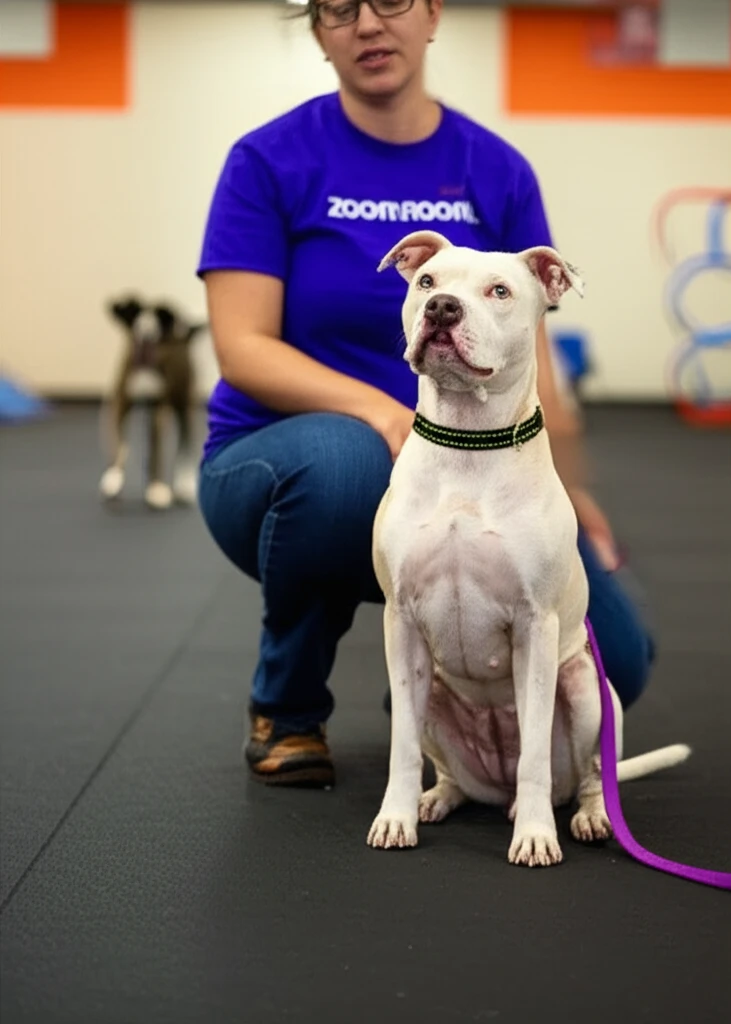
Group classes in a controlled indoor environment are ideal for reactive Pit Bulls. The space is predictable, other dogs are at managed distances, and there are no surprise off-leash dogs charging around a corner. Your dog learns that being around other dogs is boring and safe, which is exactly the emotional state you want. Over time, boring and safe replaces anxious and reactive.
For more on your Pit Bull's overall training needs and temperament, see our full Pit Bull training guide. Find a Zoom Room near you to start working with trainers who see your dog as an individual, not a stereotype.
Frequently Asked Questions
Are Pit Bulls genetically predisposed to dog aggression?
The science does not support this claim. While some Pit Bull-type dogs may have been selectively bred for dog fighting historically, individual behavior is shaped by genetics, early socialization, environment, learning history, and handling. The AVMA has concluded that breed alone is not a reliable predictor of dangerous behavior in individual dogs. Many Pit Bulls live happily in multi-dog households and enjoy dog-to-dog play. Reactivity in any individual dog should be assessed and addressed based on the dog's actual behavior, not their breed label.
My Pit Bull is reactive and I am afraid of being judged at a training class. What should I do?
This is a real concern and you are not alone in feeling it. A good training facility will welcome reactive dogs of every breed and will never make you feel judged for your dog's behavior. Reactivity is one of the most common reasons people seek professional training help, and experienced trainers have seen it all. When you contact a facility, mention that your dog is reactive. A quality program will explain how they manage space and set dogs up for success. You and your dog deserve support, and seeking help is the responsible thing to do.
Your Dog Deserves Better Than a Label
Zoom Room trainers evaluate every dog as an individual. Our structured indoor classes give reactive dogs the controlled environment they need to build confidence, and owners the skills they need to help. No judgment, no breed bias — just results.
Find a Zoom Room