
How to Train a Pomeranian
Pomeranians have a personality that far exceeds their body size. That confidence is one of the breed's best qualities — and the source of most of the behavioral challenges Pom owners face. A five-pound dog who believes they're running the show will let everyone within earshot know about it.
The Barking Problem Is Real
Let's start with the thing every Pomeranian owner deals with: the barking. Pomeranians are one of the most vocal breeds, and the barking isn't random. Your Pom is descended from larger Spitz-type sled dogs, and that heritage comes with a strong alert instinct. Every sound, every movement outside the window, every person approaching your door triggers a response that was originally designed to warn a team of humans about predators. Your Pom doesn't know the threat level has changed. As far as they're concerned, they're doing critical work.
The mistake most owners make is trying to stop the barking by yelling, which your Pom interprets as you barking along with them. Or they pick the dog up, which rewards the barking with attention and physical comfort. Both approaches guarantee more barking.
Effective barking management for Pomeranians means working with the instinct, not against it. Teach an "acknowledge and redirect" protocol: when your Pom barks at a trigger, calmly say "thank you" (acknowledging the alert), then cue a specific behavior like going to a mat or coming to you. Reward the quiet behavior that follows the redirect. Over time, your Pom learns the pattern: bark, get acknowledged, do the redirect, get a treat. The barking becomes shorter and less intense because the sequence moves quickly to the rewarding part. You're not suppressing the instinct — you're giving it a resolution.
Small Dogs Need Real Socialization
This is the message every Pomeranian owner needs to hear: your small dog needs the same socialization as a big dog. Owners skip socialization with Poms because they can simply carry the dog away from anything uncomfortable. But carrying your dog past every trigger doesn't teach coping skills — it teaches your Pom that the world is something to be protected from.
Under-socialized Pomeranians become reactive. They bark at other dogs, snap at unfamiliar hands, tremble in new environments, and refuse to walk in places they haven't been before. These behaviors look like a "mean little dog" or a "nervous dog," but they're actually a dog who never learned that unfamiliar things are safe. That's a training gap, not a personality flaw.
Start socialization early and keep it going. Expose your Pom to different people, dogs, surfaces, and environments in positive, controlled settings. Let them walk on their own four feet as much as possible. When they encounter something new, give them space to observe and approach at their own pace. Reward curiosity and calm behavior. A structured socialization program is especially valuable for Pomeranians because the environment is managed — no off-leash dogs charging at your Pom, no overwhelming crowds, just gradual, positive exposure that builds genuine confidence.
If you also have a Yorkshire Terrier, the socialization principles are similar — both breeds need owners who resist the urge to carry them through every challenge and instead let them develop the confidence to handle it themselves.
Resource Guarding: Catch It Early
Pomeranians are more prone to resource guarding than many breeds. Guarding looks like growling, snapping, or stiffening when someone approaches their food bowl, a favorite toy, or even a person they're sitting near. In a small dog, early guarding behavior is often dismissed as "cute" or "feisty" — but resource guarding escalates if it's not addressed, and a Pom who bites a child's reaching hand over a chew toy is a serious problem regardless of the dog's size.
The root of resource guarding isn't greed or possessiveness — it's anxiety about losing something valuable. The fix is to teach your Pom that people approaching their stuff means good things happen, not bad things. Practice trading games: approach your Pom while they have a toy, offer a high-value treat, pick up the toy, give the treat, and return the toy. Over time, your dog learns that giving things up is reliably rewarded, which makes guarding unnecessary.
Start this work when your Pom is a puppy, before guarding has a chance to develop. Hand-feed meals, practice approaching the food bowl and dropping in extra treats, and regularly trade toys for rewards. If your Pom is already guarding, work with a professional trainer — guarding that has escalated to snapping or biting needs a structured desensitization plan rather than a DIY approach.
Training a Dog Who Thinks They're in Charge
Pomeranians are confident, clever, and very good at training their owners. If your Pom barks and you pick them up, they've trained you to respond to barking. If they refuse to walk and you carry them, they've trained you to carry them. If they growl at the groomer and get removed from the table, they've trained the groomer to stop. Every time a Pom's behavior produces the result they wanted, that behavior gets stronger.
The answer isn't to overpower your Pom or show them who's boss. It's to be more strategic about what behaviors get rewarded. Reward the behaviors you want — calm greetings, walking on their own feet, settling quietly — and make sure unwanted behaviors don't produce payoffs. This requires the entire household to follow the same rules, because Pomeranians are astute at identifying which humans are the weak link.
Training sessions with Poms should be short, upbeat, and varied. Five minutes of focused work is better than fifteen minutes of your Pom ignoring you. Use treats they genuinely care about — dry kibble won't cut it with a Pom who has access to better options on the counter. Work in different rooms and locations so your Pom generalizes their skills beyond the kitchen. And keep the energy light. Pomeranians respond best to trainers who feel like playmates, not drill sergeants.
Building the Confident Pom
The Pomeranian who gets proper training and socialization is a genuinely delightful companion — confident, adaptable, entertaining, and surprisingly athletic for their size. Poms can excel at agility (there are courses scaled for small dogs), trick training, and nose work. These activities engage their sharp minds and channel that big personality into productive outlets.
The key is treating your Pomeranian like a real dog. That means real training classes, real socialization experiences, real expectations for behavior, and real engagement with the world on their own four feet. The owners who struggle most with Poms are the ones who treat them as accessories rather than animals with instincts, needs, and the capacity to learn.
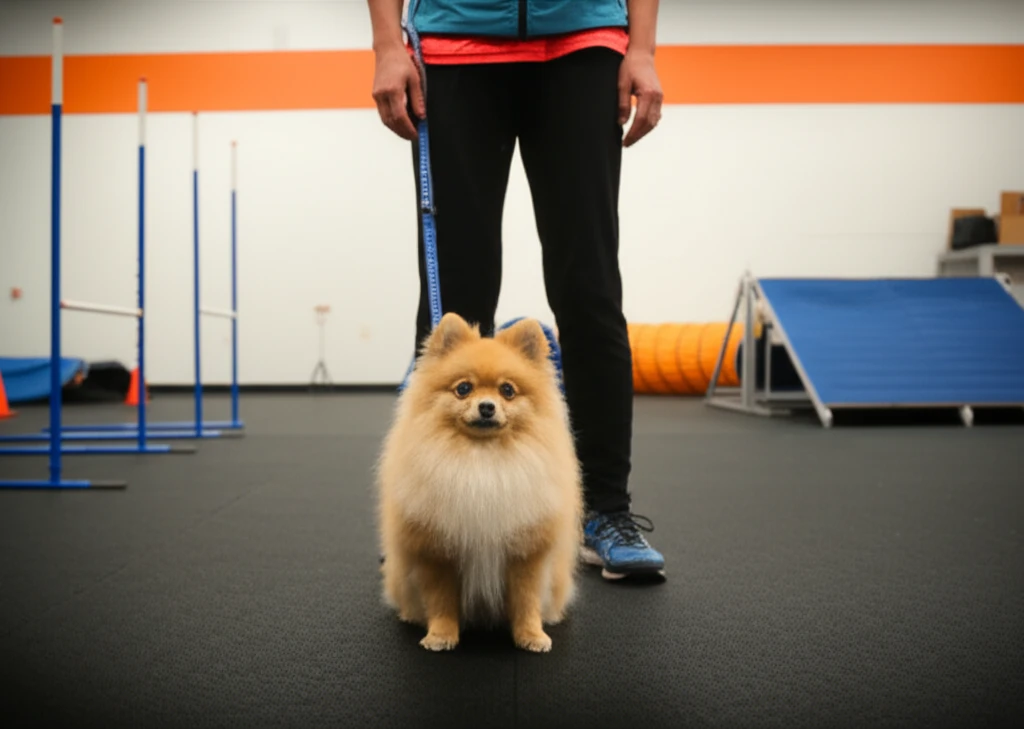
At Zoom Room, our socialization and training programs welcome every size of dog. Pomeranians train alongside dogs of all breeds in a supervised, indoor environment where they can build confidence at their own pace. Find a Zoom Room near you and discover what your Pom is capable of when they get the training they deserve.
Frequently Asked Questions
How do I get my Pomeranian to stop barking so much?
Understand that your Pom's barking is alert behavior — it's hardwired into the breed. Yelling or picking up your dog reinforces it. Instead, use an acknowledge-and-redirect approach: calmly say "thank you" when your Pom barks, then cue a specific behavior like going to their mat. Reward the redirect generously. Over time, the barking becomes shorter because your dog learns the sequence ends with a treat for being quiet. Consistency is critical — if barking sometimes gets attention, your Pom will keep testing it.
Are Pomeranians hard to train?
Pomeranians are smart and quick learners, but they're also independent and can be stubborn about cooperating if they don't see the benefit. The trick is making training feel like a game worth playing. Use high-value treats, keep sessions short — five minutes is plenty — and end on a positive note. Avoid repetitive drills, which bore Poms quickly. Vary the cues, add in tricks, and train in different locations. A Pom who thinks training is entertaining will work with enthusiasm. A Pom who thinks training is tedious will find something better to do.
Do Pomeranians need socialization classes?
Yes, and arguably more than larger breeds do. Pomeranian owners are more likely to skip socialization because they can physically manage the dog without it — just scoop them up and go. But avoidance isn't coping. An unsocialized Pom becomes reactive, anxious, and vocally overwhelming. Structured socialization classes expose your Pom to other dogs and people in a controlled environment where they can build confidence gradually. The skills they learn in class — how to handle new situations, how to be calm around unfamiliar dogs — directly reduce barking, snapping, and anxiety in daily life.
Ready to Get Started?
Zoom Room's indoor training facility is the perfect setting for Pomeranians — controlled, supervised, and designed to build confidence in dogs of every size. Find a location near you and give your Pom the real training they need.
Find a Zoom Room