
How to Train a Portuguese Water Dog
The Portuguese Water Dog's low-shedding coat makes them a magnet for allergy-conscious families. What many of those families do not expect is a mouthy, high-energy working dog who needs far more engagement than their hypoallergenic reputation suggests. This is an athlete in a teddy bear's coat, and they need to be trained like one.
The Energy Level Nobody Warned You About
Portuguese Water Dogs were bred to work alongside fishermen in the Atlantic Ocean. They retrieved nets, carried messages between boats, and herded fish into nets. That is not a lap dog's resume. Your Portie has the stamina, drive, and physical intensity of a dog who was built to work all day in cold, rough water. If you chose this breed primarily because of the coat, you need to recalibrate your expectations around the engine underneath it.
A Portuguese Water Dog who does not receive enough physical and mental exercise will tell you about it. Destructive chewing, counter surfing, relentless mouthing, and escalating demand behaviors are all symptoms of a working breed whose energy has nowhere to go. These are not behavior problems in the traditional sense. They are a bored, understimulated dog doing what bored, understimulated dogs do: finding their own employment.
Daily exercise for a Portie should include both physical activity and mental work. A brisk walk or a swimming session handles the physical component, but you also need training sessions, puzzle toys, nose work, or a structured sport to satisfy the mental side. A tired Portie body with a wide-awake Portie brain is still going to cause trouble. Both channels need to be addressed every day.
The Mouthy Phase That Lasts Longer Than You Think
Portuguese Water Dogs are oral dogs. They were bred to carry things in their mouths, and that heritage shows up as persistent mouthing, nipping, grabbing clothing, and carrying objects around the house. In puppies, the mouthing can be intense enough that some owners wonder if their dog is aggressive. It is not aggression. It is a retrieval breed's mouth looking for a job.
Redirect rather than punish. Keep a variety of appropriate chew items and tug toys accessible throughout your home. When your Portie's teeth find your hand, your sleeve, or your pant leg, calmly swap in an approved item. If the mouthing is especially intense during play, implement brief play pauses: the instant teeth touch skin, all play stops for five seconds, then resumes. Your Portie learns that teeth on objects keep the game going and teeth on people end it.
The mouthy phase in Portuguese Water Dogs often lasts well past the typical puppy stage, sometimes extending into the second year. This is normal for the breed. Continue redirecting consistently, provide plenty of appropriate outlets for the oral drive, and understand that your Portie is not being difficult. They are being exactly the breed they are. Structured retrieve games, tug sessions with rules, and food puzzles that require mouth work all channel the mouthing instinct productively.
Impulse Control and the Portie Brain
Portuguese Water Dogs are smart, enthusiastic, and impulsive. That combination means a dog who throws themselves at every opportunity with full commitment and zero hesitation. Your Portie does not pause to consider whether jumping on a guest is a good idea. They see a person, they feel excitement, and they launch. Building impulse control gives your Portie the ability to insert a moment of thought between the impulse and the action.
Start with foundation exercises that reward waiting. Ask your Portie to sit before meals, before going through doorways, and before getting their leash clipped on. Hold a treat in your closed hand and reward the moment your dog stops trying to pry it open and looks at you instead. These exercises teach a simple but critical concept: calm earns access to good things, and pushy does not.
Build toward increasingly challenging scenarios. Practice stay while you bounce a ball. Practice sit while another dog walks by in class. Practice waiting at the front door while a visitor enters. Each level increases the difficulty of the self-control required, and each success strengthens your Portie's ability to regulate their own arousal. This is not about suppressing energy. It is about teaching your dog to make choices rather than just react. A Portie with good impulse control is still exuberant and joyful. They have just learned that the fastest route to what they want runs through calm behavior first.
Agility: The Sport Your Portie Was Built For
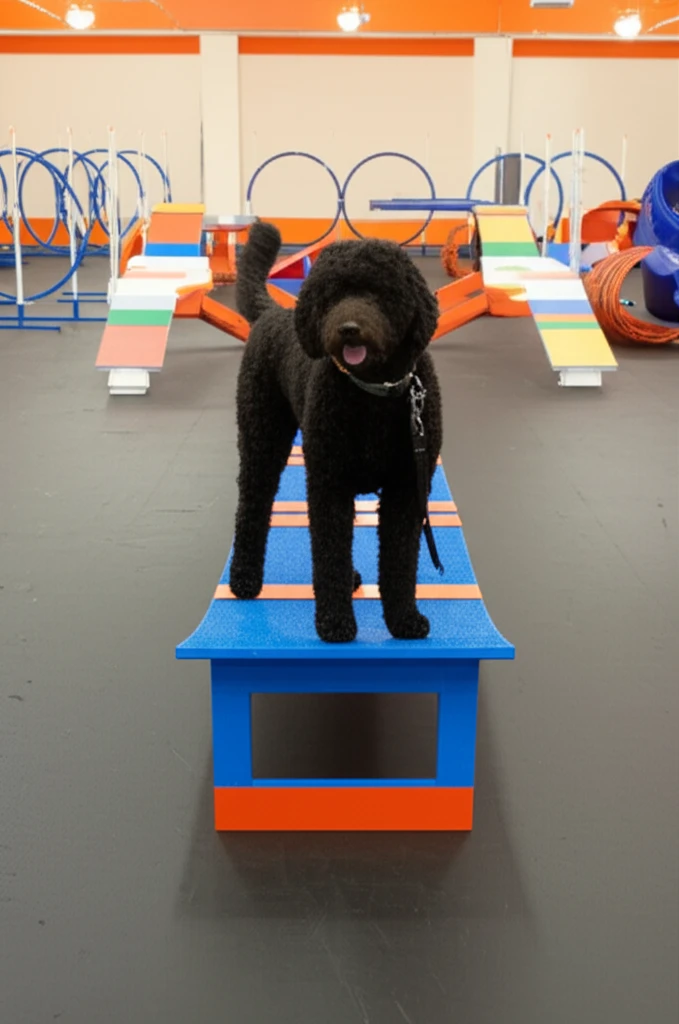
If you are looking for one activity that addresses almost every Portuguese Water Dog training challenge simultaneously, agility is it. The sport combines physical exercise, mental problem-solving, impulse control, and handler communication into a fast-paced activity that Porties take to with natural enthusiasm.
Agility requires your dog to navigate obstacles in a specific sequence at speed, which means they have to listen to your cues while managing their own excitement and body awareness. For a breed that tends toward impulsive action, the structure of agility teaches them to channel that energy through a framework rather than scattering it in every direction. The handler-dog teamwork aspect also strengthens the bond between you and your Portie, which makes all other training easier.
Portuguese Water Dogs are also well-suited to nose work, rally obedience, and trick training. The common thread across all effective Portie activities is that they engage the brain and the body at the same time. A Portie who runs an agility course, works a scent puzzle, or learns a complex trick sequence is getting the kind of whole-dog engagement that this breed was designed for. Pure physical exercise without mental engagement is like running the engine in neutral: it burns fuel but does not get you anywhere.
Building the Partnership Your Portie Wants
Portuguese Water Dogs are deeply people-oriented. They want to be involved in whatever you are doing, they want to work with you, and they thrive on interaction. That handler focus is one of the breed's greatest training assets. A Portie who understands what you are asking and believes that cooperation leads to good outcomes will work with genuine enthusiasm and reliability.
Use that desire for partnership strategically. Make training sessions interactive and engaging rather than repetitive. Porties excel when they feel like active participants, not passive followers. Vary the activities, increase the complexity as your dog masters each level, and make the process feel like a collaborative game. A Portie who is bored with training is a Portie who is not being challenged enough.
At Zoom Room, our training programs include agility courses, obedience classes, and enrichment activities that are a natural fit for the Portuguese Water Dog's intelligence and energy level. Our indoor facilities provide a consistent, distraction-managed environment where your Portie can focus on learning rather than reacting to every passing squirrel. Find a Zoom Room near you and give your Portuguese Water Dog the job their brain and body have been asking for.
Frequently Asked Questions
Are Portuguese Water Dogs easy to train?
Portuguese Water Dogs are highly intelligent and eager to work with their handler, which makes them very trainable when the approach is right. They learn quickly and respond well to positive reinforcement. The challenge is their energy and impulsiveness. A Portie who is understimulated will struggle to focus, and a Portie who is bored with repetitive drills will lose interest. Keep sessions short, varied, and rewarding. Use high-value treats and enthusiastic engagement. Porties thrive on novelty and challenge, so increase the difficulty regularly and introduce new skills to keep them invested in the process.
How do I stop my Portuguese Water Dog from mouthing everything?
Redirect rather than punish. Mouthing is a breed trait rooted in their retrieval heritage, not a behavior problem. Keep approved chew toys and tug items accessible throughout your home and swap them in whenever your Portie's teeth find something they should not have. If mouthing during play becomes intense, implement brief play pauses: the moment teeth touch skin, all interaction stops for a few seconds. Resume when your dog is calm. Provide structured outlets for the oral drive through retrieve games, tug with rules, and food puzzles. The mouthy phase in Porties can extend well into the second year, so consistency and patience are essential.
How much exercise does a Portuguese Water Dog need?
An adult Portuguese Water Dog needs at least one to two hours of daily activity, and the type matters as much as the amount. Physical exercise like brisk walks, swimming, or fetch sessions should be paired with mental stimulation: training sessions, puzzle toys, nose work, or a structured sport like agility. A Portie who gets plenty of physical exercise but no mental engagement will still be restless and prone to destructive behavior. The most effective daily routine combines moderate physical activity with dedicated brain work that challenges your Portie's intelligence.
Ready to Get Started?
Zoom Room offers agility, obedience, and enrichment programs that are a natural fit for high-energy breeds like the Portuguese Water Dog. Find a location near you and put your Portie's brain and body to work.
Find a Zoom Room