
How to Train a Rhodesian Ridgeback
Rhodesian Ridgebacks will listen to you, consider your request, and then decide whether it's worth their time. This isn't defiance. It's a breed that was built to make independent decisions while tracking lions across the African savanna, and that self-reliance doesn't switch off because you're holding a treat.
Independent Thinking Is the Feature, Not the Bug
Rhodesian Ridgebacks were developed in southern Africa to track large game — including lions — over vast distances in harsh terrain. That required a dog who could assess threats independently, make life-or-death decisions without waiting for a handler, and keep working long after most breeds would quit. Your Ridgeback still carries that cognitive architecture, and it shapes every aspect of how they engage with training.
When your Ridgeback pauses after you give a cue, they're weighing their options. This breed processes requests through a filter of "does this make sense to me right now?" A Labrador defaults to compliance. A Border Collie defaults to action. A Ridgeback defaults to assessment.
This means repetitive, drill-based training will fail. They'll do the thing three times, decide they understand the concept, and check out on repetition four. Build variety into every session, escalate complexity once a behavior is learned, and make cooperation more rewarding than independence. With a Ridgeback, you don't demand obedience. You negotiate a partnership where listening to you consistently pays off.
High-value rewards are essential. Dry kibble won't motivate a Ridgeback who has decided the corner of the room is more interesting. Use real food — chicken, cheese, or liver — and keep the treat economy running hot during early training.
Socialization: The Window That Closes Fast
Ridgebacks are naturally reserved with strangers. This is by design — a dog bred to guard homesteads and track dangerous game is not supposed to greet every approaching human with a wagging tail. In a well-socialized Ridgeback, that reserve looks like calm confidence: they notice the stranger, assess, and relax. In an under-socialized Ridgeback, that same reserve becomes tension, avoidance, or reactivity.
The difference is almost entirely determined by what happens during the critical socialization period between roughly three and fourteen weeks of age. During this window, your Ridgeback puppy needs positive exposure to as many types of people as possible — different ages, sizes, appearances, clothing, uniforms. They need to meet other dogs in controlled contexts and experience different environments, surfaces, and sounds.
After that window closes, socialization is still possible but requires significantly more effort. An adult Ridgeback who wasn't socialized as a puppy can improve, but you're working against the grain of a breed genetically inclined toward wariness.
If your Ridgeback is already showing signs of leash reactivity — barking, lunging, or stiffening when they see strangers or unfamiliar dogs on walks — structured desensitization with a professional trainer is the most effective path forward. The goal isn't to make your Ridgeback love everyone. It's to build a dog who can encounter novel situations without escalating to a stress response.
Prey Drive: The Non-Negotiable Challenge
Ridgebacks have one of the strongest prey drives of any breed. This is a dog that was bred to chase large, fast, dangerous animals across open terrain. That drive is deep, powerful, and, in high-arousal moments, capable of overriding everything you've trained.
Your Ridgeback will chase squirrels, rabbits, cats, and anything else that runs — with a speed and intensity that can yank the leash from your hand or pull you off your feet. In the moment of chase, your recall cue may as well not exist. This isn't a training failure — it's hardwired instinct with a three-hundred-year head start over anything you've taught.
A reliable recall is still worth building extensively. But with a Ridgeback, recall must be exceptionally well-proofed before you trust it near real prey animals. Practice in increasingly distracting environments, use extremely high-value rewards, and build the recall as a conditioned reflex — the kind of response that happens before your Ridgeback's thinking brain catches up to their chasing brain.
Management is equally important. A secure leash, a well-fitted harness (not a collar, which a determined Ridgeback can back out of), and awareness of your surroundings are daily necessities. Off-leash time should happen only in fully enclosed areas until your recall is bulletproof. Impulse control training — teaching your Ridgeback to pause and check in with you when they see something exciting — is an ongoing project, not a one-time lesson.
Physical and Mental Requirements
Ridgebacks are athletes. They need daily exercise that goes beyond a casual walk around the block. A healthy adult Ridgeback needs at least an hour of vigorous physical activity — running, hiking, lure coursing, or extended fetch sessions — plus mental stimulation through training, puzzle toys, or nose work.
But here's what surprises many Ridgeback owners: despite their physical intensity, Ridgebacks are remarkably calm indoors. A Ridgeback whose needs are met will settle on the couch with the quiet dignity of a dog who has done their job. This on-off switch is one of the breed's best qualities, but it only works if the "on" part actually happens. A Ridgeback who doesn't get enough outlet will find ways to burn that energy — usually involving your furniture, your garden, or your sanity.
Nose work is particularly valuable for Ridgebacks because it taps into their tracking heritage. Setting up simple scent games at home — hiding treats in boxes, creating scent trails through the house — engages the same neural pathways that made their ancestors effective game trackers. It's low-impact enough for days when a full run isn't possible, and it provides the kind of deep mental focus that physically exhausting activities alone can't match.
Building a Partnership With a Ridgeback
Training a Ridgeback is a long game. This breed matures slowly — both physically and mentally — and you shouldn't expect adult-level reliability until around two to three years of age. The adolescent period, roughly six months to two years, is the hardest stretch. Your once-responsive puppy will test every boundary, ignore cues they knew perfectly last week, and seem to forget everything. They haven't forgotten. They're renegotiating.
Stay consistent. Keep training sessions positive, varied, and short. Don't escalate when your adolescent Ridgeback becomes selectively deaf — conflict with this breed doesn't produce compliance. It produces a dog who trusts you less. Manage the environment to prevent rehearsal of unwanted behaviors and keep reinforcing the ones you want.
Ridgebacks trained with patience and positive reinforcement develop a bond with their handler that is among the deepest in the dog world. They may never be the instantly obedient dog some breeds are, but what you get is a partner who respects you because you've earned it.
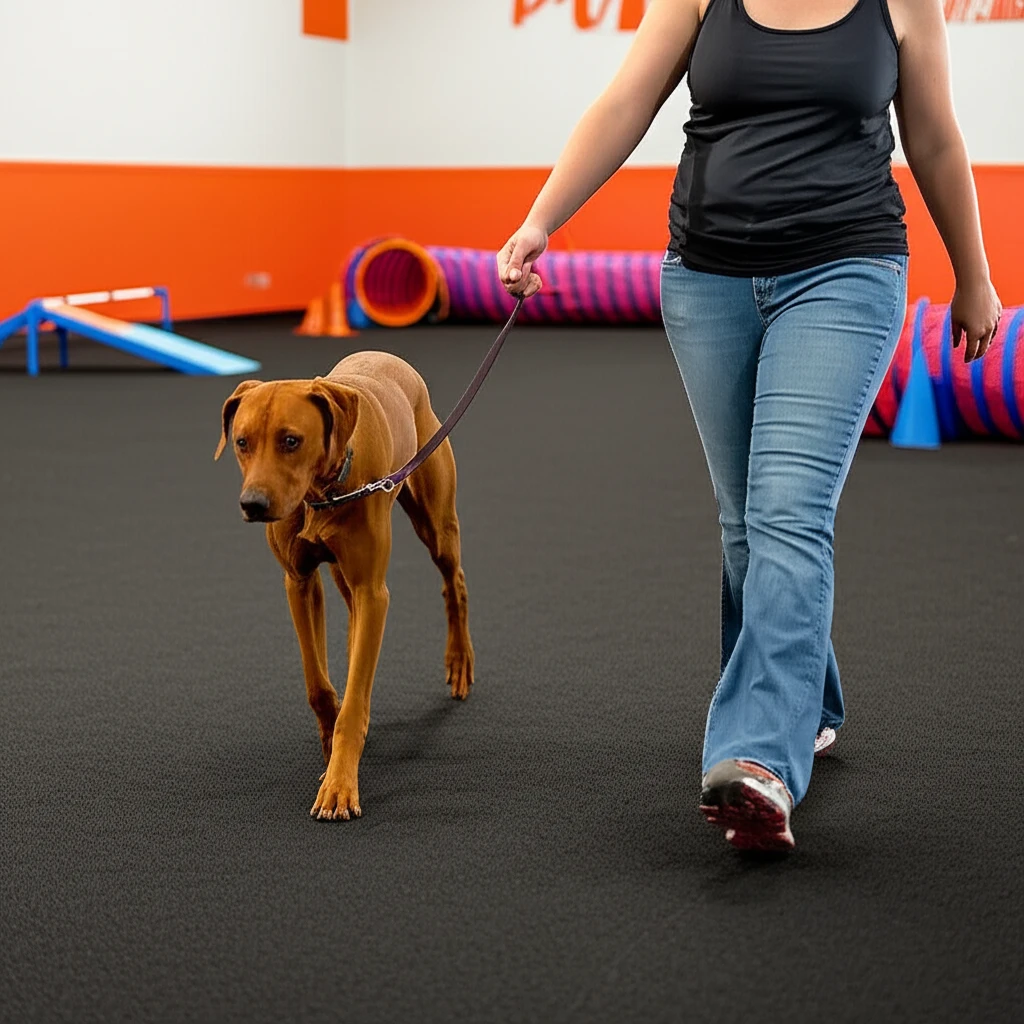
At Zoom Room, our training programs work with the Ridgeback's independent nature rather than against it. Our indoor facility provides a controlled environment where your Ridgeback can learn without prey-drive triggers derailing every session. Find a Zoom Room near you and start building the partnership your Ridgeback is capable of.
Frequently Asked Questions
Are Rhodesian Ridgebacks good for first-time dog owners?
Ridgebacks are generally not recommended as a first-time breed. Their independence, strong prey drive, physical power, and need for extensive socialization create a steep learning curve. A first-time owner who is committed to professional training from day one and has realistic expectations about the breed's nature can succeed, but most trainers would suggest gaining experience with a more forgiving breed first. If you're set on a Ridgeback as your first dog, enrolling in structured classes immediately and working consistently with a professional trainer throughout the first two years will make a significant difference.
How do I get my Rhodesian Ridgeback to come when called?
Recall with a Ridgeback requires more intensive training than with most breeds because of their strong prey drive and independent decision-making. Start in low-distraction environments with extremely high-value rewards. Practice hundreds of repetitions in controlled settings before adding distractions. Build the recall as an automatic reflex through games — call your dog, reward generously, release them to go back to what they were doing. The recall should predict something better than what they're currently doing. Even with excellent training, manage your environment carefully. Use long lines in unfenced areas and avoid off-leash situations near wildlife until your recall is thoroughly proofed.
Why is my Rhodesian Ridgeback aloof with strangers?
Reserve with strangers is a core breed trait. Ridgebacks were developed as guard dogs and hunters, and assessing new people before engaging is part of their genetic programming. This is not a breed that greets every stranger with enthusiasm, and expecting that will only frustrate you and stress your dog. What you want is a Ridgeback who is calm and neutral around strangers, not anxious or reactive. Socialization helps your Ridgeback learn that unfamiliar people are part of normal life and don't require a defensive response. Let your dog approach new people at their own pace and never force a greeting.
Ready to Get Started?
Zoom Room's positive, structured training environment is built for independent breeds like Rhodesian Ridgebacks. Our indoor facility eliminates prey-drive distractions and lets your Ridgeback focus on building skills. Find a location near you.
Find a Zoom Room