
How to Train a Rottweiler (Power Needs a Plan)
A well-trained Rottweiler is one of the calmest, most confident dogs you'll ever meet. An untrained one is 100-plus pounds of muscle with no framework for how to behave in the world -- and the world notices. The difference between those two dogs isn't genetics. It's training, and it starts earlier than most people think.
What Makes Rottweilers Different to Train
Rottweilers are a working breed with a long history of guarding, herding, and pulling carts. That heritage produced a dog with physical power, natural confidence, and a strong orientation toward their handler. These are not difficult dogs to train. They're actually among the most responsive breeds to structured, positive reinforcement-based training. The challenge isn't capability -- it's timing. What you do in the first year matters more with a Rottweiler than with almost any other breed.
The reason is simple: a 12-pound Rottweiler puppy who jumps on guests is funny. A 110-pound Rottweiler who does the same thing at two years old is a liability. Behaviors that are manageable in a small puppy become genuinely problematic in a large, powerful adult. The window for establishing good habits isn't shorter with Rottweilers -- you just notice when you've missed it.
Rottweilers are naturally watchful. They notice who's approaching the house, who's entering the room, what changed in the environment. This awareness is part of the breed's design, and it's not a problem in itself. It becomes a problem when it's left undirected -- when the dog decides on their own what constitutes a threat and what to do about it. Your job through training and socialization is to build a dog who can notice without reacting, who can be alert without being anxious, and who defers to your judgment about what's actually worth worrying about.
One thing that consistently surprises first-time Rottweiler owners: these dogs are sensitive. Not fragile -- sensitive. They read your emotional state with remarkable accuracy, and they respond to it. A calm, confident handler produces a calm, confident Rottweiler. An anxious, inconsistent handler produces a dog who fills the leadership gap themselves, and that never goes well.
Why Socialization Is Non-Negotiable
Every breed benefits from socialization. For Rottweilers, it's the single most important investment you'll make -- more important than any cue, any trick, any obedience title.
The critical socialization window closes around 16 weeks, and during that time, your Rottweiler puppy needs systematic, positive exposure to a wide range of people, dogs, environments, and situations. The goal is that a stranger approaching on the sidewalk, a child running past, a dog at the other end of the leash -- these become unremarkable events, not triggers for defensive behavior.
Without deliberate socialization, a Rottweiler's natural watchfulness can narrow into suspicion. They may become wary of unfamiliar people or dogs, and in a breed this powerful, wariness quickly becomes a management problem. The well-socialized Rottweiler who has met dozens of different people in positive contexts can tell the difference between a normal approach and a genuinely unusual one. The under-socialized Rottweiler treats everything unfamiliar as a potential threat.
Socialization doesn't end at 16 weeks. It's an ongoing practice throughout the dog's life. Regular exposure to new environments, new people, and new dogs -- in controlled, positive contexts -- keeps that early foundation strong. Group training classes serve double duty here: they teach obedience cues while providing exactly the kind of structured multi-dog, multi-person exposure Rottweilers need.
Where Rottweilers Typically Need Work
- Pulling on leash. Rottweilers are powerful and they know it. Loose-leash walking requires consistent reinforcement of the idea that walking beside you -- not ahead of you at full steam -- is what earns rewards. Start this work when they're still light enough that pulling is inconvenient rather than dangerous.
- Reactivity toward unfamiliar dogs. Some Rottweilers develop leash reactivity, especially if they haven't had enough positive exposure to other dogs in structured settings. The leash restricts their ability to communicate naturally with other dogs, and the resulting frustration or anxiety can look like aggression.
- Jumping and body-slamming. Rottweilers greet with their whole body, and that body is substantial. Teaching a calm greeting protocol -- four on the floor, sit to say hi -- needs to start in puppyhood and be enforced by every person the dog meets.
- Guarding behavior. Rottweilers may guard food, toys, spaces, or people. This is a manageable behavior when addressed early through positive conditioning -- teaching the dog that someone approaching their resources predicts good things, not loss.
- Mouthiness in puppyhood. Rottweiler puppies are mouthy. Their bite inhibition needs to be taught early and consistently, because the adult mouth can do real damage. Redirect to appropriate chew items and reward gentle mouth contact during play.
What Actually Works
Start training on day one. The day your Rottweiler puppy comes home, training begins. Not formal obedience -- just the basics. Reward calm behavior. Reward eye contact. Reward sitting instead of jumping. Every interaction is a training opportunity, and with a breed that grows this fast, early habits matter enormously.
Be consistent, not harsh. Rottweilers do not need forceful corrections. They need clarity. A Rottweiler who understands what you want will generally do it. A Rottweiler who's been physically corrected or intimidated will shut down, become defensive, or both. Dominance-based training is particularly counterproductive with this breed -- it damages the trust that makes them so trainable in the first place.
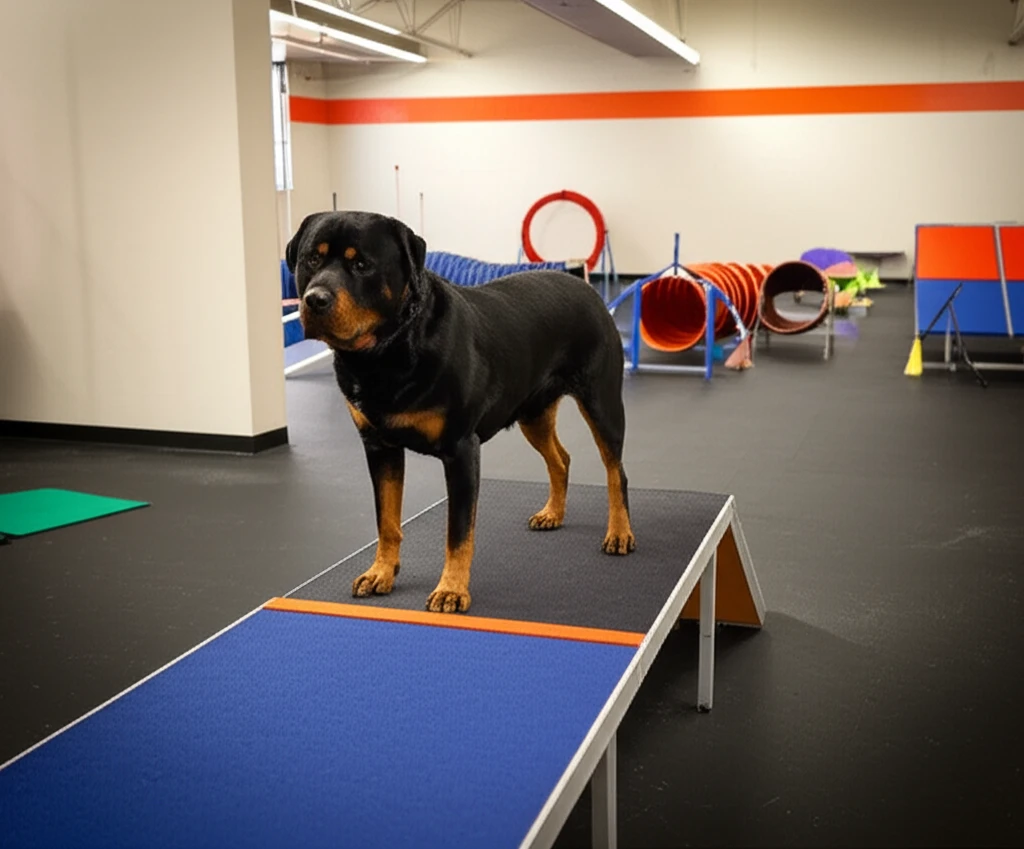
Use their work drive. Rottweilers want a job. Obedience, agility, rally, nose work, carting -- any structured activity that gives them a purpose channels their energy and intelligence into something productive. A Rottweiler with a job is focused and satisfied. A Rottweiler without one finds their own entertainment, and their idea of entertainment usually involves something expensive or structurally important.
Socialize with intention. Don't just expose your Rottweiler to things -- structure the exposure. Controlled greetings with calm dogs. Positive interactions with a variety of people. New environments paired with treats and calm praise. Quality of exposure matters more than quantity. One bad experience with an aggressive dog at a dog park can undo weeks of positive work.
Train impulse control early. Wait at doors. Wait for food. Wait before greeting. "Wait" becomes one of the most important cues in your Rottweiler's vocabulary, because it teaches the fundamental concept that good things come to dogs who can hold themselves together for a moment. A Rottweiler with impulse control is a pleasure to live with. One without it is a liability at every doorbell.
The Bigger Picture
Rottweilers carry more breed-specific stigma than almost any other dog, and it's almost entirely a training problem, not a breed problem. The vast majority of Rottweiler behavioral issues trace back to insufficient socialization, inconsistent training, or -- worst of all -- training methods based on intimidation that erode the bond between dog and handler.
The well-trained Rottweiler is a revelation. Calm in public. Gentle with children. Confident around other dogs. Responsive to cues even in distracting environments. They're a breed that wants to work with you, and when you give them the structure to do that, the partnership is extraordinary.
Group classes are particularly valuable for Rottweilers because they combine training with the kind of structured socialization this breed needs. Learning to focus on you while other dogs work nearby, practicing calm behavior around new people, building confidence in a controlled environment -- this is exactly what produces a Rottweiler who can handle the real world with the quiet confidence the breed is known for.
Frequently Asked Questions
At what age should I start training my Rottweiler?
Training starts the day your Rottweiler puppy comes home. You don't need to wait for formal obedience classes -- begin by rewarding calm behavior, eye contact, and sitting instead of jumping. Puppy socialization classes can begin as early as eight to ten weeks with appropriate vaccinations. The critical socialization window closes around 16 weeks, so the earlier you start positive exposure to new people, dogs, and environments, the better foundation you'll build. With a breed that grows as fast as a Rottweiler, every week of early training counts.
Are Rottweilers safe around children?
A well-trained, well-socialized Rottweiler can be wonderfully gentle with children. The key is early and consistent training, thorough socialization, and teaching both the dog and the children how to interact respectfully. Rottweilers are naturally protective of their family, and with proper guidance, that protective instinct translates into calm, watchful companionship rather than reactivity. Supervision during interactions, especially with young children, is always recommended regardless of breed.
Do Rottweilers need a lot of exercise?
Rottweilers are a working breed that benefits from regular, moderate exercise -- typically one to two hours per day of walking, play, or structured activity. They don't need marathon runs, but they do need enough physical and mental outlet to stay balanced. Without it, their energy can turn into destructive behavior or restlessness. Structured activities like obedience training, agility, nose work, or even carting give them the mental engagement they crave alongside physical exercise.
Build the Foundation Early
Rottweilers thrive with structure. Our group classes combine training and socialization in a controlled environment -- exactly what this breed needs.
Find a Zoom Room