
Shiba Inu Leash Reactivity: Why Your Shiba Reacts Differently Than Other Dogs
Your Shiba Inu does not want to be friends with every dog on the block. That is not a behavioral problem — it is a breed characteristic. But when natural aloofness meets the frustration of a leash, the result is a reactivity presentation that confuses owners who expect their dog to look like a barking, lunging Labrador.
Why Leash Reactivity Shows Up Differently in Shibas
Leash reactivity in most social breeds — retrievers, herding dogs, bully breeds — tends to be loud and obvious. The dog sees another dog, explodes into barking and lunging, and the owner is dragged down the sidewalk while apologizing to everyone in earshot. Shiba reactivity often looks nothing like this, and that difference causes owners and even some trainers to misread what is happening.
Shibas are a primitive breed with a naturally reserved social style. They tend to be dog-selective, meaning they tolerate some dogs and want nothing to do with others. This selectivity is not aggression — it is a normal social preference that most humans would consider perfectly reasonable if another human expressed it. The problem arises when your Shiba is forced into close proximity with dogs they have not chosen to engage with, which is exactly what happens on a leash walk.
Shiba reactivity frequently presents as stiffening, hard staring, a raised tail with rigid body posture, and sometimes the distinctive Shiba scream — a high-pitched vocalization that sounds like nothing else in the dog world. The triggers are often proximity-based: your Shiba is fine when another dog is across the street but becomes increasingly tense as the distance shrinks. This is a clear communication that your dog wants more space, and the leash is preventing them from creating it. For the full spectrum of how leash reactivity works across breeds, our leash reactivity guide covers the core mechanics.
What Works for Shibas Specifically
The first adjustment for Shiba owners is to stop trying to make your dog social in the way a Golden Retriever is social. Your Shiba does not need to greet every dog. They do not need to play at dog parks. They need to be able to walk past other dogs without reacting, and that is a very different training goal than "making friends."
Distance management is your primary tool. Learn your Shiba's threshold — the distance at which they notice another dog but can still take a treat, respond to a cue, and keep their body loose. Work exclusively at or beyond that distance. Use the "look at that" technique: when your Shiba spots another dog, mark the moment of noticing with a click or a verbal marker, then reward them for the look. You are building an association where other dogs at a distance predict treats from you. Over many repetitions, the emotional response to seeing another dog shifts from tension to anticipation.
Respect your Shiba's social preferences. If your dog has a few dog friends they enjoy, great. If they prefer to keep to themselves, that is equally valid. Forcing a Shiba into unwanted social interactions does not build tolerance — it builds resentment and escalates reactivity. The goal is not a dog who loves everyone. The goal is a dog who can calmly coexist with other dogs in public spaces without reacting.
Timing matters more with Shibas than with many other breeds because Shibas escalate quickly and de-escalate slowly. If you miss the early warning signs — the stiffening, the fixed gaze, the forward lean — and your Shiba tips into a full reaction, the training session is effectively over. You need to create distance, let your dog decompress, and end the session. Pushing through a Shiba reaction does not build resilience. It builds a dog who trusts you less. For German Shepherd owners dealing with a similar intensity of reactivity from a different temperament profile, our German Shepherd reactivity guide covers that presentation.
The Socialization Connection
Shibas who received thorough, positive socialization during the critical puppy period are dramatically less reactive on leash as adults. This does not mean early socialization makes a Shiba into a social butterfly — they will still be selective about their dog friendships. But a well-socialized Shiba has learned that other dogs exist in the world and are generally not a threat, which removes the defensive component from their leash behavior.
The challenge is that many Shiba owners mishandle the socialization window. Shibas are independent dogs who can seem indifferent to new experiences, and owners sometimes interpret that indifference as the dog not needing more socialization. In reality, a puppy who seems detached in new situations may be quietly absorbing information that will shape their reactions for life. Consistent, positive exposure to a variety of dogs, people, and environments builds a foundation of calm that makes leash reactivity far less likely.
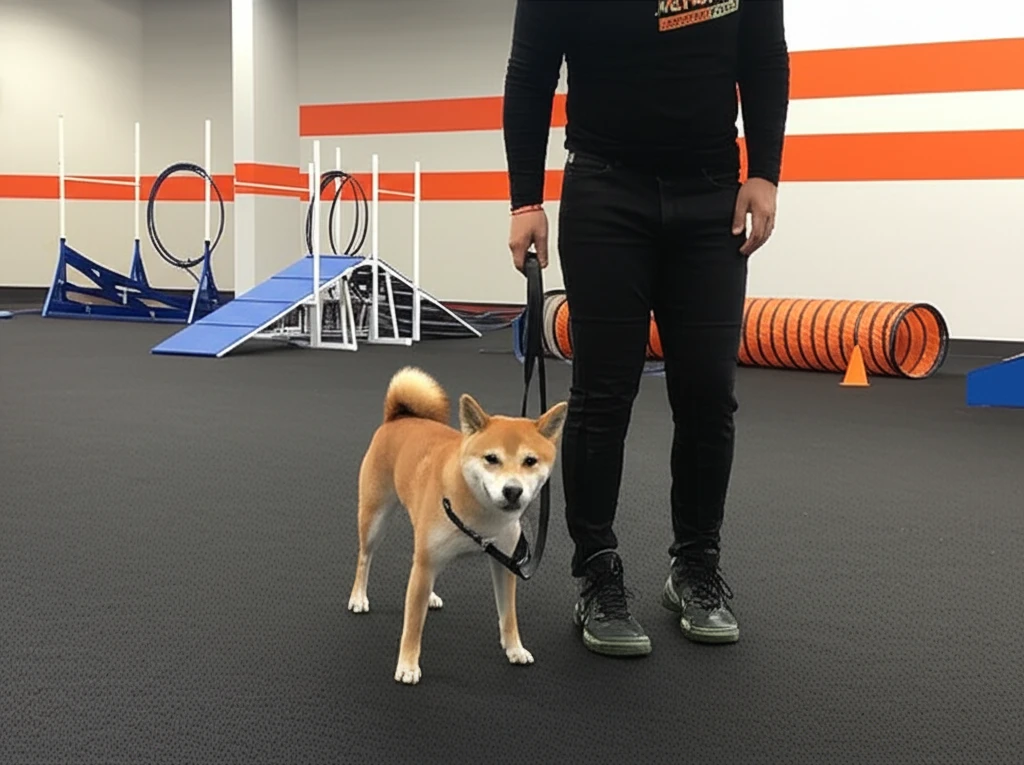
For adult Shibas who are already reactive, adult socialization work can still make a significant difference. The key is structured exposure in controlled environments — not free-for-all dog parks, which are the worst possible setting for a dog-selective breed. Group training classes in an indoor facility provide exactly the right setup: other dogs are present but managed, distances are controlled, and your Shiba learns to work calmly in the presence of other dogs without being forced to interact with them.
At Zoom Room, our training classes are built around the principle that every dog has their own social style, and the job of training is to build skills within that style rather than against it. Your Shiba does not need to become a dog park regular. They need to walk through the world calmly, and that is a trainable skill. Find a Zoom Room near you and start building leash confidence that works with your Shiba's temperament, not against it.
Frequently Asked Questions
Is it normal for Shibas to not like other dogs?
Yes. Shibas are a naturally dog-selective breed, meaning they tend to choose their social companions rather than accepting every dog as a friend. This is a normal breed characteristic, not a behavioral problem. Many Shibas get along well with specific dogs — often those they grew up with or whose energy levels match their own — while preferring to avoid unfamiliar dogs. The training goal for a Shiba is not universal friendliness but calm coexistence: the ability to walk past other dogs without reacting, even if they have no interest in interacting.
Why does my Shiba scream on leash around other dogs?
The Shiba scream is a distinctive high-pitched vocalization that can signal frustration, fear, or intense arousal. On leash around other dogs, it typically indicates that your Shiba feels trapped — they want to create distance from the other dog but the leash prevents it, and the scream is an escalated attempt to communicate discomfort. The solution is to increase distance from triggers, reward calm behavior at distances your dog can handle, and never force your Shiba into closer proximity than they are ready for. If the screaming happens consistently, work with a trainer who understands primitive breeds and their communication style.
Train With Your Shiba's Temperament, Not Against It
Zoom Room's group classes give your Shiba structured exposure to other dogs in a controlled indoor environment — building calm coexistence without forcing unwanted social interaction.
Find a Zoom Room