
How to Train a Vizsla
A Vizsla will follow you from room to room, press their body against your leg while you cook, and stare at the bathroom door if you close it. That deep attachment is the best thing about this breed and the source of their biggest training challenge.
Separation Anxiety: The Challenge You Need to Train For
Vizslas are the textbook velcro dog. They were bred as close-working Hungarian hunting companions who stayed within arm's reach of their handler all day, every day. That breeding produced a dog whose emotional baseline depends on proximity to their person. When that proximity disappears, many Vizslas don't just get a little restless. They panic.
Separation anxiety in Vizslas is not a behavioral quirk you can ignore and hope resolves itself. Without proactive training, it tends to escalate. What starts as whining by the door becomes howling, destructive chewing, house soiling, and in severe cases, self-injury from attempts to escape crates or break through barriers. The key word is proactive. You need to train for independence before anxiety takes root, not after.
Start building alone-time tolerance from day one. Leave the room for a few seconds, return before your Vizsla shows any distress, and reward calm behavior. Gradually extend the duration. Make departures boring and arrivals low-key. Build positive associations with a specific space, like a crate or exercise pen, where your Vizsla receives high-value enrichment toys only when you're absent. The goal is a dog who can self-soothe, not a dog who has simply learned to suffer quietly.
Crate Training as an Independence Builder
For a Vizsla, crate training is not about confinement. It's about building the emotional resilience to be alone. A Vizsla who views their crate as a safe, rewarding space has a tool for managing the anxiety that comes with separation. A Vizsla who was shoved into a crate as a quick fix for destructive behavior has a prison that amplifies their panic.
The difference is in how you introduce it. Feed meals in the crate with the door open. Scatter high-value treats inside and let your Vizsla discover them. Place a frozen stuffed Kong in the crate and let them choose to go in. Build duration slowly, seconds at a time, always returning before distress appears. If your Vizsla is already showing resistance to the crate, you may need to rebuild the association from scratch, which means going back to open-door feeding and removing any pressure to stay inside.
One critical mistake with Vizslas: don't crate them only when you leave. If the crate predicts your departure every time, it becomes a trigger for anxiety rather than a comfort. Use the crate during calm moments when you're home too, so the association is with relaxation, not abandonment.
Sensitivity Is Not Softness
Vizslas are among the most sensitive sporting breeds, and that sensitivity has real training implications. A raised voice, a leash correction, even a moment of visible frustration from you can shut a Vizsla down completely. You'll see it immediately: the ears drop, the body curves away, and the willingness to engage vanishes. Once a Vizsla associates a training context with negative emotion, rebuilding their confidence in that context takes far longer than it would with a less sensitive breed.
This sensitivity is not a flaw. It's actually what makes Vizslas such responsive training partners when you use it well. They read your body language with remarkable precision. A slight shift in your posture, a change in your breathing, a difference in your vocal tone: your Vizsla notices all of it. That means you need to be deliberate about what you're communicating. Calm, clear, consistent handling produces a Vizsla who works with enthusiasm and trust.
If your Vizsla has already developed fearful responses to specific situations, whether that's destructive chewing when stressed, bolting from loud noises, or shutting down during training, address it with patience and professional guidance. Sensitivity-based behaviors respond well to systematic desensitization, but they get worse quickly with flooding or forced exposure.
Exercise, Recall, and the Sporting Drive
Vizslas are serious athletes. They were bred to range across open fields at a ground-eating trot, quarter back and forth in front of a hunter, and do this for hours without flagging. That energy level does not decrease because your Vizsla lives in a suburb. If their exercise needs go unmet, the surplus energy pours into anxiety, destructive behavior, and an inability to settle indoors.
But here's the nuance: physical exercise alone doesn't produce a calm Vizsla. You can run your Vizsla for an hour and still come home to a dog who can't relax on the couch. Mental stimulation, through training sessions, nose work, puzzle feeders, and structured activities, is what actually produces the settled behavior you're looking for. A Vizsla who has worked their brain is a Vizsla who can finally be still.
Recall training is essential with this breed. Vizslas have a strong prey drive and can cover an alarming amount of ground in seconds when they lock onto a bird or squirrel. The good news is that their desire to stay connected with you works in your favor. Build recall as a game, reward it lavishly every single time, and never use it to end something your Vizsla enjoys. A solid recall, combined with the Vizsla's natural handler-focus, can give you a level of off-leash reliability that many sporting breeds can achieve with consistent practice.
Socialization classes provide an excellent combination of mental stimulation, physical activity, and the social contact Vizslas crave, all in a single session.
Living With a Velcro Dog (And Loving It)
Once you've done the work to build your Vizsla's independence and confidence, you get to enjoy the part of this breed that owners fall in love with. A well-trained Vizsla is one of the most engaged, responsive, and affectionate partners you'll ever share a couch with. They light up during training, they read your emotions with uncanny accuracy, and they bring an intensity to the partnership that other breeds simply don't match.
The owners who thrive with Vizslas are the ones who build training into daily life rather than treating it as a separate activity. Every walk includes recall practice. Every meal involves a brief training session or a puzzle feeder. Downtime at home includes settling exercises. The Vizsla's attachment to you means they're always willing to engage, so use that willingness to keep building skills throughout the day.
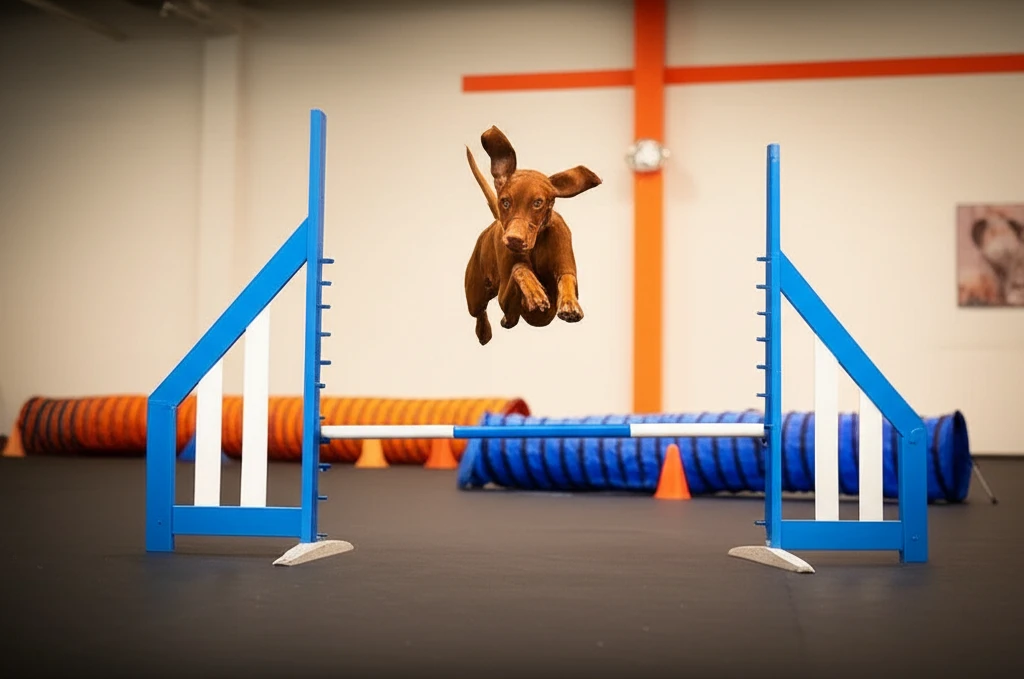
Vizslas also excel in structured activities that leverage their athleticism and handler bond. Agility, nose work, dock diving, and field work all give your Vizsla a purpose that satisfies both their physical and mental needs. Find a Zoom Room near you to explore training programs that match your Vizsla's energy and your goals. This breed gives everything they have to the partnership. Make sure you're giving them the structure and outlets to succeed.
Frequently Asked Questions
Do all Vizslas get separation anxiety?
Not every Vizsla will develop clinical separation anxiety, but the breed is genetically predisposed to it more than almost any other. Their breeding as close-contact hunting companions created a dog whose emotional regulation is tied to handler proximity. Even Vizslas who don't develop full-blown separation anxiety tend to have lower alone-time tolerance than most breeds. Proactive independence training from puppyhood significantly reduces the risk. If you work from home, this is especially important, because a Vizsla who has never practiced being alone will struggle the first time they need to.
How much exercise does a Vizsla need?
An adult Vizsla needs at least one to two hours of vigorous daily activity, but the quality matters as much as the quantity. Pure running or walking won't fully satisfy this breed. You need to include activities that engage their brain: training sessions, nose work, retrieving games with variable setups, or structured classes like agility. A Vizsla who gets both physical and mental exercise will settle beautifully at home. A Vizsla who only gets physical exercise will still be restless and will likely redirect that energy into anxious behaviors.
Are Vizslas good with other dogs?
Vizslas are generally social dogs who enjoy the company of other dogs, especially when properly socialized. Their play style tends to be energetic and physical but not typically aggressive. They do well in group classes and social settings because they're motivated by interaction. The main consideration is their sensitivity. A Vizsla who has a negative experience with another dog may develop lasting wariness. Structured socialization in controlled environments helps your Vizsla build positive associations with other dogs and learn appropriate play skills.
Ready to Get Started?
Zoom Room's group training classes combine mental stimulation, physical activity, and the social engagement your Vizsla craves. Train alongside your dog with professional guidance in a supportive indoor environment.
Find a Zoom Room