
Vizsla Separation Anxiety: Training the Ultimate Velcro Dog
Your Vizsla is pressed against your leg right now. They were pressed against your leg while you made coffee. They will be pressed against your leg when you brush your teeth tonight. And the moment you try to leave them alone, the whining, pacing, and destructive panic begin. Welcome to life with the breed that invented the term "Velcro dog."
Why Separation Anxiety Shows Up Differently in Vizslas
Vizslas were bred to work in close physical partnership with a single hunter, staying within arm's reach all day in the field. Unlike retrievers who were sent out and called back, or hounds who worked ahead of the handler, Vizslas were expected to remain glued to their person while pointing and retrieving. Centuries of selecting for that extreme proximity created a dog whose attachment runs deeper than almost any other breed.
What separates Vizsla separation anxiety from other breeds is the intensity and the speed at which it develops. A Cavalier may whimper when you leave. A Vizsla may destroy a door frame, break out of a crate, or injure themselves trying to follow you. The distress is not proportional — it is extreme, it is physical, and it starts the moment your car pulls out of the driveway, sometimes before.
The other critical factor is that Vizslas are high-energy sporting dogs. A Cavalier with separation anxiety will lie by the door and cry. A Vizsla with separation anxiety will pace, dig, chew, howl, and burn through an enormous amount of adrenaline. The combination of extreme attachment and extreme energy makes Vizsla separation anxiety one of the most challenging behavior issues any dog owner can face. But it is manageable — if you start early and stay consistent.
What Works for Vizslas Specifically
Start independence training on day one. Do not wait for separation anxiety to appear. With Vizslas, prevention is dramatically easier than treatment. From the first day your Vizsla comes home, practice brief separations. Close the bathroom door for thirty seconds. Step outside and come right back in. Put a baby gate between you and your dog while you are both home. These micro-separations teach your Vizsla that your absence is temporary and unremarkable before the anxiety has a chance to take root.
Exercise first, then practice separation. Unlike some breeds where exercise is overrated as a solution, Vizslas genuinely need their energy drained before alone-time training can work. A Vizsla who has had a solid run or a vigorous training session is physiologically more capable of settling. Pair your separation practice with post-exercise windows when your dog is naturally calmer.
Build a rich alone-time environment. Vizslas need more than a Kong when left alone. Create a dedicated space with multiple enrichment options: a frozen stuffed toy, a snuffle mat, a long-lasting chew, and background noise (music or television). Rotate these items so they stay novel. The goal is making alone time an enrichment experience rather than an empty void where your dog has nothing to do but panic about your absence.
Avoid dramatic departures and arrivals. This matters more with Vizslas than most breeds because they feed off your emotional energy. If you deliver a long, apologetic goodbye, you are confirming that your departure is a big deal. If you burst through the door with excited greetings, you are confirming that your return is the best moment of the day, which makes the time between departures feel even worse. Be calm and matter-of-fact in both directions. Leave quietly. Return quietly. Save the affection for a few minutes after you are settled back in.
For Vizslas with severe separation anxiety, consult your veterinarian. Teaching calm through training is essential, but some Vizslas have anxiety levels that genuinely benefit from medication to bring the panic down to a level where training can take hold.
The Socialization Connection
Socialization builds the broader confidence that makes separation possible. A Vizsla whose entire world is you and your house has no resilience when you are removed from the equation. A Vizsla who has positive experiences with other people, other dogs, and other environments has a larger foundation of safety to draw from.
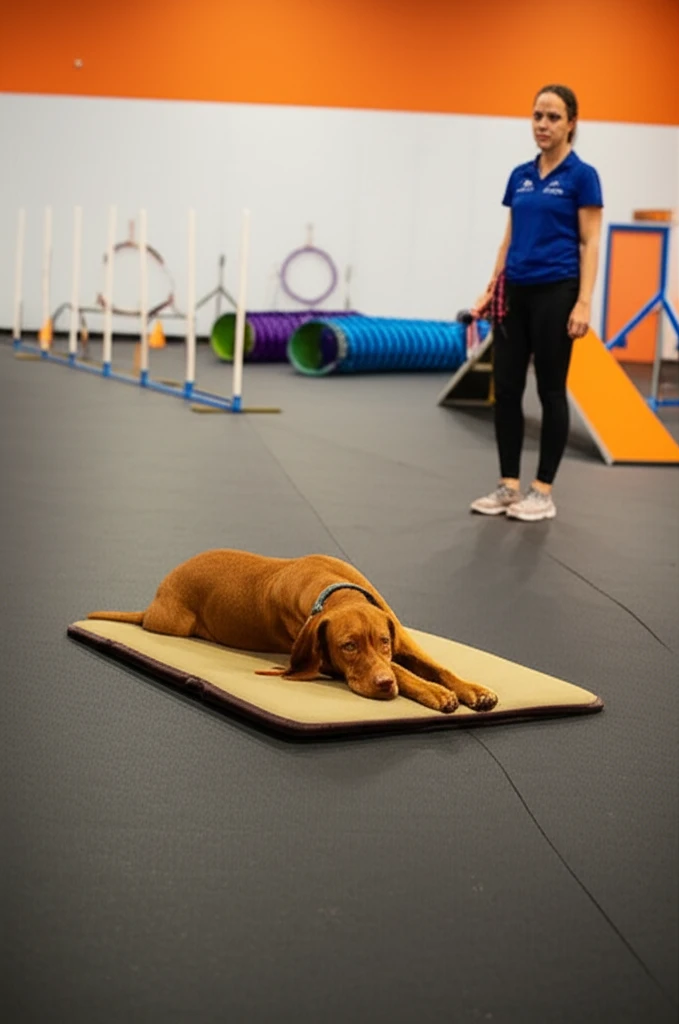
Group training classes serve a dual purpose for Vizslas with separation anxiety. First, they provide the intense mental and physical stimulation that this breed needs, which contributes to calmer behavior at home. Second, they teach your Vizsla to focus and work in the presence of other people and dogs, building a sense of competence that is not dependent entirely on your physical proximity.
Doggy daycare or regular playdates with trusted dogs can also help, particularly during the training phase. A Vizsla who is comfortable being left with familiar dogs or people is practicing being away from you in a context that feels safe. This is not a substitute for direct separation training, but it is a valuable supplement that prevents the anxiety from intensifying on days when you need to be gone for longer periods.
At Zoom Room, our group classes and socialization programs give your Vizsla the stimulation, structure, and social confidence they need. Find a Zoom Room near you and start building the independence your Vizsla needs to thrive — even when you are not in the room.
Frequently Asked Questions
Is it true that Vizslas cannot be left alone at all?
No. Vizslas can learn to handle reasonable periods alone, but it requires intentional training that many owners skip because the breed is so pleasant to have around. The problem is not that Vizslas are incapable of being alone. The problem is that owners of young Vizslas rarely practice separations because the dog is always right there, willing and eager to be included in everything. Then the first real absence hits and the dog has zero practice. Start independence training early, build duration gradually, and most Vizslas can comfortably handle four to six hours alone as adults.
My Vizsla broke out of their crate and injured themselves. Should I stop using a crate?
Yes, at least for now. A Vizsla who is injuring themselves in a crate is in a state of panic, and continuing to crate them will escalate the fear and the injuries. Switch to a dog-proofed room or a larger enclosed area while you work on the underlying separation anxiety. Some Vizslas do well with crates eventually, but only after the anxiety has been reduced to a manageable level through gradual desensitization and, in many cases, anti-anxiety medication. Forcing a panicking dog into a crate is dangerous and counterproductive. Address the anxiety first, then reintroduce the crate slowly with positive associations.
Ready to Help Your Vizsla Feel Secure?
Zoom Room's training programs and socialization classes give your Vizsla the mental stimulation and social confidence that support independence. Work with trainers who understand high-attachment breeds.
Find a Zoom Room