
Dog Car Anxiety: How to Help a Dog Who Hates Car Rides
If the only time your dog gets in the car is to go to the vet, they have learned exactly one thing about car rides: nothing good happens next. The trembling, drooling, and desperate attempts to escape the vehicle are not your dog being difficult. They are your dog making a perfectly logical prediction based on the data you have given them.
Why Your Dog Dreads the Car
Car anxiety in dogs usually comes from one of two sources, and sometimes both: negative associations and motion sickness. The distinction matters because the solutions are different.
Negative associations develop when the car consistently predicts something unpleasant. For many dogs, the pattern is straightforward. Car means vet. Vet means needles, rectal thermometers, and being handled by strangers. After a few repetitions of that sequence, your dog does not need to arrive at the clinic to feel anxious. The anxiety starts the moment they see the car door open, or even earlier, when they see you pick up your keys. This is classical conditioning working against you, and it is the same mechanism that makes dogs excited when they hear the treat bag crinkle. The association is automatic and emotional, not something your dog can reason their way out of.
Motion sickness is a separate, physical problem. It is especially common in puppies whose inner ear structures are still developing, though some adult dogs remain prone to it throughout their lives. A dog with motion sickness may drool excessively, lip-lick, yawn, vomit, or refuse to move once inside the vehicle. If your dog consistently vomits on car rides regardless of destination, the issue is likely vestibular, not emotional. Talk to your vet about anti-nausea medication before attempting behavioral desensitization, because no amount of treats will override genuine nausea.
Many dogs have both. A puppy who got carsick on their first few rides now associates the car with feeling terrible, and the anxiety that develops on top of the nausea makes the nausea worse. Breaking that cycle requires addressing the physical discomfort first, then rebuilding the emotional association.
Desensitization: Rebuilding the Car Association from Scratch
If your dog's car anxiety is primarily fear-based, the approach is the same gradual desensitization and counter-conditioning used for any fear-based behavior. You start well below the level that triggers panic, pair that low-level exposure with something your dog loves, and build up in small increments.
Step one is just being near the car. Walk your dog to the car in the driveway. Feed several high-value treats. Walk away. Repeat until your dog perks up when you head toward the car because it predicts chicken or cheese, not a trip. This might take one session or it might take ten. Let your dog's body language guide you.
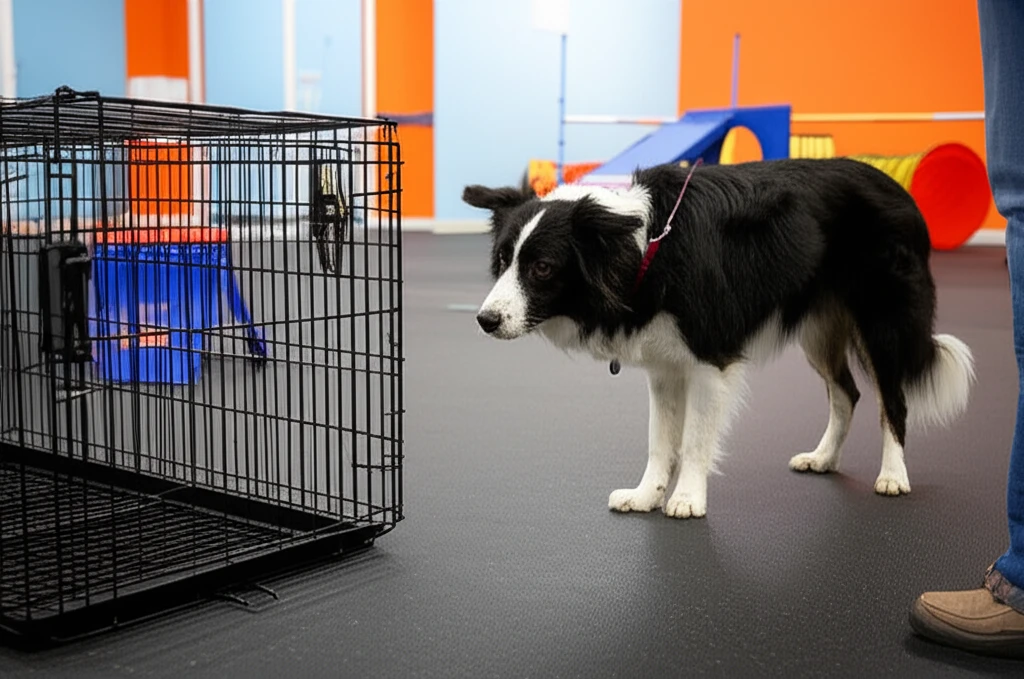
Step two is getting in the car with the engine off. Open the door, let your dog investigate or hop in on their own, and feed treats. Sit with them for a minute. No closing doors, no engine. Just a calm hang in the car where good things happen. If your dog uses a crate at home and finds it comforting, placing a familiar crate in the car can give them a secure anchor in the new space.
Step three is the engine. Start the car while your dog is inside, feed treats, then turn it off. The sound and vibration are a separate trigger for some dogs. Build comfort with the engine running before you go anywhere.
Step four is movement. Back down the driveway and pull back in. Drive around the block. Then drive to the end of the street and back. Each trip should be short, uneventful, and end with treats or play. The critical mistake people make here is going too far too fast. A thirty-minute highway drive after two days of driveway practice is not gradual. It is flooding, and it will undo the progress you have made.
Step five is driving to fun places. The park. A friend's yard. A pet store that allows dogs. The drive-through where your dog gets a plain burger patty. You need enough positive car destinations to outweigh the vet visits in your dog's mental ledger. This is the long game, and it works.
Crate, Harness, or Free Roaming: Finding What Works
How your dog rides in the car affects both their safety and their anxiety level. There is no universal answer, but there are clear guidelines.
A secured crate is the safest option and is often the best choice for anxious dogs. A crate limits visual stimulation, provides a den-like enclosure, and prevents your dog from pacing or trying to climb into your lap while you drive. If your dog is already comfortable in their crate at home, the car crate becomes familiar territory. Use the same bedding, the same crate cue, and the same treat routine. For motion-sick dogs, the crate should be positioned so your dog can see out the front windshield if possible, because forward-facing visual input helps reduce nausea.
A crash-tested harness attached to the seatbelt is the next best option. It keeps your dog secure without full enclosure. Some dogs do better with a harness because they can see more of their surroundings, which reduces the feeling of being trapped. Others do worse for the same reason, because they can see everything rushing past the windows. Observe your dog and adjust.
Free roaming in the car is the least safe option and often the worst for anxious dogs. An unsecured dog can jump into the front seat, block your vision, interfere with driving, or be thrown in a sudden stop. For an anxious dog, the freedom to pace and pant around the back seat gives them more space to rehearse their anxiety rather than settle. Structure helps anxious dogs. That means a defined space, whether it is a crate or a secured harness position.
Window position matters too. Some dogs are calmer with windows cracked for fresh air. Others fixate on passing stimuli and escalate. Experiment with window shades or covering part of the crate if visual input seems to be amplifying the problem.
Managing Motion Sickness
If your dog's car trouble is physical rather than emotional, or a combination of both, there are specific strategies that help with the nausea component.
Withhold food for two to three hours before a car ride. A full stomach makes motion sickness worse. For longer trips, offer a light meal well in advance rather than feeding right before departure.
Keep the car cool and well-ventilated. Heat amplifies nausea. Crack a window or run the air conditioning.
Face your dog forward. Whether in a crate or harness, position them so they can see the direction of travel. Side-facing or rear-facing positions, like a dog staring out a side window, can worsen the disconnect between what the inner ear senses and what the eyes see, which is the fundamental mechanism of motion sickness.
Drive smoothly. Sudden stops, sharp turns, and rapid acceleration all make motion sickness worse. Take corners gently, brake early, and stick to straight, smooth roads while your dog is building tolerance.
Talk to your vet about medication. Cerenia (maropitant) is a veterinary anti-nausea medication that works well for many motion-sick dogs. Over-the-counter options like meclizine may also help, but always consult your vet before giving any medication. For dogs with both anxiety and nausea, your vet may recommend combining an anti-nausea medication with a mild anti-anxiety medication like trazodone for the initial desensitization phase.
Puppies often outgrow motion sickness as their vestibular system matures, usually by around one year of age. But if a puppy has already built a negative car association from repeated nausea, you will still need to do the desensitization work even after the physical issue resolves. The memory of feeling sick does not disappear on its own.
Building a Lifetime of Positive Car Experiences
The best long-term fix for car anxiety is making the car a regular, boring, positive part of your dog's life. Dogs who only ride in the car once a month for a vet visit never get enough positive data to override the negative association. Dogs who ride in the car several times a week to parks, training classes, happy vet visits, friend's houses, and road trips learn that the car is simply how you get to the next good thing.
Start building this pattern early if you have a puppy. Short, positive rides to fun destinations during the first few months create a car association that is hard to shake, even after occasional vet visits. Bring treats for the ride, play a calm audiobook or classical music, and make the car a space where your dog can settle with a stuffed Kong or a favorite chew.
If you are working with an adult dog who already has car anxiety, be patient with the desensitization process and do not skip steps. Some dogs come around quickly. Others need weeks or months of consistent short exposures before they can handle a trip across town without trembling. Both timelines are normal. What matters is that every car experience is as positive as you can make it, and that you are not forcing your dog through rides they are not ready for just because it is more convenient than continuing the slow work.
The dogs who walk up to the car with a wagging tail and hop in without hesitation did not get there by accident. They got there because someone took the time to make the car mean good things. You can be that person for your dog. Find a Zoom Room near you to work on the foundational confidence and desensitization skills that make car rides, and everything else, less stressful for your dog.
Frequently Asked Questions
How do I know if my dog has motion sickness or car anxiety?
Motion sickness and anxiety often look similar, but there are differences. A dog with primarily motion sickness will drool, lip-lick, yawn excessively, and vomit during or after rides, regardless of the destination. A dog with primarily anxiety will show stress signs before or at the start of the ride, such as trembling, panting, whining, trying to escape, or refusing to get in the car. Motion-sick dogs often improve when given anti-nausea medication even without behavioral work. Anxious dogs typically do not respond to anti-nausea medication alone. Many dogs have both issues, so if you are not sure, start with a vet visit to rule out the physical component and then address the behavioral side.
Can I give my dog Benadryl for car rides?
Benadryl (diphenhydramine) is sometimes recommended as a mild sedative for car anxiety, but it is not an anti-nausea medication and its sedation effect varies widely between dogs. Some dogs become drowsy, others become more agitated, and the sedation does nothing to change the underlying emotional response to the car. Talk to your vet about more targeted options. Cerenia is a veterinary anti-nausea medication specifically designed for motion sickness in dogs. For anxiety, medications like trazodone or gabapentin given before a ride are more effective and more appropriate. Never give any medication without consulting your vet first, as dosing depends on your dog's weight, health, and other medications.
How long does it take to desensitize a dog to the car?
The timeline depends on how severe the anxiety is and how long the negative association has been building. A puppy with mild car nervousness might come around in a week or two of short, positive exposures. An adult dog who has panicked on every car ride for years may need two to three months of consistent desensitization work. The most important variable is consistency. Short sessions several times a week produce better results than one long session on the weekend. Rushing the process by skipping steps or increasing difficulty too quickly is the most common reason desensitization stalls, so let your dog's comfort level set the pace.
Ready to Help Your Dog Enjoy the Ride?
Zoom Room's training programs build the confidence and desensitization skills your dog needs to handle car rides, vet visits, and every new experience. You train alongside your dog with professional coaching in a controlled indoor gym.
Find a Zoom Room