
How to Choose a Dog Daycare: What to Look For and What to Avoid
A great daycare can be the highlight of your dog's week. A bad one can set off behavioral problems that take months to undo. The difference is not always obvious from the lobby, so you need to know what to look for before you hand over the leash.
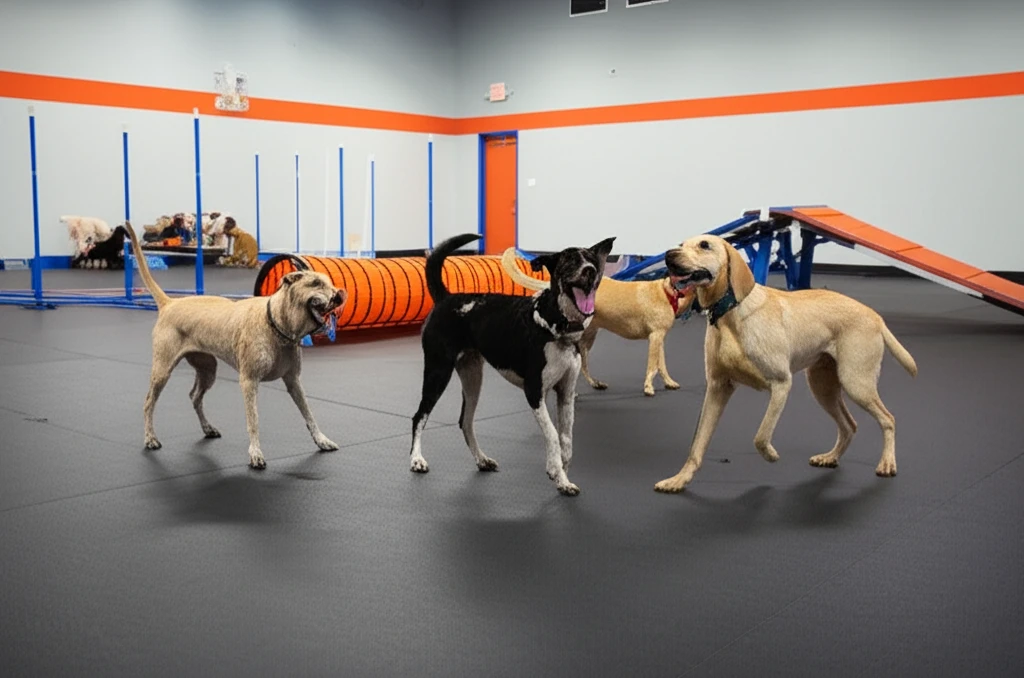
What a Good Daycare Looks Like
The most important thing a daycare does is manage the social environment. That starts with staff-to-dog ratios. Look for one handler per ten to fifteen dogs at a minimum, and closer to one-to-eight for facilities that accept puppies or large mixed groups. Those handlers should be actively supervising, meaning they are on the floor watching body language and redirecting dogs before tension escalates, not sitting in a corner scrolling their phones.
Play groups should be separated by size, energy level, or play style. A seventy-pound Labrador and a nine-pound Chihuahua should not be in the same play area, no matter how friendly both dogs are. Body weight differences create injury risk during normal play. Similarly, a dog who plays by body-slamming should not be grouped with a dog who prefers parallel sniffing. Good facilities assess play styles during intake and adjust groupings throughout the day as energy levels shift.
Vaccination requirements should be non-negotiable. At minimum, a responsible daycare requires up-to-date rabies, DHPP (distemper, hepatitis, parainfluenza, parvovirus), and bordetella (kennel cough) vaccinations. Some also require the canine influenza vaccine, especially in areas where outbreaks have occurred. If a facility tells you vaccinations are optional or they will accept a titer test without veterinary documentation, that is a facility that is prioritizing enrollment over safety.
Cleanliness is obvious but worth stating: the facility should smell clean, not like bleach masking urine. Floors should be non-porous and sanitized regularly. Outdoor areas should be free of standing water and feces. Fresh water should be available at all times in clean, non-tippable bowls.
Red Flags That Should Send You Elsewhere
No temperament screening is the biggest red flag. A daycare that accepts every dog on the first visit without any behavioral evaluation is telling you they do not manage their playgroups carefully. A responsible facility conducts an intake assessment, often a short trial visit where staff observe how your dog responds to other dogs, handling, and the new environment. This protects your dog as much as it protects everyone else's.
No webcams or observation windows should give you pause. Transparency is a sign of confidence. Facilities that do not let you see what happens during the day may have something to hide, or they may simply not care enough about accountability to invest in it. Either way, you want to see how your dog spends their time.
Watch for overcrowding. If the play area looks like a mosh pit, with dogs piling on top of each other, constant mounting, or dogs unable to move away from an interaction they do not want, the space is either too small or the groups are too large. Dogs need room to disengage. A dog who cannot walk away from a situation they are uncomfortable with is a dog who will eventually escalate to a snap or fight.
Untrained staff is harder to spot but critical. Ask what training the handlers receive. If the answer is vague or amounts to on-the-job learning, that is a problem. Staff should be trained to read canine body language, break up altercations safely, and recognize stress signals before they become incidents. Ask how they handle a dog fight. Ask what they do when a dog is showing signs of stress. The answers will tell you a lot.
Finally, any facility that uses punishment-based corrections, spray bottles, alpha rolls, or physical intimidation to manage dogs should be crossed off your list immediately.
How Socialization and Training Prepare Your Dog for Daycare
Daycare is not a substitute for socialization. It is a place where previously socialized dogs get to practice their social skills. There is an important difference. A dog who has never learned how to greet another dog politely, read social cues, or disengage from play when things get too intense is going to have a rough time in a group setting, and they may make it rough for every other dog in the room too.
Dogs who have been through structured puppy socialization or group classes learn how to navigate social situations before they are thrown into an unstructured one. They learn that not every dog wants to play, that play pauses are normal, and that human handlers are a source of safety. These skills translate directly to the daycare environment. A well-socialized dog gets more out of daycare because they can actually enjoy it instead of spending the day overstimulated, anxious, or in conflict.
If your dog struggles with separation anxiety, daycare might sound like a solution because your dog is not home alone. But the underlying anxiety does not disappear just because there are other dogs in the room. A dog with separation distress needs that issue addressed through training before daycare becomes a positive experience rather than a different flavor of stress. The social pressure of a group environment can actually intensify anxiety for dogs who are not ready for it.
Basic obedience matters too. A dog who responds to their name, can settle on a mat, and understands a recall cue is significantly easier for daycare staff to manage. That is good for your dog, because it means staff can redirect them quickly if a situation gets tense, and it is good for the other dogs, because one well-trained dog in a playgroup actually raises the quality of play for everyone. At Zoom Room socialization classes, your dog learns these skills in a supervised group setting that mirrors the social dynamics of daycare, with the added benefit of a trainer guiding every interaction.
Questions to Ask Before You Enroll
Treat your daycare visit like a job interview, because that is what it is. You are hiring someone to care for your dog all day. Here are the questions that matter most.
What is your intake and assessment process? You want a multi-step answer: a questionnaire, a temperament screening, and a trial period. One-and-done sign-ups are a red flag.
What is your staff-to-dog ratio, and how do you manage playgroups? Listen for specifics about group size limits, how dogs are matched, and how often groups are rotated or given rest breaks during the day.
What happens if my dog gets into a fight or is injured? You want to know about incident protocols, veterinary contacts, and how and when you will be notified. A good facility has a clear, practiced emergency plan.
What training do your staff members receive? Look for mention of canine body language, stress signal recognition, and safe intervention techniques. Certifications from organizations like the Dog Gurus or Pet Care Services Association are a positive sign.
Can I see the play areas and observe a session? Any hesitation here is a dealbreaker. You should be able to see where your dog will spend the day and watch how staff interact with the dogs in their care.
How much rest time do dogs get? All-day play is not a benefit. It is a recipe for overstimulation. Dogs should have scheduled quiet time, ideally in individual spaces, where they can decompress during the day. A good daycare builds rest into the schedule the same way a good puppy routine builds in naps.
Frequently Asked Questions
Is dog daycare good for every dog?
No, daycare is not the right fit for every dog. Dogs who are highly social, enjoy play, and have solid basic manners tend to thrive. Dogs who are fearful, dog-reactive, resource guarders, or easily overwhelmed by stimulation may find daycare stressful rather than enriching. Puppies under four months who have not completed their vaccination series should not attend. Senior dogs or dogs with mobility issues may also struggle with the physical demands of group play. If your dog comes home from daycare exhausted in a frantic, wired way rather than a content, relaxed way, or if their behavior at home deteriorates after daycare days, it is worth reconsidering whether the environment is a good match.
How often should my dog go to daycare?
Two to three days per week is a sweet spot for most dogs. Daily daycare can lead to chronic overstimulation, and some dogs start showing behavioral changes like increased reactivity, difficulty settling at home, or a heightened arousal baseline when they attend five days a week. Think of it like a social calendar for a person. Some interaction is great. Too much is exhausting. On non-daycare days, provide exercise, mental enrichment, and opportunities to practice calm, independent behavior at home. Watch your individual dog's response and adjust the frequency based on how they handle it.
What should I do if my dog fails the daycare temperament test?
A failed temperament test is information, not a verdict. It usually means your dog needs more foundational social skills before they are ready for an unstructured group environment. That might mean working on dog-to-dog introductions, building confidence around new people and environments, or addressing specific behaviors like resource guarding or leash reactivity. Group training classes and structured socialization sessions are the bridge between where your dog is now and where they need to be for daycare to work. Many dogs who fail an initial screening pass comfortably after a few months of consistent socialization and training.
Ready to Get Started?
Zoom Room's group socialization classes and obedience training build the skills your dog needs to thrive in daycare and every other social setting. You train alongside your dog with a professional who knows how to prepare dogs for the real world.
Find a Zoom Room