
How to Choose a Dog Trainer: What to Look For and What to Avoid
Dog training is an unregulated industry. Anyone can call themselves a trainer, print business cards, and start charging money. That means the difference between an excellent trainer and a harmful one is not obvious from a website or a Google listing. Knowing what to look for, and what to run from, protects your dog and your investment.
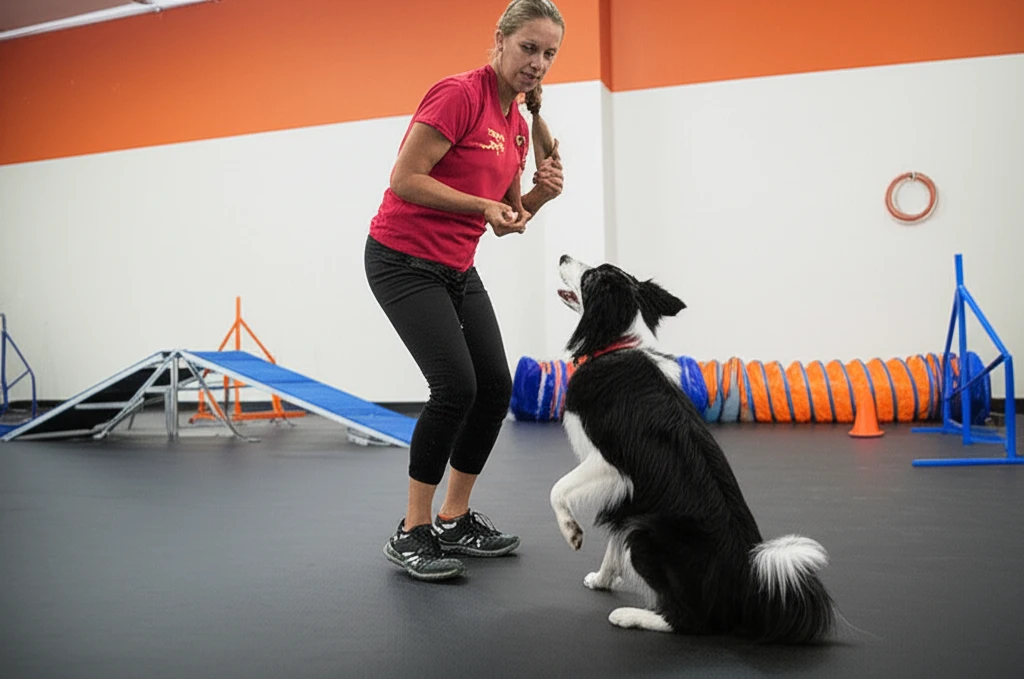
Methods Matter More Than Anything Else
The single most important question when evaluating a trainer is: how do they train? The answer should center on positive reinforcement, which means marking and rewarding the behaviors you want rather than punishing the ones you do not want. This is not a philosophical preference. It is what the science supports. The American Veterinary Society of Animal Behavior, the American College of Veterinary Behaviorists, and virtually every major animal behavior organization in the world recommends reward-based training as the most effective and least harmful approach.
A good trainer uses food rewards, play, and praise to build behaviors. They use management and redirection to prevent unwanted behaviors. They understand that a dog who pulls on the leash, barks at other dogs, or jumps on guests is not being defiant. The dog is doing what has worked before, has not been taught an alternative, or is responding to an emotional state like fear or frustration. The trainer's job is to teach, not to correct.
Ask the trainer to describe how they would address a specific issue your dog has. The answer should involve understanding why the behavior is happening, setting the dog up to succeed, and building an alternative behavior through repetition and reward. If the answer involves leash pops, verbal corrections, intimidation, or any tool that works by causing discomfort, that is not the trainer for you.
Red Flags That Should End the Conversation
Guaranteed results. No ethical trainer guarantees outcomes because dog training involves a living animal and a human who has to follow through at home. A trainer who guarantees your dog will be fixed in a specific number of sessions is selling certainty they cannot deliver, and when the guarantee is not met, it is always framed as the owner's fault.
Dominance language. If a trainer talks about being the alpha, establishing pack leadership, showing your dog who is boss, or references wolf pack hierarchy, they are working from a model that has been thoroughly debunked. The original wolf pack studies were conducted on captive, unrelated wolves, not natural family groups, and the researcher who popularized the concept has spent decades trying to correct the misunderstanding. Dominance-based training justifies confrontation and physical intimidation, both of which increase fear, aggression, and behavioral fallout.
Aversive tools as standard equipment. Prong collars, choke chains, shock collars (often marketed as e-collars or remote trainers), and citronella spray collars all work by causing pain or discomfort to suppress behavior. If a trainer requires or routinely recommends these tools, their methodology relies on punishment, regardless of what their website says about balanced training or relationship-based approaches.
You drop off your dog. Any format where you hand your dog to a trainer and pick them up "trained" should be scrutinized heavily. Your dog's behavior is largely about the relationship between you and your dog, and if you are not present to learn the skills, timing, and mechanics, the training does not transfer to your daily life. There are limited scenarios where a brief board-and-train component can jumpstart specific skills, but if the entire program happens without you in the room, you are paying for someone else to build a relationship with your dog instead of building your own.
Secrecy about methods. If a trainer will not let you observe a class, watch a session, or explain exactly what happens when your dog does not comply, that is a problem. Trainers who are proud of their methods are happy to show them. Trainers who hide their methods know they would not survive scrutiny.
What Good Training Looks Like
A good training environment has a few consistent characteristics, regardless of whether it is a group class, a private session, or an online program.
You are present and involved. Training is a skill transfer from the trainer to you, not from the trainer to your dog. A good trainer spends as much time coaching you on timing, body language, and consistency as they spend working directly with your dog. After a good class, you should understand not just what to do, but why it works, so you can apply the principles to new situations at home.
The dogs in the room look comfortable. In a well-run class, dogs are focused, engaged, or resting calmly. Some excitement and distraction are normal, especially in beginner classes, but you should not see widespread fear, cowering, or dogs desperately trying to get away from their handlers. The energy of the room tells you a lot about the methods being used.
The trainer adjusts to individual dogs. A class of eight dogs will have eight different temperaments, learning speeds, and challenges. A good trainer modifies exercises, adjusts criteria, and provides individual feedback rather than applying one rigid protocol to every dog. If a dog is struggling, the trainer makes the exercise easier rather than repeating the same instruction louder.
Education is ongoing. The best trainers pursue continuing education because the science of animal behavior evolves. Ask about certifications and professional memberships. CPDT-KA (Certified Professional Dog Trainer, Knowledge Assessed), KPA CTP (Karen Pryor Academy Certified Training Partner), and IAABC (International Association of Animal Behavior Consultants) membership all indicate a commitment to evidence-based methods. These letters are not a guarantee of quality, but their absence combined with other red flags is telling.
Puppy socialization is integrated into the training program, not treated as a separate activity. Dogs who learn to navigate social situations, handle novel environments, and recover from minor stressors during their critical development period are easier to train and more resilient for life. A training program that addresses behavior in context, not just in isolation, produces better real-world results.
Training Formats: Group, Private, and Board-and-Train
Group classes are the most effective format for most dogs and most goals. You train alongside other dogs and handlers, which means your dog practices skills in the presence of real-world distractions from day one. A sit in your kitchen is easy. A sit in a room full of other dogs, new smells, and excited humans is training. Group classes also provide built-in socialization, peer support for owners, and a structured progression from basic skills to advanced work. They are the best value per dollar of any training format.
Private sessions are valuable when your dog has a specific issue that needs individual attention: fear-based behavior, leash reactivity, resource guarding, or a history that requires careful, customized planning. Privates are also useful for owners who want coaching on their handling mechanics without the pace of a group class. The limitation is the absence of real-world distractions. A dog who learns to focus on you in a quiet room still needs to practice those skills around other dogs and people, which is what group classes provide.
Board-and-train programs send your dog to live with a trainer for a period of time, typically two to four weeks. This is the most expensive format and the one that requires the most caution. The best board-and-train programs include significant owner education sessions, transition coaching when the dog comes home, and full transparency about methods used during the board. The worst ones are black boxes where your dog disappears for three weeks and comes back suppressed rather than trained, and you have no idea what happened. If you consider board-and-train, visit the facility unannounced, ask to see training in action, and get detailed descriptions of every method and tool used. No exceptions.
For most people, a combination of group classes for foundational skills and socialization, with occasional private sessions for targeted issues, produces the best long-term results. The skills you and your dog build together in class form the foundation for everything else: walking into your first class is often the single most important step in your dog's training journey.
Questions to Ask Before You Enroll
These questions will tell you whether a trainer is worth your time and your dog's trust.
What methods and tools do you use? The answer should be specific and centered on reward-based training. Vague answers like "we use whatever works" or "it depends on the dog" often mask the use of aversive methods on dogs who do not respond quickly to rewards.
What happens when a dog does not comply? This is the most revealing question. A good trainer talks about making the exercise easier, increasing the value of the reward, or breaking the behavior into smaller steps. A bad trainer talks about corrections, consequences, or escalation.
Can I observe a class before enrolling? Any trainer who says no is not someone you want training your dog. Observation lets you see the methods in practice, the energy in the room, and how the trainer handles dogs who are struggling.
What are your credentials and continuing education? Look for nationally recognized certifications and ongoing learning. The field changes, and trainers who stopped learning ten years ago are working from outdated information.
Am I present during all training? The answer should be yes for group classes and the majority of private sessions. If the trainer's model depends on working with your dog without you, ask why and what the plan is for transferring skills to you.
What is the class size and structure? Smaller classes generally provide more individual attention. Ask how many dogs are in each session and what the student-to-instructor ratio is. A class of fifteen dogs with one trainer is a lecture, not a training session.
Do you have experience with my dog's specific issue? A generalist trainer may be great for obedience but out of their depth with severe reactivity or aggression. For complex behavioral issues, look for a trainer or behaviorist with specific experience and ideally a referral from your veterinarian.
Frequently Asked Questions
What is the difference between a dog trainer and a behaviorist?
A dog trainer teaches skills and manners, like sit, stay, loose leash walking, and recall. A behaviorist addresses emotional and psychological issues, like aggression, severe anxiety, phobias, and compulsive behaviors. Board-certified veterinary behaviorists (DACVBs) are veterinarians with additional residency training in animal behavior and can prescribe medication. Certified applied animal behaviorists (CAABs) hold advanced degrees in animal behavior. For issues like basic obedience, puppy manners, or mild reactivity, a qualified trainer is the right starting point. For severe, dangerous, or medically complex behavioral problems, a veterinary behaviorist provides the highest level of expertise.
How do I know if my dog's trainer is using good methods?
Watch your dog. A dog in a well-run, reward-based class looks engaged, offers behaviors willingly, and recovers quickly from mistakes or distractions. Their tail is neutral or relaxed, they make eye contact with their handler, and they eat treats readily. A dog being trained with aversive methods looks shut down, avoidant, hesitant to offer behaviors, and may show stress signals like lip licking, yawning, whale eyes, or a tucked tail. Also watch the trainer. They should be coaching you to reward your dog, not telling you to correct them. If you leave a class feeling like you spent most of your time telling your dog no, the training approach is wrong.
Is online dog training effective?
Online training can be effective for specific skills, owner education, and guided behavior modification plans, especially when delivered by a qualified trainer who reviews your video submissions and provides personalized feedback. It is not a substitute for in-person group classes because your dog does not get to practice around other dogs, and the trainer cannot observe your dog's body language and your timing in real time. The best use of online training is as a supplement to in-person work, or as a starting point when no qualified local trainer is available. If you are choosing between a good online trainer and a local trainer who uses aversive methods, the online option is the better choice for your dog.
Ready to Get Started?
Zoom Room <a href="/train">group classes</a> put you and your dog in the room together with a professional trainer who uses only positive reinforcement methods. You learn the skills, your dog practices in a real-world setting, and the training translates to your daily life.
Find a Zoom Room