
Dog Body Language: How to Read What Your Dog Is Telling You
Your dog is talking to you constantly. Not with barks and whines, but with their body: the position of their ears, the tension in their mouth, the speed of their tail, and the way they shift their weight. Learning to read these signals is the single most useful skill you can develop as a dog owner, and most people have never been taught how.
Calming Signals: Your Dog's First Language
Dogs use a set of behaviors called calming signals to communicate that they are not a threat, that they need space, or that a situation is making them uncomfortable. These signals evolved as social tools to prevent conflict, and your dog uses them every day, whether you notice or not.
Lip licking. A quick tongue flick, not in response to food, is one of the most common calming signals. Your dog may lip-lick when approached by a stranger, when another dog is staring at them, or when you lean over them. It means something about the situation is creating mild stress.
Yawning. A yawn that is not related to waking up or being tired is a stress signal. Dogs yawn in the vet waiting room, during tense interactions, and when they are being asked to do something they find confusing or pressuring. If your dog yawns repeatedly during a training session, they may be overwhelmed and need a break.
Look-aways and head turns. When a dog deliberately turns their head away from something or averts their gaze, they are communicating that they are not interested in conflict. This is polite dog language. A head turn during a greeting says, "I am not a threat." A look-away when another dog approaches says, "I do not want to engage." Humans often miss this one entirely, or worse, they pull their dog's face back toward the thing the dog was trying to avoid.
Sniffing the ground. A dog who suddenly becomes very interested in the ground during a social interaction is often using sniffing as a displacement behavior: a way to defuse tension. If your dog drops their nose to the ground when another dog approaches, they are likely managing their discomfort, not just smelling something interesting.
Slow movement and freezing. A dog who slows their walking pace or freezes completely is processing a situation they find uncertain or concerning. Freezing, in particular, is often a precursor to a decision: the dog is about to either engage, flee, or escalate. If your dog freezes when another dog approaches, pay close attention to what happens next.
The Tail Wag Myth and Other Misreadings
The most persistent misconception in dog ownership is that a wagging tail means a happy dog. It does not. A wagging tail means an aroused dog. That arousal can be excitement, happiness, fear, frustration, or aggression. The wag alone tells you almost nothing. You need to read the whole dog.
A broad, sweeping wag with a loose body, relaxed face, and soft eyes? That is likely a happy, friendly dog. A stiff, rapid wag held high with a tense body, hard eyes, and forward weight distribution? That dog is aroused and possibly about to escalate. A low, slow wag with a tucked posture and averted gaze? That is an anxious or uncertain dog trying to appease. Same body part, three completely different emotional states.
Whale eyes (also called half-moon eyes) occur when a dog turns their head slightly but keeps their gaze fixed on something, showing the white sclera of the eye in a crescent shape. This is a stress signal that often shows up when a dog is guarding a resource, feeling trapped, or being handled in a way that makes them uncomfortable. If you see whale eyes, the dog is telling you they are not okay with what is happening. A dog showing whale eyes over a food bowl is a dog who may be developing resource guarding behavior.
Hard stares. Prolonged, unblinking eye contact between dogs is confrontational. It is the opposite of the polite look-away. Two dogs staring at each other without breaking eye contact are in a standoff, and if neither dog disengages, the interaction can escalate quickly. If you see your dog locked in a hard stare with another dog, interrupt it calmly by moving your dog away or breaking the sight line. Do not wait to see what happens.
Play bows are not always invitations to play. A play bow, front end down and rear end up, usually signals playful intent. But some dogs use play bows as appeasement when they are unsure, and others use them as a tactic to get closer to a dog they intend to bully. Context matters. A play bow followed by bouncy, reciprocal play with frequent pauses is genuine. A play bow followed by a hard rush, pinning, or relentless chasing where the other dog is trying to escape is not play.
Stress Signals vs. Happy Signals: A Comparison
Reading body language is about reading the whole dog, not isolating one signal. Here is what to look for at each end of the spectrum.
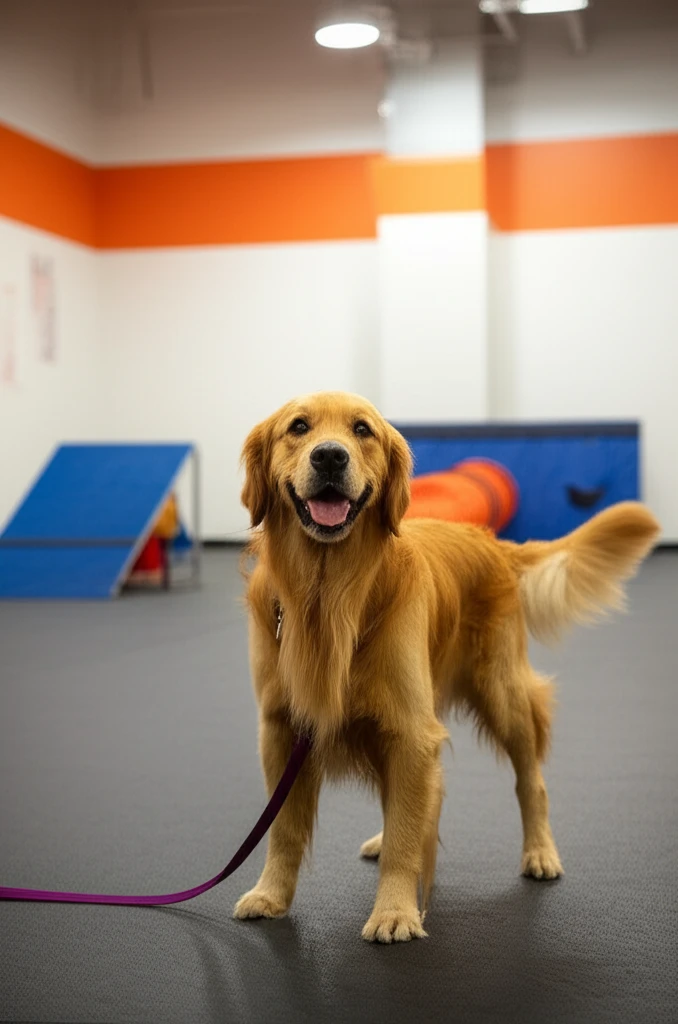
A relaxed, happy dog has a loose body with weight distributed evenly, not leaning forward or shrinking back. Their mouth is slightly open or closed softly. Their ears are in their natural position, not pinned back or pressed forward rigidly. Their tail is at or below their natural resting position with a gentle, sweeping motion. Their eyes are soft with visible but relaxed eyelids. They move fluidly, engage willingly, and recover quickly from surprises. This is a dog who feels safe.
A stressed dog looks different in ways that are sometimes subtle. Their body is tense or stiff. Their mouth is closed tightly or pulled back at the corners in what people sometimes mistake for a smile. Their ears are pinned flat against their head or rotated sideways. Their tail is tucked, rigid, or flagging high and stiff. Their eyes are wide, showing the whites, or squinting. They may be panting rapidly even though they are not hot or have not exercised. They may shake off as if wet after a stressful interaction. They may refuse food, which is a significant stress indicator because most dogs will eat anywhere, anytime, unless they are shut down.
Learning to see the difference takes practice, and you will get better at it the more you watch dogs in different contexts. Observe dogs at the park, in waiting rooms, during walks. Watch how their body changes when they see something they like versus something that worries them. Once you start seeing it, you cannot unsee it, and your relationship with your dog will change because you are finally hearing what they have been saying all along.
In socialization classes, trainers help you read your dog's body language in real time during interactions with other dogs and people. This guided observation accelerates your learning because you have a professional pointing out signals you would otherwise miss.
Why Body Language Matters for Training and Daily Life
Every training decision you make should be informed by what your dog's body is telling you. A dog who is lip-licking and yawning during a training session is not being lazy or stubborn. They are stressed, and pushing through will make the association with training worse, not better. A dog who freezes when another dog appears on a walk is not being difficult. They are telling you they have hit their threshold, and pulling them closer is going to trigger a reactive response.
Body language reading also prevents bites. The vast majority of dog bites are preceded by clear warning signals that the human either did not see or chose to ignore. A dog who tenses, shows whale eyes, freezes, and growls before snapping gave at least four warnings. If you can read the first signal, the tension, you can change the situation before the dog feels the need to escalate. This is especially important when children interact with dogs, because children are the most likely to miss or misinterpret canine stress signals.
Understanding body language transforms your walks, your social outings, and your time at home. You stop putting your dog in situations that overwhelm them. You start noticing when they are comfortable and when they are not. You advocate for them when other people or dogs do not respect their signals. And your dog, in turn, trusts you more because you are finally responding to what they are communicating. That trust is the foundation of every skill you will ever teach them.
Dogs who attend structured introduction sessions and group training develop clearer body language themselves, because they practice social communication in environments where the rules are consistent and the humans are paying attention. A dog who has learned that their calming signals are respected is a dog who continues to use them. A dog whose signals have been consistently ignored is a dog who stops communicating and starts reacting.
Putting It Into Practice
Start watching your dog at home during low-stress moments. Notice their baseline: how they hold their body when they are relaxed, what their face looks like when they are content, where their tail naturally rests. This baseline is your reference point. When something changes, you will notice it faster because you know what normal looks like for your specific dog.
Then watch them in more stimulating situations. On a walk, observe how their body changes when they see another dog at a distance. At the park, watch how they greet familiar dogs versus unfamiliar ones. When guests come to your home, notice whether your dog approaches with a loose body or hangs back with tension. Each observation gives you information about your dog's emotional state that you can use to make better decisions.
When you see stress signals, do not punish them. Do not correct your dog for growling, lip curling, or moving away from something that frightens them. These are communication tools. Punishing them removes the warning system without removing the emotion, which makes your dog less predictable and more dangerous. Instead, acknowledge the signal by creating distance from the trigger, reducing the pressure, or ending the interaction.
If your dog is showing chronic stress signals, frequent lip licking, persistent yawning, ongoing avoidance, or regular freezing in everyday situations, that is a pattern worth addressing with a professional. Chronic stress affects your dog's health, their ability to learn, and their quality of life. A trainer who understands fear-based behavior can help you identify the triggers and build a plan to help your dog feel safer. Find a Zoom Room near you to start learning body language skills alongside your dog in a supportive group setting.
Frequently Asked Questions
How can I tell if my dog is happy or just tolerating something?
Look at the whole body, not just one signal. A happy dog has a loose, wiggly body, soft eyes, a relaxed open mouth, and initiates or stays in the interaction voluntarily. A tolerating dog may be still but tense, with a closed mouth, averted gaze, or stiff posture. They stay in the situation but do not engage enthusiastically. You may see subtle stress signals like lip licking, yawning, or turning the head away. A key test is whether your dog chooses to return to the situation when given the option to leave. A dog who walks away and does not come back was tolerating, not enjoying.
Do all dogs use the same body language signals?
The core signals are consistent across breeds, but physical characteristics can make them harder to read. Dogs with cropped ears cannot pin them back. Dogs with docked tails cannot tuck or flag them. Breeds with heavy facial folds may have harder-to-read mouth and eye expressions. Breeds with naturally curled tails or erect ears have a different baseline than floppy-eared, long-tailed breeds. This is why knowing your individual dog's baseline is so important. Learn what relaxed looks like for your specific dog, and deviations from that baseline will stand out, regardless of breed.
My dog growls when my child hugs them. Should I be worried?
Yes, take this seriously. A growl is a clear communication that the dog is uncomfortable, and it is a warning that should be respected, not punished. Most dogs do not enjoy being hugged because it restricts their movement and puts a face close to theirs, both of which can feel threatening. Teach your child to pet the dog on the chest or side instead of hugging, and supervise all interactions. Never punish the growl, because removing the warning does not remove the discomfort. It just means the dog may skip the warning next time and go straight to a snap. If the growling is frequent, consult a trainer who specializes in family dog dynamics.
Ready to Get Started?
At Zoom Room, our trainers help you read your dog's body language in real time during group classes and socialization sessions. Understanding what your dog is telling you changes everything about how you train, play, and live together.
Find a Zoom Room