
How to Take Your Dog to Pet-Friendly Stores and Actually Enjoy It
Pet-friendly stores are everywhere, but bringing your dog into one before they are ready turns a quick shopping trip into a stressful ordeal for you, your dog, and every other person in aisle five. Done right, store visits are one of the best real-world socialization tools you have access to.
Which Stores Actually Allow Dogs
The short answer: more than you think, but fewer than social media suggests. Most hardware stores, including Home Depot, Lowe's, and Ace Hardware, are widely dog-friendly, though policies vary by location and manager. Pet supply stores like Petco, PetSmart, and most independent pet shops welcome dogs. Outdoor and sporting goods retailers such as REI, Bass Pro Shops, and Cabela's frequently allow dogs. Some clothing and home goods stores, including Nordstrom, TJ Maxx, and Pottery Barn, have dog-friendly policies at many locations.
Grocery stores, pharmacies, and restaurants with indoor dining generally do not allow dogs due to health department regulations. This is not a gray area. Bringing a non-service dog into a grocery store puts the store at risk of health code violations, and it is not fair to employees who have to enforce the rules.
Always call ahead or check with the specific location before bringing your dog. Corporate policy and individual store management can differ. When in doubt, ask at the door. And if a store says no, respect it. Pushing the issue hurts access for every dog owner who comes after you.
What Your Dog Needs to Be Able to Do
A dog who is ready for store visits can do four things reliably. First, walk on a loose leash on smooth, unfamiliar flooring. Store floors are slick, which changes how your dog moves and feels. Tile, polished concrete, and epoxy surfaces can be unsettling for dogs who have only walked on carpet, grass, and sidewalks. If your dog skitters, splays, or freezes on smooth floors, work on surface confidence before adding the complexity of a retail environment.
Second, impulse control around merchandise. Stores are full of things at nose level: food, toys, leather goods, other shoppers' bags. Your dog needs to walk past these items without grabbing, sniffing obsessively, or pulling you into displays. This is the same disengagement skill that makes restaurant dining possible.
Third, polite greetings or, better yet, the ability to ignore strangers entirely. In a pet-friendly store, people will approach. Some will ask to pet your dog; some will not. Your dog should be able to pass people at close range without jumping, lunging, or demanding attention. If someone does pet your dog, they should be able to accept the greeting without losing their composure.
Fourth, a basic settle or wait. You are going to stop moving. You will stand in checkout lines, pause to look at products, and talk to employees. Your dog needs to be able to stand or sit calmly beside you during these pauses rather than pacing, whining, or pulling toward the exit.
How to Build Up to Busy Stores
Start quiet. A Tuesday morning at a garden center with wide aisles and three other shoppers is a different planet from a Saturday afternoon at Costco. Your first few store visits should be deliberately low-stimulation: go during off-peak hours, choose stores with spacious layouts, and keep the visit short. Ten to fifteen minutes is plenty. You are not shopping. You are training.
Walk the perimeter first, where there is more space and fewer people. Reward calm, loose-leash walking with treats. If your dog pulls toward something, stop, wait for the leash to go slack, and then continue. If they seem overwhelmed by a particular section, calmly redirect to a quieter area. You are building a positive association with the store environment itself.
Over multiple visits, gradually increase the difficulty. Go during slightly busier times. Walk down narrower aisles. Practice sits near the register. Stand in a checkout line. Add one new challenge per visit so your dog's confidence builds incrementally. A dog who has been through structured errand-running practice will progress through these stages faster because they already have a baseline comfort with indoor retail environments.
If your dog is doing well in quiet stores, try a pet supply store on a weekend when other dogs are present. This adds a significant challenge: your dog now has to maintain their composure around other dogs in a confined space. Watch their body language carefully. A stiff body, hard stare, or pulling toward other dogs means you need more distance or a quieter time.
Common Mistakes and the Service Dog Conversation
The most common mistake is treating the store visit as a test rather than a training session. If your dog falls apart in a store, that is data, not a failure. It means they need more preparation at an earlier stage. Pushing through a bad experience teaches your dog that stores are stressful, which is the opposite of what you want.
The second mistake is bringing a dog who is not ready because the store allows dogs. Permission to enter is not the same as readiness to enter. A dog who barks at every person, knocks over a display, or has an accident in the aisle creates problems for the store, for other shoppers, and for future dog-access policies. Be honest about where your dog is in their training.
A note about service dogs: do not misrepresent your pet as a service dog to gain access to stores that do not allow pets. Service dogs are individually trained to perform specific tasks for people with disabilities. They are protected under the ADA. Faking service dog status is illegal in many states, it undermines access for people who genuinely need their service animal, and it creates problems when an untrained pet misbehaves while wearing a service dog vest. If a store does not allow pets, go to one that does. There are plenty.
Stores as Socialization Training Grounds
Here is why store visits matter beyond the convenience of bringing your dog along. Every successful store visit is a socialization repetition. Your dog is learning that novel environments are safe. They are learning to process new sounds, smells, and visual stimuli without going over threshold. They are practicing impulse control, leash manners, and polite behavior around strangers in a real-world context that no backyard training session can replicate.
The cumulative effect of regular store visits is a dog who generalizes confidence to new environments more quickly. A dog who is comfortable in Home Depot is more likely to be comfortable in a veterinary office, a hotel lobby, or a friend's house, because they have developed a broad expectation that unfamiliar indoor spaces are manageable. That generalized confidence is the whole point of socialization.
Use specific store environments to work on specific skills. The wide lumber aisles at a hardware store are ideal for loose-leash fundamentals. The checkout area with beeping scanners and moving carts builds distraction tolerance. The pet store treat aisle is an advanced impulse control exercise. The entrance with automatic doors that whoosh open builds environmental confidence. Every section of the store is a training station if you approach it that way.
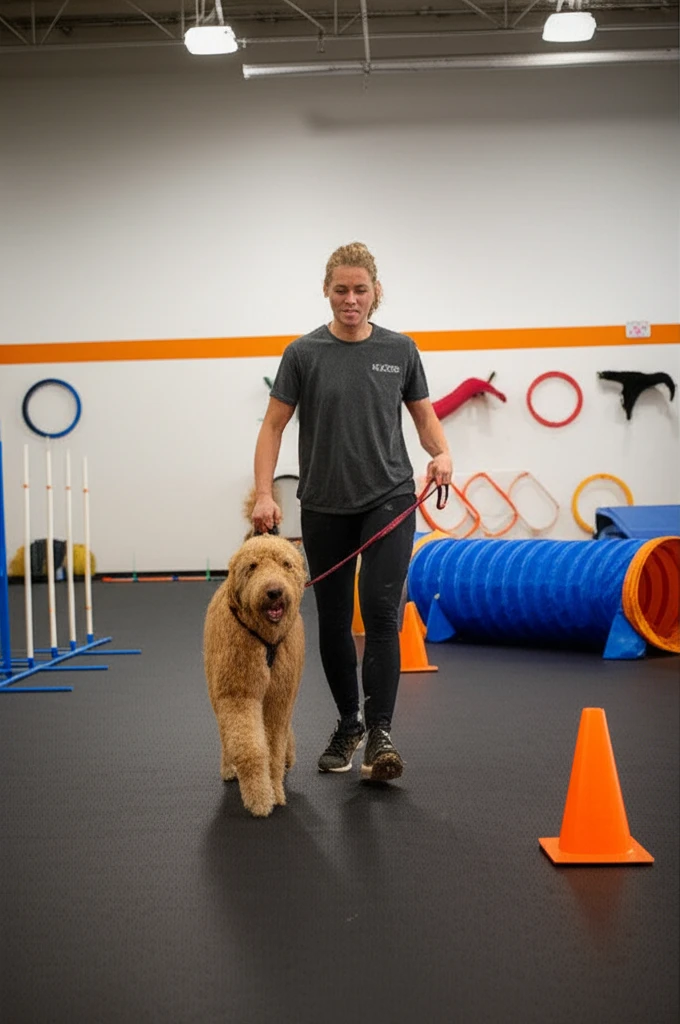
If your dog is not store-ready yet, start with the foundational skills: loose-leash walking, impulse control, and comfort in novel environments. These are exactly what you build in a structured indoor training gym where every distraction is managed and every success is set up intentionally. Find a Zoom Room near you to build the skills that make pet-friendly stores a training opportunity instead of a liability.
Frequently Asked Questions
What should I do if my dog has an accident in a store?
Clean it up immediately and tell a store employee so the area can be properly sanitized. Carry waste bags and paper towels on every store visit. An accident usually means your dog was inside too long without a break or was too stressed to signal that they needed to go out. Give your dog a thorough bathroom break before entering any store and keep early visits short. If accidents happen repeatedly despite bathroom breaks beforehand, your dog may be stress-eliminating, which means the environment is more overwhelming than they can currently handle. Shorten visits and choose quieter stores.
How do I stop my dog from pulling toward other dogs in stores?
Pulling toward other dogs is usually excitement-based or anxiety-based, and the training approach is similar for both. When you see another dog, increase your distance to a point where your dog notices the other dog but can still respond to you. Reward your dog for checking in with you instead of fixating on the other dog. Over many repetitions, the pattern of see a dog, look at my person becomes automatic. If your dog is highly reactive to other dogs on leash, work on that skill in outdoor settings with more space before attempting it in the confined aisles of a store.
Can I bring my puppy to stores before they are fully vaccinated?
You can carry an unvaccinated puppy through pet-friendly stores for socialization exposure without letting them walk on the floor where other dogs have been. This gives your puppy valuable exposure to the sights, sounds, and smells of a retail environment during the critical socialization window. Once your puppy has completed their full vaccination series, typically around 16 weeks, they can walk on store floors safely. Use a carrier, a stroller, or simply hold your puppy to keep them off the ground during these early socialization visits.
Ready to Take Your Dog Shopping?
Zoom Room's obedience and socialization classes build the loose-leash skills, impulse control, and environmental confidence your dog needs to be a calm, polite store companion. You train alongside your dog in a controlled indoor gym.
Find a Zoom Room