
Dog Weight Management: Keeping Your Dog at a Healthy Weight
Over half of dogs in the United States are overweight or obese. Excess weight shortens lives, worsens joint pain, and increases the risk of serious disease. The good news is that you control what goes into your dog's bowl and how much they move. This is a problem you can fix.
How to Tell If Your Dog Is Overweight
The number on the scale matters less than the body condition score. Dogs vary enormously in breed, build, and frame, so there is no single ideal weight. Instead, use a hands-on assessment combined with a visual check.
Run your hands along your dog's ribcage. You should be able to feel the ribs without pressing hard. If you have to dig through a layer of padding to find them, your dog is carrying too much weight. If the ribs are visible from across the room, your dog is underweight. The sweet spot is ribs that are easily felt with a light touch but not prominently visible.
Look at your dog from above. You should see a noticeable waist behind the ribs, where the body narrows before the hips. A dog with no visible waist when viewed from above is likely overweight. From the side, you should see a tuck in the abdomen, where the belly slopes upward from the ribcage toward the hind legs. A dog with a straight or sagging belly line is carrying excess weight in the abdominal area.
Your vet can assign your dog a body condition score on a 1-to-9 scale, where 4 to 5 is ideal. This provides a standardized reference point that is more useful than weight alone. A 65-pound Labrador may be lean and fit, while another 65-pound Lab of a different build may be significantly overweight. The body condition score accounts for individual variation in a way that a scale cannot.
Why Excess Weight Is a Serious Health Issue
Carrying extra weight is not a cosmetic issue for dogs. It is a medical one. Overweight dogs have a higher incidence of osteoarthritis, because the excess load on their joints accelerates cartilage breakdown. They are at greater risk for diabetes, respiratory problems, heart disease, and certain cancers. They are harder to anesthetize safely for surgery. They recover more slowly from illness and injury. Studies have consistently shown that lean dogs live longer, often by a year or more, than their overweight counterparts.
Joint pain creates a vicious cycle. An overweight dog's joints hurt, so they move less. Less movement means fewer calories burned, which means more weight gain, which means more joint pain. Breaking this cycle requires both dietary changes and a thoughtful approach to increasing activity in a way the dog's body can handle.
The emotional impact is real too. A dog carrying excess weight moves through the world more cautiously. They tire faster, play less, and may avoid activities they used to enjoy. Owners sometimes attribute this decline to aging when it is actually the weight. Restoring a healthy body condition often reveals a dog who is more energetic and engaged than their owner thought possible.
Diet Adjustments That Actually Work
Weight loss for dogs, like weight loss for humans, comes down to calories in versus calories out. The most effective first step is measuring your dog's food. Many owners free-pour kibble or eyeball the portion, and the accumulation of those extra bites adds up quickly. Use a measuring cup or a kitchen scale. Follow the feeding guidelines for your dog's target weight, not their current weight, and adjust based on results.
Talk to your vet about the right daily calorie target for your dog's weight loss plan. A safe rate of weight loss for most dogs is one to two percent of body weight per week. Crash diets are dangerous and can cause muscle loss, nutritional deficiencies, and metabolic problems. Slow and steady works.
Nutrition quality matters alongside quantity. A diet with adequate protein helps preserve muscle mass during weight loss. Adding low-calorie volume to meals, like green beans, carrots, or pumpkin, can help your dog feel fuller without adding significant calories. Avoid foods with excessive fillers and empty carbohydrates.
Treats are often the hidden culprit. A single large biscuit can contain 100 or more calories. For a 20-pound dog, that one treat represents a significant percentage of their daily calorie budget. Switch to lower-calorie training treats, break treats into smaller pieces, or use part of your dog's daily kibble ration as treats throughout the day. Your dog does not care about the size of the treat. They care that they got one.
Increasing Exercise Safely
If your dog is significantly overweight, you cannot jump straight to the exercise plan you want. Start where your dog is, not where you want them to be. A 90-pound dog who should weigh 70 pounds cannot safely go on a three-mile run. Their joints are already under stress, and high-impact exercise will cause more harm than good.
Begin with low-impact activities. Short walks at a comfortable pace, gradually increasing in duration as your dog's fitness improves. Swimming is one of the best exercises for overweight dogs because the water supports their body weight and eliminates joint impact while still providing a cardiovascular workout. Gentle fitness exercises like controlled step-ups, balance work, and walking on varied surfaces build strength without jarring impact.
Increase activity gradually. Add five minutes to walks each week rather than doubling the distance overnight. Watch for signs of overexertion: excessive panting, reluctance to continue, limping, or extended recovery time after exercise. Your dog's comfort is the guide. Pushing past it creates setbacks.
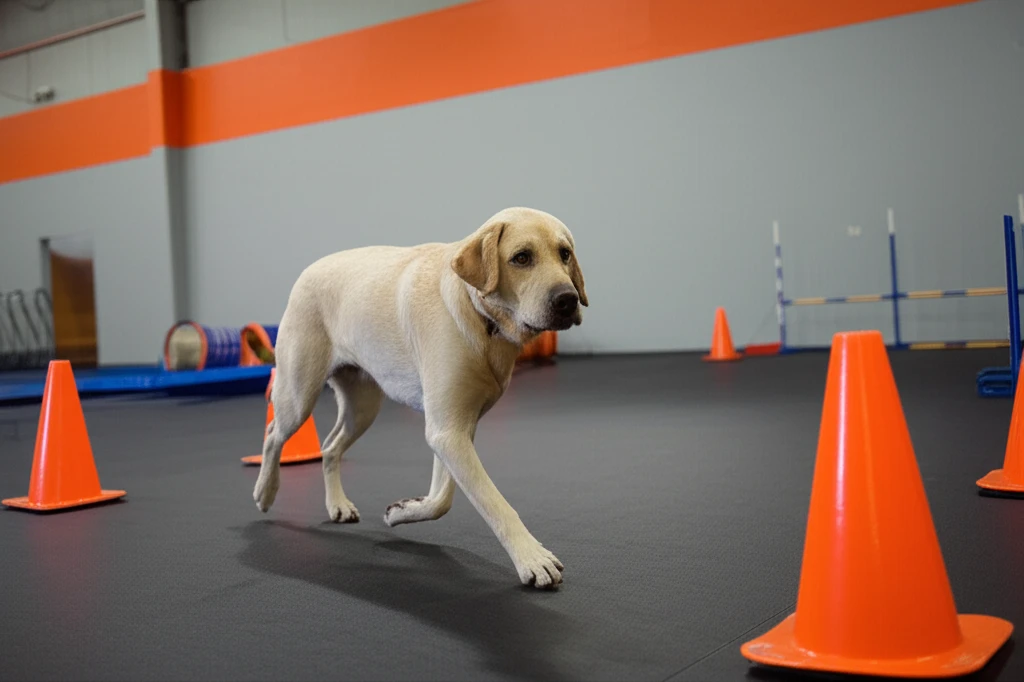
Structured fitness classes designed for dogs can help you build an exercise plan that matches your dog's current ability. Working with a professional ensures the exercises are appropriate for your dog's weight, age, and any existing joint issues. As the weight comes off, your dog's exercise tolerance will increase, and you can gradually add more challenging activities.
Managing Treats During Training
If you are actively training your dog, treats are essential. Positive reinforcement depends on them. But training treats and weight management are not in conflict. They just require a little planning.
Use tiny treats. Training treats should be pea-sized or smaller. Your dog does not need a golf-ball-sized biscuit to understand they did something right. A small piece of chicken, a bit of cheese, or a commercial training treat the size of your fingernail delivers the same reinforcement with a fraction of the calories.
Deduct treat calories from your dog's meal portions. If you are doing a training-heavy day, reduce breakfast or dinner by a corresponding amount. Some trainers use their dog's entire meal as training treats, delivering kibble piece by piece during a session. This approach eliminates the need for separate treats entirely and ensures you are not accidentally overfeeding.
Food enrichment serves double duty for overweight dogs. Puzzle feeders, slow-feed bowls, snuffle mats, and stuffed Kongs make your dog work for their food, which provides mental stimulation and extends the feeding experience without adding calories. A dog who works for their kibble over 20 minutes is getting enrichment and eating the same amount they would have inhaled from a bowl in 30 seconds.
Weight management is not about deprivation. It is about intentionality. Every calorie counts, and every calorie should serve a purpose: fueling your dog's body, reinforcing a behavior, or providing enrichment. When you approach it that way, maintaining a healthy weight and maintaining an active training program work together perfectly. Find a Zoom Room near you to learn how to use treats effectively without compromising your dog's waistline.
Frequently Asked Questions
How quickly should my dog lose weight?
A safe rate of weight loss for most dogs is one to two percent of their body weight per week. For a 50-pound dog, that is about half a pound to one pound per week. Faster weight loss can cause muscle loss, nutritional deficiencies, and in some cases, hepatic lipidosis, a dangerous liver condition. Work with your vet to set a target weight and a realistic timeline. Most dogs reach their goal weight in three to six months with consistent dietary management and gradual exercise increases. Regular weigh-ins every two to four weeks help you track progress and adjust the plan.
Are certain breeds more prone to weight gain?
Yes. Labrador retrievers, golden retrievers, pugs, beagles, basset hounds, dachshunds, cocker spaniels, and Cavalier King Charles spaniels are among the breeds with a higher tendency toward weight gain. Some of this is genetic. Labs, for example, have a variant in the POMC gene that affects satiety, making them feel perpetually hungry. But genetics is not destiny. Even breeds predisposed to weight gain can maintain a healthy body condition with appropriate portions, regular exercise, and treat management. Knowing your dog's predisposition helps you be more vigilant, not less hopeful.
My dog always seems hungry. How do I know they are getting enough food?
Many dogs will eat as much as you put in front of them regardless of actual hunger. Begging, staring at the food bowl, and hovering in the kitchen are not reliable indicators of genuine hunger. If your dog is maintaining a healthy body condition score and your vet has confirmed the daily calorie intake is appropriate, your dog is getting enough food. To help them feel more satisfied, split their daily portion into more frequent smaller meals, use slow-feed bowls or puzzle feeders to extend eating time, and add low-calorie volume like green beans to their meals. These strategies increase satiety without increasing calories.
Help Your Dog Get Fit
Zoom Room's fitness classes, agility courses, and training programs provide the structured exercise and mental enrichment your dog needs to reach and maintain a healthy weight.
Find a Zoom Room