
Elevator and Escalator Training: What Every Urban Dog Owner Needs to Know
If you live in a city, your dog will encounter elevators. If your dog panics, freezes, or bolts every time those doors open, your daily life becomes an exhausting negotiation. Elevator confidence is not optional for urban dogs. It is a basic life skill, and it is entirely trainable.
Why Elevators Are Hard for Dogs
An elevator asks your dog to do something genuinely strange: walk into a small metal box, stand still while the floor vibrates beneath them, listen to mechanical sounds they cannot identify, and then walk out into a completely different environment. The doors open and close on their own. The air pressure shifts. Other people and dogs may be packed in at close range. From your dog's perspective, none of this is intuitive.
Dogs who are uncomfortable with elevators typically show one of three responses. Some freeze at the threshold and refuse to enter. Some enter but panic inside, panting, pacing, or trying to squeeze through the doors before they fully open. Others ride the elevator in a state of low-grade stress, with a tucked tail and tense body, that their owners may not even recognize as anxiety because the dog is not doing anything dramatic.
If your dog is a puppy still in their socialization window, introducing elevators now while everything is novel and nothing is yet scary is ideal. If your dog is already anxious around elevators, the approach is the same: systematic desensitization. It just takes more repetitions.
A Step-by-Step Elevator Desensitization Protocol
Start with the elevator lobby, not the elevator itself. Walk your dog near the elevator bank at a distance where they can hear the dings and see the doors open and close without reacting. Feed high-value treats while the elevator sounds happen. When your dog looks relaxed at this distance, move closer. This may take one session or ten, depending on how fearful your dog is.
Next, practice at the threshold. Walk up to the open elevator doors, let your dog sniff the interior, and reward any voluntary forward movement. Do not lure them in or pull them by the leash. The goal is for your dog to choose to approach. If they put one paw in, treat and let them back out. Two paws, treat and back out. You are building the association that approaching the elevator produces good things and that they are free to leave at any time.
Once your dog will walk into the elevator willingly, ride one floor. Just one. Doors close, brief movement, doors open, you walk out, treats happen. Gradually add floors. Add other people waiting in the lobby. Add the experience of the doors opening to reveal a different floor than the one you started on. Each variable is introduced separately so your dog can process one new thing at a time.
For dogs who live in high-rise buildings and must use elevators multiple times a day, front-load this training before it becomes a daily battle. A week of dedicated desensitization work saves you months of wrestling your dog into the elevator every morning.
Escalators Are Dangerous: Use the Elevator Instead
Escalators are not elevators, and they are not safe for dogs. The moving steps, the comb plate at the top and bottom, and the narrow treads create a genuine risk of paw entrapment. A dog's paw pad or nail can get caught in the gap between the moving step and the side panel or sucked into the comb plate where the steps flatten at the landing. These injuries are painful, sometimes severe, and they happen fast.
This is not a training problem to solve. It is a safety hazard to avoid. Even dogs who appear comfortable on escalators are at risk every single time they ride one. The correct answer is to skip the escalator entirely and use the elevator, the stairs, or carry your dog if they are small enough. Some airports and shopping centers have pet-friendly signs near elevators for exactly this reason.
If you find yourself in a situation where the only option appears to be an escalator, look harder. There is almost always an elevator or a staircase nearby. If your dog is too large to carry and there truly is no alternative, find a staff member and ask for assistance. This is not being overly cautious. Veterinary emergency rooms see escalator injuries in dogs regularly, and they are entirely preventable.
Surface Confidence and Novel-Environment Training
Elevator anxiety is rarely just about elevators. Dogs who balk at elevators often also hesitate on metal grates, slippery floors, wobbly surfaces, and anything that feels unfamiliar under their paws. This is a surface confidence issue, and it is one of the most important and most overlooked aspects of socialization.
Build surface confidence by exposing your dog to a variety of textures and surfaces in low-pressure settings. Walk on metal grates, rubber mats, wooden boardwalks, gravel, wet grass, and tile floors. Let your dog step on a wobble board or a balance disc at home. Reward voluntary exploration. The more surfaces your dog has experienced positively, the smaller the category of "scary ground" becomes.
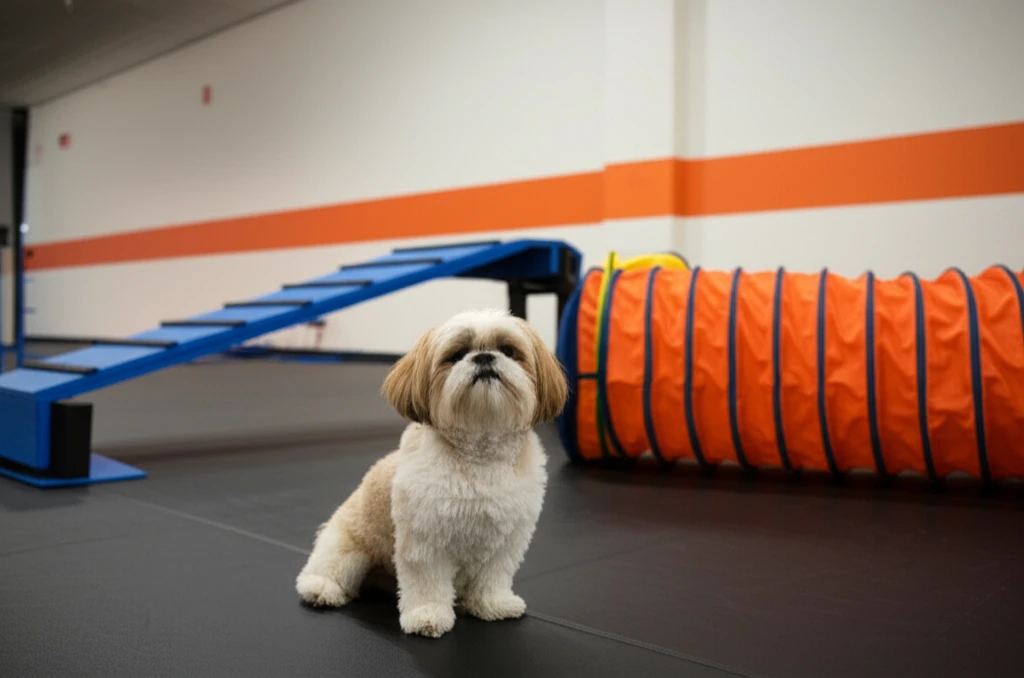
This is exactly the kind of work that happens in a structured socialization program. In an indoor training gym, you can introduce novel surfaces, sounds, and movement patterns in a controlled environment where your dog is never overwhelmed. A dog who has walked across a wobble board, navigated a tunnel, and stepped onto a teeter-totter in a gym is much less likely to panic when the elevator floor shifts beneath them.
Novel-environment confidence is the broader skill that makes urban living work. Your dog needs to be comfortable walking into buildings they have never been in, riding in vehicles, navigating crowds, and handling the unpredictable sensory landscape of a city. Running errands in pet-friendly stores builds this same muscle. Every new environment your dog handles successfully makes the next one easier.
Common Mistakes and Getting Professional Help
The biggest mistake is forcing your dog into the elevator. Picking up a terrified dog and carrying them in, or dragging them by the leash, does not build confidence. It builds a stronger association between the elevator and fear and damages your dog's trust in you. If your dog will not enter voluntarily, you are not at the entering-the-elevator step yet. Go back to working at a distance.
Another common mistake is flooding: taking a fearful dog on a long elevator ride in a busy building, hoping they will "get used to it." Flooding sometimes appears to work because the dog shuts down and stops resisting, but that is not calm. That is learned helplessness. The fear is still there, and it will resurface in other contexts.
Rushing the process is the third mistake. Elevator desensitization involves a lot of standing around in lobbies, feeding treats, and riding one floor at a time. People get impatient and skip steps. Every skipped step risks pushing your dog past their threshold, which sets the process back further than if you had taken your time.
If your dog's elevator anxiety is severe, or if they show significant stress in other urban environments, working with a professional trainer can accelerate the process. A trainer can read your dog's body language more precisely than most owners, identify the exact threshold where your dog tips from processing into panic, and structure the desensitization protocol so each session is productive. Find a Zoom Room near you to build the surface confidence and environmental adaptability that make city living comfortable for your dog.
Frequently Asked Questions
How long does it take to desensitize a dog to elevators?
It depends on how fearful your dog is and how consistent you are with the training. A puppy or mildly hesitant dog may become comfortable with elevators in a few short sessions spread over a week. A dog with a strong fear response that has been practicing avoidance for months or years may need several weeks of daily desensitization work. The key is to go at your dog's pace rather than imposing a timeline. Rushing creates setbacks. Short, positive sessions of five to ten minutes near or in the elevator, done consistently, produce faster results than infrequent long sessions.
Is it ever safe for a dog to ride an escalator?
No. Veterinary professionals and most dog trainers advise against letting dogs ride escalators due to the real risk of paw entrapment in the comb plate or side panels. Even dogs who have ridden escalators without incident are at risk every time. The moving steps and mechanical gaps are designed for flat-soled shoes, not paw pads. Always use an elevator, stairs, or carry your dog instead. If you are in a building where the only visible option is an escalator, ask a staff member to direct you to an elevator or staircase.
My dog rides the elevator but seems tense the whole time. Is that a problem?
Yes. A dog who rides the elevator with a tucked tail, tense body, pinned ears, or excessive panting is tolerating the elevator, not comfortable with it. Tolerance can look like compliance from the outside, but your dog is still experiencing stress on every ride. Over time, that stress can generalize to the lobby, the building entrance, or the leash coming out. It is worth going back to desensitization basics. Ride one floor, feed high-value treats during the ride, and rebuild the association so your dog is genuinely relaxed, not just enduring it.
Ready to Build Urban Confidence?
Zoom Room's socialization and confidence-building classes help your dog navigate the surfaces, sounds, and environments of city living. You train alongside your dog in a controlled indoor gym where every variable is managed.
Find a Zoom Room