
First Time Dog Owner: The Honest Guide Nobody Gives You
You have done the research, bought the supplies, and set up the crate. You are ready. Except nobody told you about the sleep deprivation, the second-guessing, or the moment your new dog looks at you like you have no idea what you are doing. Here is the guide that starts with what actually matters, not what looks good on a checklist.
The First Month Priority List (It Is Not What You Think)
Most first-time dog owner guides start with teaching sit. That is not wrong, but it is not the priority. If your dog is a puppy, the single most important thing you can do in the first month is start socialization. The critical window for socialization closes between 14 and 16 weeks of age, and every week you spend perfecting sit at home instead of exposing your puppy to new people, surfaces, sounds, and dogs is a week you cannot get back.
Socialization is not just about playing with other dogs. It is about building a dog who can navigate the real world without falling apart. A well-socialized dog can visit the vet without a meltdown, walk past a skateboard without lunging, and meet a stranger without cowering or jumping. These outcomes matter more for your daily quality of life than any trick or cue you will ever teach.
Your first month priorities, in order: find a veterinarian and get your first wellness exam done within the first week. Start potty training from day one. Begin crate training on the first night. Enroll in a puppy socialization or beginner obedience class immediately, not after your dog is "ready." Your dog does not need to know anything to start a class. That is the entire point of going. And establish a daily routine that your dog can predict, because predictability is the foundation of security for a dog in a new home.
Everything else, the Instagram-worthy trick training, the off-leash recall at the park, the perfectly behaved dog at the outdoor cafe, those come later. They build on the foundation you set in this first month. Get the foundation right.
The Gear You Actually Need vs. What You Can Skip
The pet industry is a multi-billion dollar business built partly on convincing new dog owners that they need more things than they actually do. Here is what you genuinely need for the first month, and what can wait.
Get these now: A properly sized crate (wire crates with a divider panel work well for growing puppies). A flat collar with an ID tag. A six-foot leash, not a retractable one. Food and water bowls, nothing fancy. An age-appropriate food recommended by your vet. A handful of durable chew toys like Kongs and Nylabones. An enzymatic cleaner for accidents, because there will be accidents. A bag of small, soft training treats. That is it.
The things that can wait include elevated food bowls, breed-specific supplements, GPS trackers, automatic feeders, dog cameras, subscription boxes, matching leash-and-collar sets, and the orthopedic bed your puppy will chew apart in the first week. None of these are bad products. They just are not priorities when you are trying to establish a potty routine and figure out where the vet is.
One thing worth investing in early: a treat pouch that clips to your waist. You will use it constantly during training, and having treats accessible at all times means you can reward good behavior the moment it happens, which is the core of positive reinforcement training. A clicker is also inexpensive and useful if you plan to do clicker training, which Zoom Room classes use extensively.
Finding Your Team: Vet, Trainer, and Support System
You need a veterinarian before you need a trainer, but you need both within the first two weeks. Schedule your first vet visit within a few days of bringing your dog home. This establishes baseline health records, gets you on a vaccination schedule, and gives you a professional to call when your dog does something that sends you to Google at midnight. Ask your vet about flea and tick prevention, heartworm prevention, spay or neuter timing, and what is normal for your dog's age and breed. Write down the questions beforehand, because you will forget them in the exam room.
Finding a trainer is equally important, and the approach matters more than the credentials. Look for trainers who use positive reinforcement methods exclusively. That means the training is built on rewarding behavior you want rather than punishing behavior you do not want. If a trainer talks about being the "alpha," uses prong collars, shock collars, or choke chains, or tells you that your eight-week-old puppy is trying to dominate you, keep looking. Modern, evidence-based training does not use those tools or frameworks.
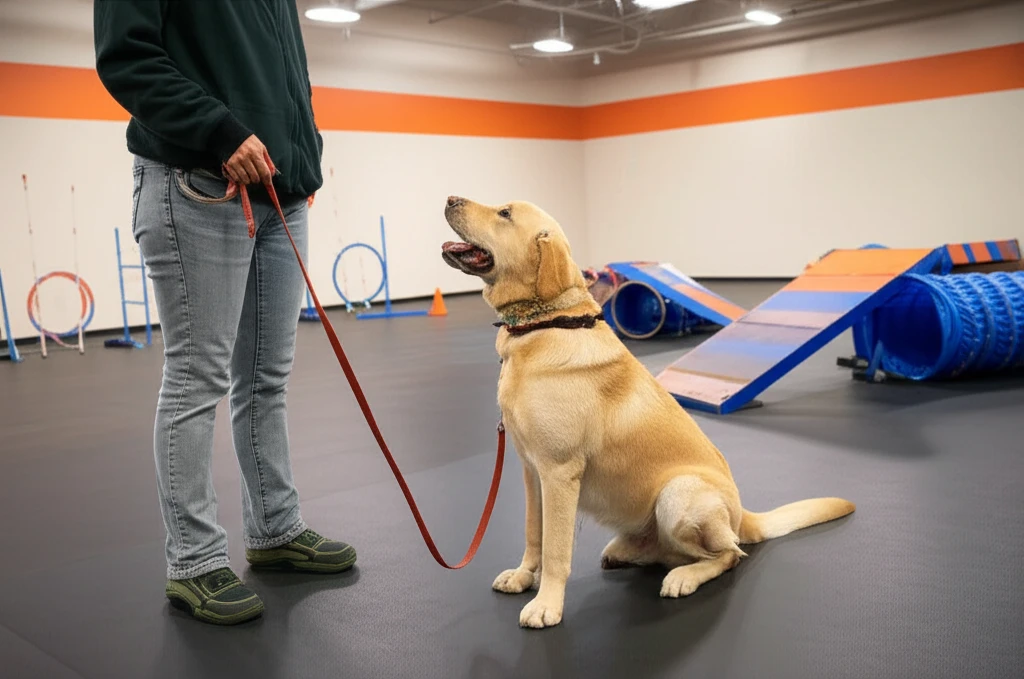
At Zoom Room, you train alongside your dog in every class. You are not dropping your dog off. You are learning the skills together, which means you leave every session knowing how to practice at home. This is important because training is not something that happens for one hour a week in a classroom. It happens in every interaction you have with your dog, and you need to know what you are doing.
Your support system also includes other dog owners. Puppy classes are as much about building your confidence as your dog's skills. You will meet people going through the same sleep deprivation, the same potty training frustration, and the same "is this normal?" moments. That community matters more than you expect right now.
Building a Routine Your Dog Can Count On
Dogs thrive on predictability. A consistent daily routine reduces anxiety, speeds up potty training, and gives your dog a framework for understanding their new life. You do not need a minute-by-minute schedule, but the basic structure of the day should be the same.
A simple puppy routine: wake up, go outside immediately for a potty break, then breakfast (in the crate is ideal for building positive crate associations), then supervised play or a short training session, then a nap in the crate. Repeat throughout the day. Potty breaks happen after every nap, every meal, and every play session. Bedtime routine includes a final potty break, then crate for the night. Puppies sleep 16 to 20 hours a day, so enforced naps are not cruel. They prevent the overtired, bitey, wild behavior that makes new owners wonder what they have gotten themselves into.
For adult dogs, the routine is simpler but equally important. Morning walk, breakfast, alone time (if you work), midday walk or enrichment, afternoon alone time, evening walk, dinner, and quality time before bed. The specific times do not matter as much as the consistency. Your dog will learn the rhythm within a week and start anticipating what comes next, which is a sign that they feel settled.
Include training in the routine from day one. Not formal sessions at first. Just naming things as they happen: say your potty cue when your dog goes outside, say "yes" and treat when they sit naturally before you put the food bowl down, reward them for walking near you on leash without pulling. These moments are training, and they add up faster than you think.
The Emotional Reality: It Is Harder Than You Expected
Here is the part that most guides skip. Getting a dog is an emotional experience, and not all of those emotions are the ones you see on social media. Alongside the joy and excitement, many first-time dog owners experience genuine anxiety, frustration, exhaustion, and doubt. There is even a term for it: the puppy blues. It is the sinking feeling that you have made a terrible mistake, that you are not cut out for this, and that your life before the dog was better. It is shockingly common, and it does not mean you are a bad dog owner.
The puppy blues typically peak in the first two to three weeks and gradually improve as you and your dog settle into a routine, as potty training starts clicking, as the sleep deprivation lessens, and as you begin to see your dog's personality emerge. If you are in this phase right now, know that what you are feeling is a normal response to a massive life change. You are not failing. You are adjusting.
What helps: lower your expectations. Your dog does not need to be perfect. They need to be safe, healthy, and gradually learning. You do not need to be a perfect owner. You need to be consistent, patient, and willing to learn alongside your dog. Take breaks when you need them. Put the puppy in the crate for a nap, and give yourself twenty minutes of quiet. Ask for help from friends, family, or your trainer.
If the feelings persist beyond a few weeks, or if you are feeling genuinely overwhelmed, talk to your vet or trainer. Sometimes there is a practical solution, a different management strategy, a schedule adjustment, a training breakthrough, that shifts the entire experience. And sometimes knowing that a professional has looked at your specific situation and said "you are doing fine, this is normal" is all you need to hear.
The bond you are building right now, through the messy, exhausting, imperfect first weeks, is real. Your dog is learning to trust you, and you are learning to understand them. That does not happen overnight. But it does happen, and when it does, you will understand why people say their dog changed their life. Find a Zoom Room near you to start the journey with professional support from the beginning.
Frequently Asked Questions
When should I start training my new dog?
Start training from the day you bring your dog home. Training does not mean formal obedience sessions right away. It means rewarding behavior you like when it happens naturally, starting potty training immediately, and enrolling in a class as soon as possible. Puppies can start group socialization and training classes as early as eight weeks old, provided they have had their first set of vaccinations. The idea that you should wait until your dog is older or knows basic cues before starting classes is a myth that costs you valuable socialization time during the critical developmental window.
How much does it actually cost to own a dog in the first year?
The first year is the most expensive. Beyond the adoption or purchase price, expect to spend on veterinary care including vaccinations, spay or neuter surgery, and wellness exams, which can total several hundred to over a thousand dollars. Food, depending on the size of your dog and the quality of food, runs several hundred dollars per year. Add in a crate, leash, collar, toys, treats, and training classes, and most first-year estimates land between two thousand and four thousand dollars. Emergency veterinary care, which is unpredictable, can add significantly to that total. Pet insurance is worth considering early, before any pre-existing conditions develop.
Should I get a puppy or adopt an adult dog as a first-time owner?
Both are excellent choices with different trade-offs. Puppies give you the opportunity to shape socialization and training from the start, but they require significantly more time, energy, and patience. You will be managing potty training, teething, biting, and a creature that needs to go outside every two hours. Adult dogs from shelters or rescues often come with some training, past the destructive puppy phase, and with a more settled temperament that you can evaluate before committing. The trade-off is that some adult dogs come with behavioral history or missed socialization that requires patience and sometimes professional help. Consider your lifestyle, schedule, and energy level honestly before deciding.
Ready to Get Started?
Zoom Room's puppy and beginner classes are designed for dogs and owners who are just starting out. You train alongside your dog with professional coaching from day one, so you build confidence and skills together.
Find a Zoom Room