
How to Teach Your Dog Calm Greeting Manners at the Front Door
The doorbell rings and your dog loses their mind. Barking, spinning, launching at the door, and the moment it opens, jumping all over whoever is on the other side. It is exhausting, embarrassing, and in some cases dangerous. But your dog is not being bad. They are experiencing a massive burst of arousal with absolutely no structure for how to handle it.
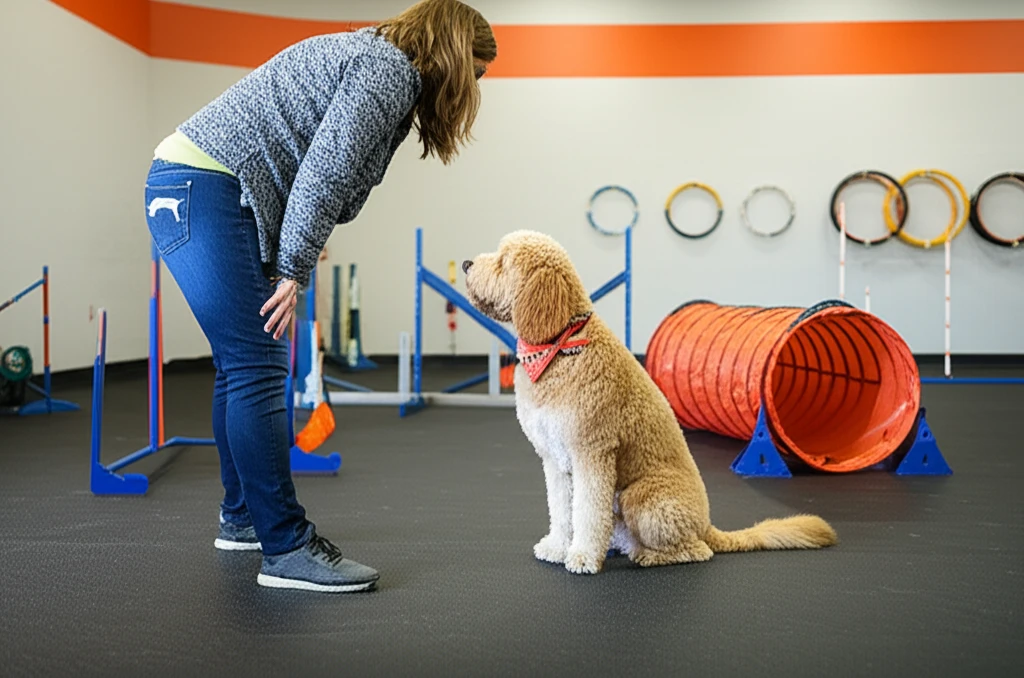
Why the Front Door Is Ground Zero
The front door is the most exciting spot in your house. Every good thing that has ever walked through it, guests, delivery people with interesting smells, family members returning home, has entered through that one opening. Your dog has learned that the doorbell or knock predicts a high-intensity, high-reward event: a new person to interact with. The arousal spike that follows is not defiance or disrespect. It is genuine excitement that has never been channeled into an appropriate behavior.
Arousal is the key concept here. An aroused dog is not a dog who is thinking clearly. Their heart rate is up, their adrenaline is flowing, and their ability to respond to cues drops dramatically. Asking a dog in peak doorbell arousal to "sit" is like asking someone who just won the lottery to calmly fill out a tax form. The dog may know the cue perfectly in every other context, but in this moment, their brain is not online enough to access it.
The other factor is rehearsal. Every time your dog has practiced the door frenzy sequence, barking, jumping, spinning, and getting attention from the person who enters, the behavior has gotten stronger. Guests who say "oh, it is okay, I do not mind the jumping" are unwittingly rewarding and reinforcing the exact behavior you are trying to change. And every time the pizza delivery person appears after your dog barks at the door, your dog believes their barking summoned the visitor. From their perspective, the strategy is working perfectly.
The solution is not to punish the excitement. It is to give your dog a different job to do when the door opens, practice that job until it is automatic, and manage the environment so the old pattern does not keep getting rehearsed while you build the new one.
Teaching a Door Routine
A door routine gives your dog a clear, rehearsed sequence of behaviors to perform when someone arrives, replacing the chaos with structure. The most effective door routine has three components: a station (like a mat or bed), a stay, and a controlled release for greeting.
Start by teaching a solid "go to your mat" or "place" cue. This means your dog goes to a specific mat or bed and stays there until released. Practice this away from the door first. Send your dog to the mat, reward them for being on it, build duration gradually, and add distractions one at a time. A dog who can hold a mat stay while you walk around the kitchen is on their way but not ready for a doorbell yet. You need the mat stay to be reliable enough that your dog can do it while mildly distracted before you add the hardest distraction in their world: someone at the door.
Once the mat stay is solid, position the mat where your dog can see the door but is not directly in front of it. Six to ten feet back is a good starting distance. Practice the sequence: doorbell rings (you can use a recording on your phone), you cue "go to mat," your dog goes and stays, you approach the door and pretend to open it. Reward the dog for staying on the mat. If they break, calmly reset them and try again with less intensity, maybe just walking toward the door without opening it. Build up to actually opening the door over multiple sessions.
The controlled greeting is the payoff. Once the door is open and the guest is inside, you release your dog from the mat with a cue like "go say hi." The release itself becomes a reward for staying on the mat, and it teaches your dog that patience leads to the thing they want. If your dog jumps during the greeting, the guest turns away and the dog goes back to the mat. The greeting only continues when all four paws are on the floor.
This entire routine takes weeks to build and months to make reliable under real-world conditions with genuine visitors. That is normal. Door manners involve the highest arousal your dog experiences in daily life, so it is the hardest context for any trained behavior to hold. Be patient and keep practicing.
Managing Guests Who Do Not Help
One of the biggest obstacles to door manners is the well-meaning guest who undermines your training. "Oh, I love dogs! Let them jump!" is the enemy of your door routine. Every time a guest rewards the jumping with attention, petting, or excited baby talk, your dog learns that some people reinforce the old behavior and the new routine is optional.
You need to advocate for your dog's training. Before guests arrive, send a quick text: "We are working on door manners. When you come in, please ignore the dog until I release them from their mat. Then you can greet them, but only if they keep four paws on the floor. If they jump, turn away." Most people are happy to cooperate once they understand there is a plan.
For guests who will not follow instructions, or for unexpected visitors, management is your friend. Put your dog in another room, behind a baby gate, or on a leash before you open the door. You can practice the door routine after the initial excitement has passed and your dog's arousal has dropped to a manageable level. It is far better to manage the situation and protect your training progress than to let your dog rehearse the old behavior because you felt awkward asking a guest to cooperate.
The leash is a useful management tool even inside the house. Tether your dog to a heavy piece of furniture or hold the leash yourself when guests arrive. This prevents the dog from reaching the guest while you work on the mat stay and ensures that jumping physically cannot be rewarded. As the dog's door routine improves, the leash becomes a backup rather than the primary tool.
Children, delivery drivers, and repair workers are especially hard to coach. For these situations, default to management. The door routine is for predictable, cooperative visitors. For everyone else, your dog goes behind a gate or in another room, and that is perfectly acceptable.
Doorbell Desensitization
For many dogs, the doorbell itself is the trigger. The sound has been paired so many times with the excitement of someone arriving that it produces an instant arousal spike. You can desensitize the doorbell the same way you would desensitize any trigger: by decoupling it from the event it predicts.
Record your doorbell sound or use a doorbell app on your phone. Play the sound at low volume while your dog is relaxed. If they do not react, treat. Play it again. Treat. Repeat until the sound at that volume is boring. Then increase the volume slightly and repeat. Over many sessions, work up to full volume. The critical piece: do not open the door. The doorbell rings, treats appear, and nothing else happens. Your dog learns that the doorbell does not always mean someone is coming, which weakens the automatic arousal response.
Once the doorbell at full volume produces a calm response or a look-at-you-for-treats response, start combining it with the door routine. Doorbell rings, dog goes to mat, you approach the door, dog stays, you reward. Then add a real person on the other side. Then add a real person who enters. Each layer of difficulty gets its own set of practice sessions before you move to the next.
If you have a smart doorbell with a camera, you can see who is at the door without opening it, which gives you time to set up your dog before the guest enters. Technology does not replace training, but it buys you the seconds you need to cue the mat stay before the door opens.
For dogs who also bark intensely at the door, the barking component needs separate work. Demand and alert barking have their own training protocols. Often, teaching the door routine and desensitizing the doorbell reduce the barking as a side effect, because the dog now has something to do other than stand at the door and vocalize. But if the barking persists after the mat stay is solid, address it directly with a trainer. Loose leash skills also help, because a dog who has learned to regulate their impulses on walks transfers some of that self-control to the front door.
Putting It All Together
Door manners are not a single skill. They are a stack of skills: mat training, duration stay, impulse control, doorbell desensitization, and a controlled greeting release. Each piece needs to be taught and proofed individually before the full routine works reliably in real life. That is why door manners are one of the more advanced real-world applications of obedience training, even though they look simple from the outside.
Set realistic expectations. Your dog will not go from door chaos to calm mat stays in a weekend. Most dogs need four to eight weeks of consistent practice to have a functional door routine, and ongoing reinforcement after that to keep it sharp. Every time a guest visits and the routine works, it gets stronger. Every time the routine fails because you skipped the setup or a guest did not cooperate, the old pattern gets a little more reinforcement. Consistency is the deciding factor.
Practice with family members. Have someone leave the house, ring the bell, and come back in while you run the routine with your dog. Do this ten times in a row until it is boring. Then do it with a friend your dog knows. Then with someone your dog has never met. Increase the difficulty gradually, just like any other desensitization exercise.
If your dog's door behavior includes genuine aggression toward visitors, not just excitement, that is a different problem requiring professional assessment. A dog who lunges, snarls, or has bitten a guest at the door needs a behavior modification plan that goes beyond a mat stay. But for the majority of dogs whose door behavior is excitement-based, the routine described here, combined with consistent management and patient practice, will transform your front door from a war zone into a manageable moment. Find a Zoom Room near you to build the obedience and impulse control skills that make door manners possible.
Frequently Asked Questions
How long does it take to teach a dog to be calm when guests arrive?
Most dogs need four to eight weeks of consistent practice to develop a functional door routine, and ongoing reinforcement to maintain it. The timeline depends on how aroused your dog gets at the door, how often you practice, and how consistently you manage the environment while training. Dogs with lower baseline arousal may pick it up in a few weeks. Dogs who have been rehearsing door chaos for years need more time to build an equally strong alternative behavior. Practice several times a week with family members or willing friends, and use management tools like leashes and baby gates for real visitors until the routine is reliable.
My dog only jumps on some people but not others. Why?
Dogs are excellent at discriminating between people who reward jumping and people who do not. If your dog jumps on your enthusiastic friend who pets them and talks in a high-pitched voice, but stays calm around your neighbor who ignores them, your dog has learned exactly which people reinforce the behavior. This is actually a sign that your dog is paying attention and making decisions, which means they are capable of learning the new rules. The fix is consistency across all visitors. Everyone who enters needs to follow the same protocol: ignore the dog until released from the mat, and withdraw attention if jumping happens during the greeting.
Should I put my dog in a crate when guests come over?
A crate or a separate room is a perfectly appropriate management tool, especially during the early stages of training or for visitors who cannot cooperate with your door routine. It is not a punishment. It is a way to prevent your dog from rehearsing the old behavior while you build the new one. Give your dog a stuffed Kong or a long-lasting chew in the crate so the experience is positive. As your door routine becomes more reliable, you can start using it for real guests and reserve the crate only for situations where management is necessary, like large parties or unexpected visitors.
Ready to Reclaim Your Front Door?
Zoom Room's obedience and impulse control classes build the skills your dog needs for a calm door routine. You practice alongside your dog in a structured environment with professional coaching.
Find a Zoom Room