
How to Hike with Your Dog Without Wrecking the Experience for Everyone
A trail is not a backyard. It is a narrow strip of shared space where your dog will encounter wildlife, other hikers, mountain bikers, horses, cliff edges, and every smell the forest has ever produced. Hiking with your dog is one of the most rewarding things you can do together, but only if you have put in the training work first.
The Trail Is the Final Exam, Not the First Lesson
Picture this: you are two miles in on a single-track trail. A deer bolts through the brush thirty feet ahead. Your dog locks on, every muscle firing, leash suddenly taut as a piano wire. A mountain biker rounds the bend behind you. Another hiker with a reactive dog is approaching from the front. In this moment, what you need is a dog who has a rock-solid recall, reliable leash manners, and enough impulse control to disengage from the most exciting stimulus they have ever encountered.
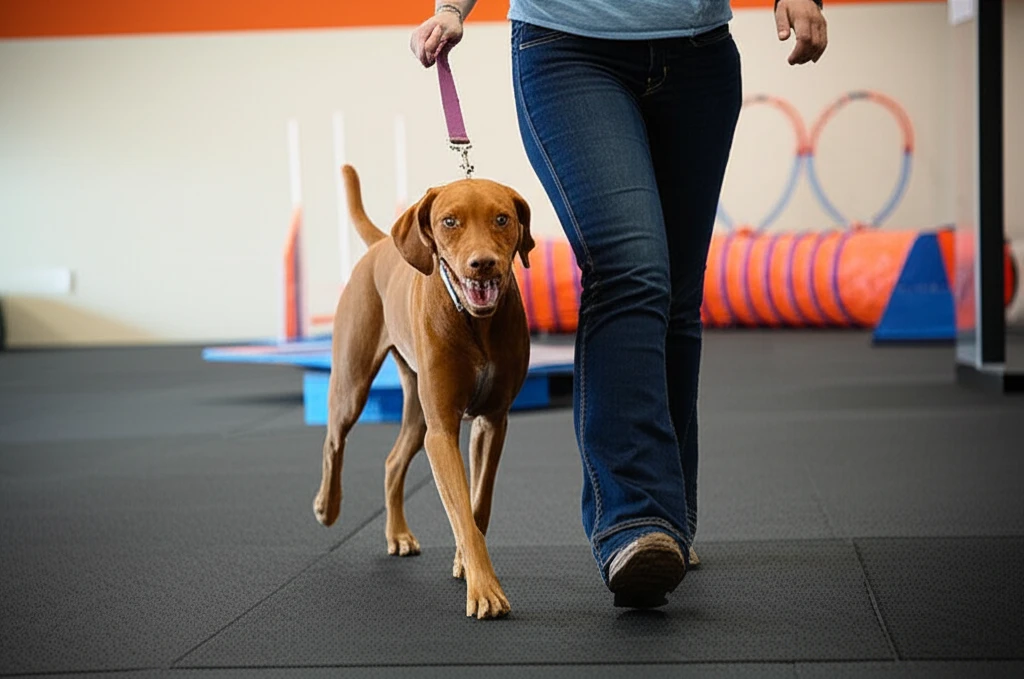
That stack of skills does not get built on the trail. It gets built in your living room, your backyard, a training gym, and progressively more challenging environments before you ever clip a leash to a pack and head for the trailhead. Hiking is the ultimate real-world test of your training foundation. If the foundation is solid, hiking is spectacular. If it is not, you are in for a miserable, potentially dangerous experience.
What Your Dog Needs to Be Able to Do
Before your first trail outing, your dog should have four skills at a reliable level. First, recall. Your dog needs to come back to you immediately when called, even when distracted. On a trail, distractions include squirrels, deer, other dogs, interesting smells, puddles, and the sheer adrenaline of being outdoors. If your recall only works in your kitchen, it does not work yet.
Second, loose-leash walking on uneven terrain. Sidewalk leash manners are a start, but trail walking involves rocks, roots, narrow paths, and steep sections where a pulling dog can send you both off balance. Your dog needs to adjust their pace to yours and navigate obstacles without yanking you sideways.
Third, impulse control around wildlife. Chasing deer is not a game. It is dangerous for your dog, illegal in many jurisdictions, and devastating for wildlife. A dog who cannot disengage from a moving animal has no business being on a trail. This skill is built through structured impulse control exercises, not through hoping your dog will make good choices in the moment.
Fourth, the ability to settle and yield. Trails have right-of-way rules. When you encounter other hikers, horses, or bikers, you need to step off the trail, shorten your leash, and have your dog hold a calm sit or stand while the other party passes. A dog who lunges, barks, or tries to greet every passing person or dog makes the trail worse for everyone.
Trail Etiquette That Most Dog Owners Get Wrong
Here is the uncomfortable truth: dog owners have damaged trail access for other dog owners. Many trails that once allowed dogs are now off-limits because of consistent bad behavior from handlers, not dogs. Every time a dog chases wildlife, leaves waste on the trail, or charges at another hiker, it moves the needle toward more restrictions.
Leash laws exist on most trails, and they are not suggestions. Even if your dog has excellent recall, a leash protects wildlife, other trail users, and your dog from hazards you cannot see. If the trail requires a leash, use one. A six-foot fixed leash is appropriate for trail hiking. Retractable leashes are dangerous on trails because they give your dog enough range to reach a cliff edge, a snake, or an oncoming mountain biker before you can react.
Yield to horses and uphill hikers. Step off the trail on the downhill side, shorten your leash, and ask your dog for a sit. Many horses are not accustomed to dogs, and a spooked horse on a narrow trail is genuinely life-threatening for the rider. Pick up waste, even on backcountry trails. Carry it out if there are no trash cans. Do not bag it and leave it trailside with the intention of grabbing it on the way back. That bag will still be there next week, and you have now added plastic to the environment.
Preparing Your Dog Physically and Packing Smart
Trail readiness is not just behavioral. Your dog needs to be physically conditioned for the hike you are planning. A dog who walks around the block twice a day is not prepared for an eight-mile mountain trail with elevation gain. Build distance and difficulty gradually over several weeks, the same way you would train yourself for a challenging hike.
Paw care matters more than most people realize. Hot rocks, sharp gravel, and icy surfaces can damage paw pads. Check your dog's paws at every rest stop. If you are hiking on abrasive terrain, consider booties or a paw wax. Build up pad toughness with progressively longer walks on varied surfaces before tackling rough trails.
Water is critical. Dogs overheat faster than humans because they cannot sweat and rely on panting to cool down. Carry enough water for both of you and a collapsible bowl. Offer water every 15 to 20 minutes on warm days, not just when your dog looks thirsty. Avoid letting your dog drink from standing water, which can carry giardia and other parasites. If you are traveling to a trailhead far from home, research the trail conditions and water availability in advance.
A basic pack list for your dog includes water and a bowl, high-value treats for reinforcing recall and yielding, waste bags, a basic first-aid kit with tweezers for ticks, a towel, and booties if terrain warrants them. For longer hikes, your dog can carry their own gear in a fitted dog pack, but introduce the pack at home first and keep the weight under 25 percent of your dog's body weight.
Common Mistakes and the Socialization Connection
The most common mistake is skipping the training progression entirely. People adopt a high-energy dog, buy a fancy leash, and head straight for the trail on day one. That dog has never had to maintain leash manners for three continuous hours. They have never encountered a horse. They have never been asked to hold a sit while something exciting passed. The hike devolves into a wrestling match, and both of you come home frustrated.
The second mistake is anthropomorphizing your dog's trail behavior. Your dog is not "being stubborn" when they refuse to cross a stream. They are uncertain about a novel surface. They are not "being bad" when they lunge at a squirrel. They are responding to prey drive that has not been channeled through training. Meeting your dog where they actually are, rather than where you wish they were, is how progress happens.
Here is the deeper point: a dog who is confident on a trail is a dog who has been systematically exposed to novel environments, surfaces, sounds, and stimuli in a positive way. That is socialization. The dog who walks calmly past a rattling mountain biker, steps over a rushing creek, and ignores a deer at fifty yards did not wake up that way. They were built that way through structured socialization experiences that taught them the world is interesting, not threatening.
If your dog is not trail-ready yet, that is not a problem. It is a starting point. Find a Zoom Room near you and build the recall, leash skills, and impulse control that turn a chaotic trail outing into the adventure you both deserve.
Frequently Asked Questions
Can I let my dog off leash on hiking trails?
Only on trails that explicitly permit off-leash dogs, and only if your dog has a genuinely reliable recall under high distraction. Reliable means your dog comes back immediately when called even when chasing a squirrel, greeting another dog, or investigating a fascinating smell. If you have any doubt, keep them on leash. Most public trails require leashes by law, and even on off-leash trails, you are responsible for your dog's behavior around wildlife, other hikers, and their dogs. Off-leash reliability is built through months of structured recall training in progressively distracting environments, not assumed.
How do I know if my dog is getting too hot on a hike?
Watch for heavy panting that does not slow down during rest stops, excessive drooling, bright red gums, a staggering gait, vomiting, or glazed eyes. These are signs of heat exhaustion, which can escalate to heatstroke quickly. Brachycephalic breeds like bulldogs and pugs are at higher risk, as are dark-coated, overweight, or elderly dogs. Hike during cooler parts of the day, offer water frequently, rest in shade, and be willing to turn around early. If your dog shows signs of overheating, wet them down with cool water, move them to shade, and get veterinary help immediately.
What age can I start hiking with my puppy?
Wait until your puppy is fully vaccinated, typically around 16 weeks, before walking on trails where other dogs have been. Even after that, puppies under a year old should not do long or strenuous hikes because their growth plates are still developing and excessive impact can cause joint problems. Start with short, flat trails of a mile or less and gradually increase distance and difficulty as your puppy matures. A veterinary check before starting any distance hiking program is a good idea, especially for large or giant breeds that are more susceptible to growth-related joint issues.
Ready to Hit the Trail Together?
Zoom Room's recall, leash skills, and socialization classes build the foundation your dog needs to be a confident, reliable trail partner. You train alongside your dog in a controlled indoor gym before taking it to the real world.
Find a Zoom Room