
How to Host Guests When You Have a Dog
The doorbell rings and your dog loses their mind. Whether your dog is the type who leaps on every visitor or the type who hides behind the couch, having a plan for guests makes the evening better for everyone, including your dog.
Why Guests Are So Exciting (or Terrifying) for Dogs
From your dog's perspective, guests are an event. The doorbell or a knock is a trigger that signals something unusual is happening. A new person enters the home bringing unfamiliar scents, a different voice, different body language, and often a lot of energy directed at the dog, either in the form of enthusiastic greetings or nervous avoidance. For a dog who thrives on social interaction, this is overwhelming excitement. For a dog who is unsure about strangers, this is overwhelming stress.
Dogs who jump, bark, spin, and body-slam guests are not being bad. They are overstimulated and have never been taught what to do instead. The arousal level at the door is the highest it will be all evening, and without a practiced alternative behavior, your dog defaults to whatever releases that energy fastest, which is usually jumping and vocalizing.
Dogs who retreat, growl, or bark defensively at visitors are not being stubborn or mean. They are telling you that the sudden appearance of a stranger in their safe space feels threatening. Fearful dogs need a different management plan than overexcited dogs, but both need a plan. Winging it at the door is how problems escalate.
Building a Door Routine
A door routine is a practiced sequence that tells your dog exactly what to do when someone arrives. The specific behavior you choose matters less than the consistency with which you practice it. Some people teach their dog to go to a mat or bed when the doorbell rings. Others crate their dog before opening the door. Others have their dog sit in a specific spot with a stay cue. Pick the behavior that works for your dog and your home layout, and practice it until it is automatic.
Here is what a mat routine looks like: your dog hears the doorbell, goes to their designated spot, and stays there while you open the door and greet the guest. You reward them for staying. The guest enters, settles in, and only then, when the initial excitement has passed, does your dog get released to say hello if appropriate. This requires practice without actual guests first. Ring the doorbell yourself, cue your dog to their spot, and reward. Repeat dozens of times until the doorbell itself becomes the cue to go to the mat rather than the cue to rush the door.
Polite greeting skills layer on top of the door routine. Once your dog is released from their spot, the expectation is four paws on the floor. No jumping. If they jump, the guest turns away. When four paws hit the ground, attention resumes. This takes practice and it takes guest cooperation, which brings us to the next point.
Teaching Your Guests How to Interact
Your guests need coaching, and you should not feel awkward about providing it. Most people either ignore the dog entirely, which is fine, or shower the dog with high-energy attention the moment they walk in, which undoes your training. A quick message before the gathering sets the tone: "When you arrive, please ignore the dog until they are calm. Once they settle, you are welcome to pet them. If they jump, just turn away and wait."
Well-meaning guests who squeal, bend down, and reach for your dog the moment they arrive are inadvertently rewarding the exact behavior you are trying to change. Guests who chase a nervous dog around the house to say hello are making that dog's anxiety worse. Setting clear expectations in advance is not rude. It is responsible dog ownership, and most people are happy to cooperate once they understand why.
If you have guests who are afraid of dogs, uncomfortable around dogs, or allergic, give your dog a separate space for the duration of the visit. A crate in a quiet room with a stuffed Kong and some calming music is not a punishment. It is a thoughtful management decision that protects both your guest and your dog from a stressful interaction. Not every dog needs to be present for every social event.
Management Tools for Different Situations
Your management plan should match your dog's specific issue and the type of gathering you are hosting. A casual dinner with two friends requires a different setup than a holiday party with fifteen people.
For the overexcited dog: exercise them before guests arrive. A well-exercised dog has less pent-up energy to direct at your visitors. Practice impulse control exercises earlier in the day. Have a long-lasting chew or frozen Kong ready to give them on their mat once they are settled. Use a baby gate if needed to keep them in a specific area during the initial greeting chaos.
For the fearful or anxious dog: give them a safe retreat space before guests arrive. Do not force them to greet anyone. Let them observe from behind a baby gate or from their crate with the door open. If they choose to approach a guest on their own, that is progress. If they choose to stay in their safe space all evening, that is okay too. Pushing a fearful dog into social interactions they are not ready for builds more fear, not confidence.
For large gatherings: consider whether your dog needs to be present at all. A house full of people, many of them moving around, talking loudly, possibly drinking, with doors opening and closing, is a high-stimulation environment. Some dogs handle it beautifully. Others are better off in a quiet back room with their own enrichment, checked on periodically. Knowing your dog's threshold and planning around it is the kindest thing you can do.
Building Toward Better Guest Experiences
The dogs who handle guests beautifully are the dogs whose owners treated every visitor as a training opportunity. Every delivery person is a chance to practice the door routine. Every friend who comes over is a chance to reinforce four-on-the-floor greetings. Every dinner party is a chance to practice settling on a mat while conversation and activity happens around them.
If your dog is currently reactive to guests, start small. Have one calm friend come over and practice the routine. When that goes well, add a second person. Then try with someone your dog has not met before. Gradual exposure with positive outcomes builds the association that guests arriving is a normal, predictable part of life rather than a crisis.
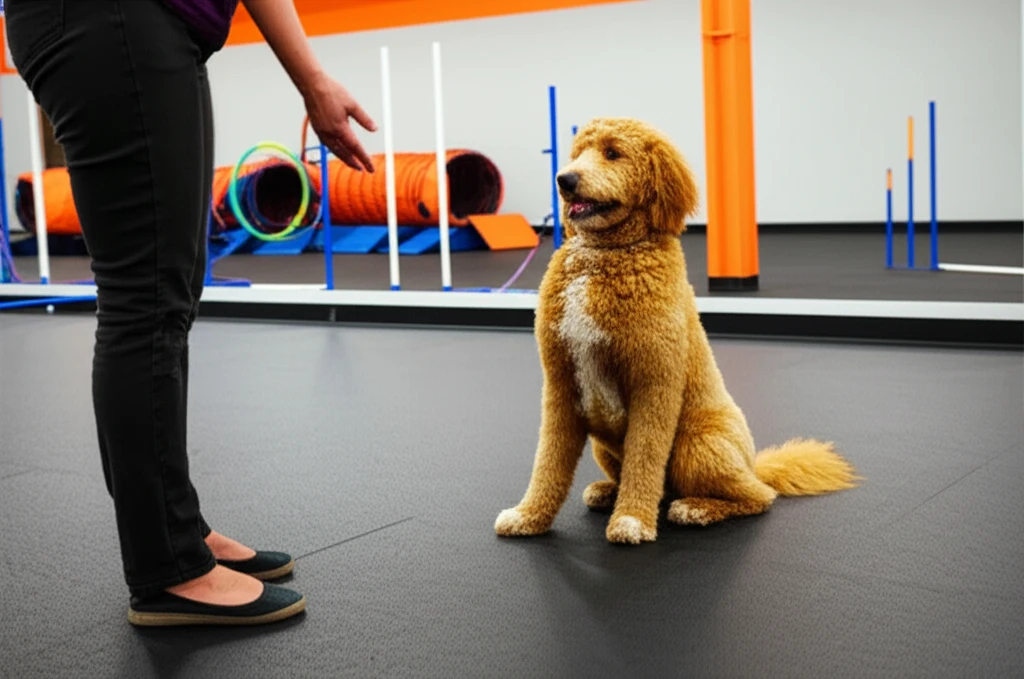
For dogs who are fearful of visitors, structured training classes can help because they teach your dog to be comfortable around unfamiliar people in a controlled setting. A dog who has positive experiences with new people in a training gym is building the same confidence that will eventually transfer to new people in your living room. The controlled environment lets your dog practice at their own pace without the pressure of a real social event.
Whatever your dog's starting point, the path forward is the same: a clear plan, consistent practice, and realistic expectations about what your dog can handle right now versus what you are building toward. Find a Zoom Room near you to start building the skills that make hosting guests enjoyable for everyone in your household.
Frequently Asked Questions
How do I stop my dog from jumping on guests?
Teach an alternative behavior that is incompatible with jumping, such as sitting or going to a designated spot. Practice this without guests first, then with a cooperative friend who follows the rules: ignore the dog completely when they jump, and give attention only when four paws are on the floor. Consistency is critical. If some guests allow jumping and others do not, your dog cannot learn the rule. Exercise your dog before guests arrive to reduce arousal, and have treats ready to reward calm behavior at the door. This takes practice over multiple visits, not a single training session.
My dog barks non-stop when guests are over. What can I do?
First, identify why your dog is barking. Excitement barking, alert barking, and fear barking require different approaches. For excitement barking, redirect to an alternative behavior like going to a mat and give them a long-lasting chew to occupy their mouth. For alert barking at the initial arrival, practice your door routine until the doorbell triggers a go-to-mat behavior instead of a barking frenzy. For fear-based barking, give your dog space and do not force interaction. If the barking is persistent, a quiet room away from the action with enrichment is a better option than letting your dog practice barking for the entire evening.
Should I put my dog away when guests come over?
It depends on your dog and your guests. If your dog is calm, well-mannered, and enjoys meeting people, there is no reason to put them away. If your dog is overwhelmed by visitors, reactive, or if you have guests who are afraid of or allergic to dogs, giving your dog their own space is the right call. Being put in a crate or quiet room with a Kong and calming music is not a punishment. It is a management decision that protects your dog from stress and your guests from unwanted interactions. You can reassess as your dog's skills improve.
Ready for Stress-Free Hosting?
Zoom Room's training classes teach the impulse control, settle skills, and polite greeting manners that make hosting guests easy. Practice in a controlled setting so your dog is ready for the real thing.
Find a Zoom Room