
How to Introduce Dogs: Building a Peaceful Multi-Dog Household
You want to add a second dog to your family, or you are moving in with someone who already has one. The fantasy is instant friendship. The reality is that throwing two dogs together and hoping for the best is one of the most common ways people set up a multi-dog household for conflict. A good introduction takes days to weeks, not minutes.
Why Slow Introductions Prevent Conflict
Dogs are social animals, but that does not mean they automatically welcome strangers into their living space. Your resident dog has an established territory, a daily routine, preferred resting spots, valued toys, and a relationship with you that has been built over time. A new dog arriving disrupts all of that simultaneously. Even a friendly, well-socialized dog can become tense, avoidant, or reactive when a strange dog suddenly appears in their home with access to all their things.
A slow introduction lets both dogs process the new situation in manageable stages. They learn about each other gradually, associate the other dog's presence with good things, and establish a working relationship before they have to share space, resources, and your attention full-time. Rushing the process because the dogs "seem fine" in the first five minutes is a gamble. Early tolerance is not the same as genuine comfort, and many conflicts do not emerge until the novelty wears off and the dogs begin negotiating real-life access to things they care about.
The single biggest predictor of a successful multi-dog household is the quality of the introduction. Dogs who are introduced thoughtfully and gradually are far more likely to develop a relaxed coexistence than dogs who are forced into proximity and left to sort it out. The investment of a few extra days at the beginning saves months of management and potential rehoming decisions later.
The Introduction Protocol: Step by Step
Step one: neutral territory. The first meeting should not happen in your home or yard. Both of those are your resident dog's territory, and territorial associations can color the entire interaction. Choose a neutral location: a quiet park, a parking lot, a neighbor's yard, or any space where neither dog has an established claim. Have one handler per dog, both dogs on loose leashes, and plenty of distance between them.
Step two: parallel walking. Do not let the dogs meet face-to-face yet. Walk them in the same direction, on the same side of the street, with ten to fifteen feet between them. Let them be aware of each other without being forced to interact. Watch the body language: loose bodies, relaxed tails, casual glances toward the other dog, and willingness to sniff the ground are all good signs. Stiff posture, hard staring, raised hackles, or pulling toward the other dog with intensity (not just curiosity) are signals to increase distance. Walk for ten to fifteen minutes, gradually closing the gap if both dogs are relaxed.
Step three: allow a brief greeting. If the parallel walk goes well, allow the dogs to approach each other in an arc (not head-on, which is confrontational in dog language). Keep leashes loose so neither dog feels trapped. Let them sniff for three to five seconds, then cheerfully call them apart. Short, controlled greetings followed by breaks prevent the interaction from escalating through overstimulation. Three or four brief greetings with breaks between them are better than one long, unstructured encounter.
Step four: shared activity on neutral ground. If the greeting goes well, take both dogs for a walk together. Side by side, moving in the same direction, with occasional treat breaks. Shared movement builds positive associations without the pressure of direct interaction. Many dogs who are tense face-to-face relax when walking parallel because the movement dissipates arousal and gives them something to focus on besides each other.
Step five: gradual home access. Before bringing the new dog inside, put away your resident dog's high-value items: favorite chews, bones, squeaky toys, and food bowls. These are flash points for resource guarding. Let the new dog explore one room at a time while the resident dog is in a separate area. Then swap: let the resident dog re-enter the space so they can smell where the new dog has been without direct confrontation. When both dogs are calm, allow them supervised access to a shared space with plenty of room to move apart from each other.
Resource Management in Multi-Dog Households
Most multi-dog conflicts happen around resources: food, chews, toys, resting spots, and human attention. Dogs who coexist peacefully in the yard can erupt into a fight over a bully stick dropped between them. Managing resources is not a temporary measure during the introduction period. It is an ongoing practice for any multi-dog household.
Feed dogs separately. This means separate bowls in separate areas, ideally with a physical barrier like a closed door or baby gate between them. Mealtime should be calm and pressure-free for both dogs. Even dogs who show no tension around food should eat separately, because food guarding can develop over time, especially if one dog eats faster and moves toward the other's bowl. Pick up bowls when the meal is done. Free-feeding (leaving food down all day) invites guarding behavior.
Distribute high-value items (chews, bones, stuffed Kongs) in separate spaces. If you cannot supervise, do not give them at all when both dogs are together. A chew is not worth a fight, and once dogs have had a conflict over a resource, that pattern tends to repeat. Low-value toys that neither dog cares deeply about can be available in shared space, but anything that either dog gets intense about should be a separated activity.
Resting spots matter too. Each dog should have their own bed, crate, or designated area where they can retreat and not be bothered by the other dog. Some dogs share beds happily. Others need clear personal space. Watch for subtle signs of one dog displacing the other from a preferred spot: approaching and staring until the other dog moves, lying on top of the other dog's bed, or blocking access to a doorway or crate. These are low-level resource competitions that can escalate if unaddressed.
Your attention is a resource. Petting one dog while the other watches can trigger jealousy-like behavior that is actually competition for access. Distribute affection thoughtfully, and if one dog pushes in between you and the other dog, ask them to wait or redirect them rather than rewarding the interruption. Teaching both dogs a solid sit-stay or confidence-building settle gives you tools for managing attention distribution without creating tension.
Reading Body Language: Normal Adjustment vs. Real Problems
Not every tense moment means the introduction is failing. Dogs in a new living arrangement need time to figure each other out, and that process includes some awkwardness, posturing, and negotiation. Knowing what is normal and what is a warning sign helps you avoid overreacting to healthy adjustment and underreacting to genuine problems.
Normal adjustment behavior: Brief stiffening when the other dog approaches, then relaxing. Avoidance, where one dog walks away from the other and the other dog lets them go. Occasional grumbling or lip curling that ends the interaction without escalation. One dog choosing to stay in a different room. Mild play that is bouncy and reciprocal, with both dogs taking turns chasing, mouthing, and being on the bottom during wrestling. Checking in with you when the other dog does something unexpected. These are all signs that the dogs are communicating effectively and setting boundaries in appropriate ways.
Warning signs that need intervention: Sustained hard staring without breaking eye contact. Stiff, forward body posture with closed mouth and high, rigid tail. One dog pinning the other repeatedly without the pinned dog being able to get up. One dog pursuing the other after the other dog has tried to move away. Escalating intensity during play where one dog is no longer having fun but cannot exit. Snapping that makes contact. Any interaction that draws blood. If you see these patterns, separate the dogs calmly (do not yell or grab, which escalates arousal) and consult a professional before continuing the introduction process.
The adjustment period for most multi-dog households is two to four weeks, with continued settling over two to three months. During this time, supervise all interactions, separate the dogs when you cannot supervise, and resist the urge to rush the process because they had one good afternoon together. Consistency and patience during this window build the foundation for years of peaceful coexistence.
The Long Game: Building a Household That Works
A successful multi-dog household is not one where the dogs are best friends. It is one where both dogs feel safe, have their needs met, and can coexist without chronic tension. Some dogs become inseparable playmates. Others develop a polite tolerance where they share space without interacting much. Both outcomes are fine. The goal is low stress for everyone, including you.
Maintain individual time with each dog. Walk them separately sometimes. Do training sessions one-on-one. Give each dog their own crate or quiet space where they can decompress without the other dog. Dogs in multi-dog households still need individual attention and activities, and providing that actually reduces competition because each dog has guaranteed access to you and to enrichment.
Continue managing resources even after the dogs seem settled. Many multi-dog conflicts emerge weeks or months into the relationship, once the initial politeness fades and the dogs start testing boundaries. Keep feeding separate. Keep high-value chews separated. Keep monitoring resting spots. These are not signs that the relationship is failing. They are responsible management practices that prevent problems from developing.
If the introduction has not gone well, that does not necessarily mean the dogs cannot live together. It often means the pace was too fast, the resource management was insufficient, or one dog has a stress-related behavior that needs separate attention before they can handle the added social pressure of a housemate. A professional trainer can assess the dynamic and help you build a structured plan.
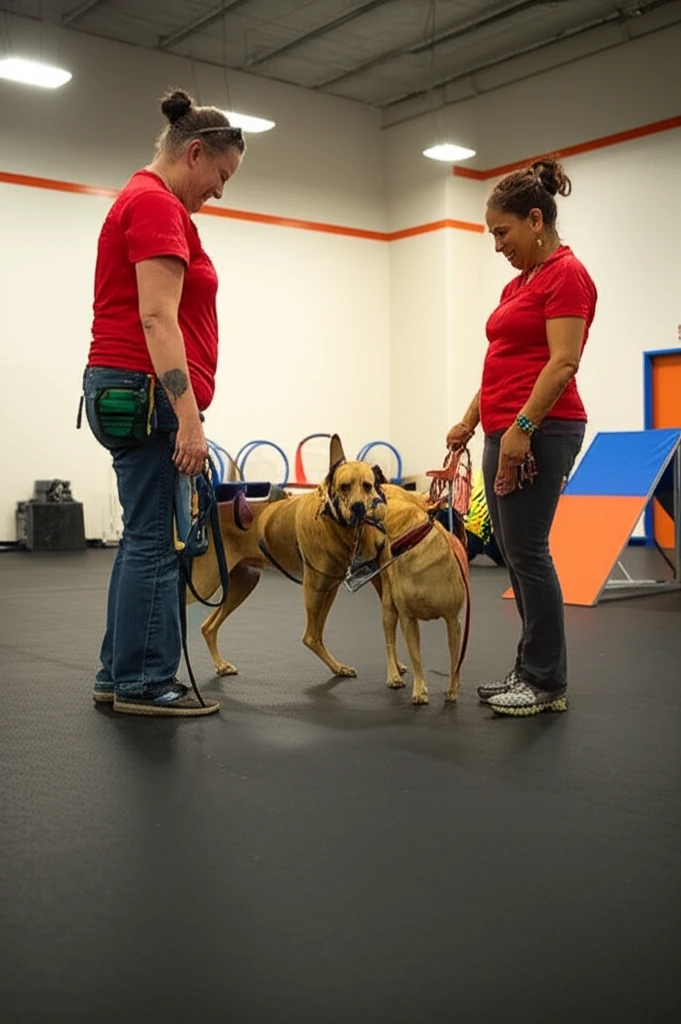
At Zoom Room, our trainers work with multi-dog households regularly. Whether you are planning an introduction, navigating the adjustment period, or troubleshooting tension between dogs who have been together for a while, we can help. Our indoor gym provides a controlled, neutral environment where both dogs can practice being near each other with professional guidance and where you learn to read the body language that tells you how the relationship is actually going.
Frequently Asked Questions
How long should I keep the dogs separated before giving them full access to each other?
There is no fixed timeline because it depends on the dogs. A general guideline is to keep all interactions supervised for at least two weeks, with separation when you cannot supervise. During this period, gradually increase the duration and variety of shared activities. Some dogs are relaxed together within a few days. Others need a month or more of careful management before they can be trusted unsupervised. The signals to watch for are consistent relaxed body language in each other's presence, voluntary proximity seeking, and the ability to share space without tension around resources. Do not rush to unsupervised access because of convenience. One unsupervised conflict can set the relationship back significantly.
Should I let the dogs work it out themselves if they get into a scuffle?
No. The idea that dogs should be left to sort out their hierarchy is based on outdated thinking and can result in injuries, trauma, and a damaged relationship that is much harder to repair. If dogs scuffle, calmly separate them by calling them apart, using a barrier, or gently guiding one away by the back of their harness. Do not yell, grab collars, or put your hands near their mouths. After a scuffle, give both dogs a cool-down period in separate spaces, then assess what triggered the conflict. Was it a resource, a spatial issue, or overstimulation? Address the trigger with management before reintroducing supervised contact.
Can I introduce a puppy to my adult dog more quickly since puppies are less threatening?
Puppies are less threatening in some ways, but they are also relentless, have no social skills, and do not read adult body language well, which can exhaust and frustrate an adult dog quickly. Many adult dogs tolerate puppies initially and then reach a breaking point after days of being climbed on, bitten, and chased. Follow the same gradual introduction protocol. Give your adult dog escape routes and personal space the puppy cannot access, like a baby-gated room or a raised bed. Supervise all interactions and intervene when the puppy is not respecting the adult dog's signals to stop. The adult dog should not have to escalate to a snap to get the puppy to back off. That is your job.
Bringing a New Dog Home?
Zoom Room's trainers help you plan and execute introductions, manage the transition to a multi-dog household, and build the skills both dogs need to coexist peacefully. Our indoor gym provides neutral ground and professional oversight.
Find a Zoom Room