
Managing a Multi-Dog Household: How to Prevent Conflict and Build Harmony
Adding a second dog does not automatically give your first dog a best friend. Multi-dog households require active management, not the assumption that dogs will figure it out on their own. When it works, living with multiple dogs is deeply rewarding. When it does not, it is stressful, chaotic, and sometimes dangerous. The difference almost always comes down to what the humans do.
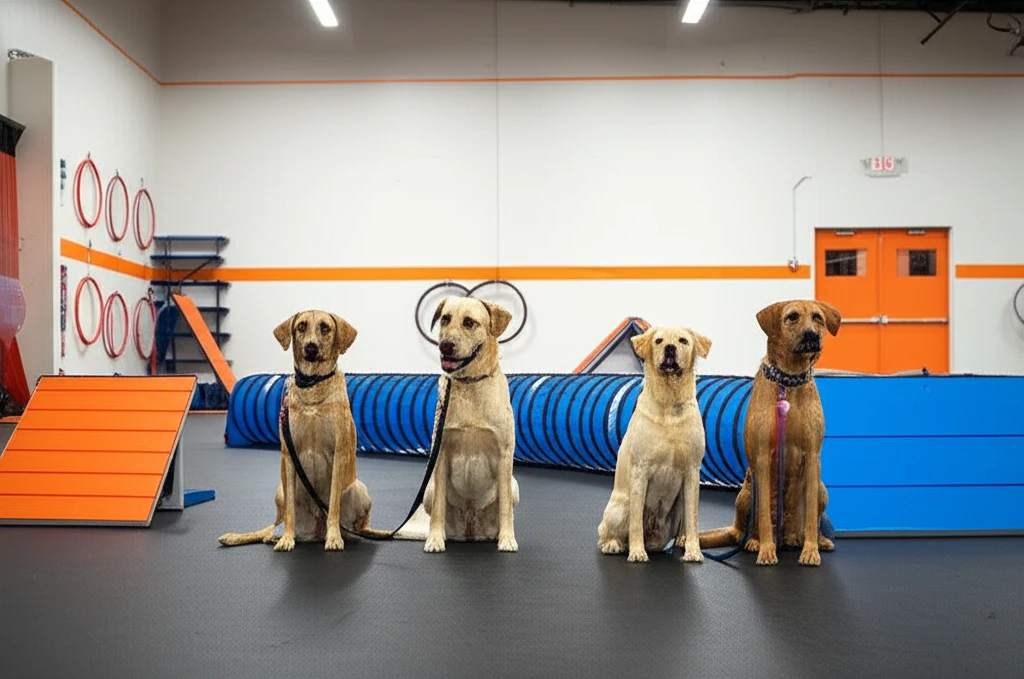
Why Multi-Dog Households Need Structure
The fantasy is that two dogs will play together, keep each other company, and solve each other's loneliness. The reality is more complicated. Dogs are social animals, but social does not mean they automatically get along with every other dog, any more than you automatically get along with every person you meet. Dogs have individual temperaments, energy levels, play styles, and tolerance thresholds. Two dogs with incompatible styles, a rough player paired with a sensitive introvert, for example, can make each other miserable without anyone intending harm.
Structure is what prevents tension from building into conflict. That means structured feeding, structured access to valued resources, structured introductions to new spaces and situations, and structured individual time with you. It does not mean rigidity or constant micromanagement. It means creating a household framework where both dogs know the rules, neither has to compete for essentials, and each has space to be themselves.
The most common mistake in multi-dog households is assuming that proximity equals bonding. Dogs who live together do not necessarily like each other. Some tolerate each other. Some form genuine friendships. Some maintain a fragile truce that collapses under pressure. Your job is to read the relationship honestly, not project the friendship you want onto dogs who are merely coexisting, and manage accordingly.
Resource Management: The Foundation of Peace
The majority of conflicts in multi-dog homes involve resources: food, treats, toys, resting spots, and your attention. Resource guarding between dogs is natural canine behavior, but in a household with inadequate management, it escalates into fights.
Feed your dogs separately. Separate rooms with closed doors or baby gates is the standard. Do not feed dogs next to each other and hope they will be polite. Even dogs who do not guard from humans may guard from other dogs, especially when the meal is a high-value item like a raw bone or a stuffed Kong. Pick up food bowls after meals so there is nothing left to argue about.
Distribute treats and chews individually. If you give one dog a bully stick and the other gets nothing, you have created a conflict opportunity. If you give both dogs a bully stick in the same room, you have created a different conflict opportunity. Give each dog their high-value chew in their own space, behind a barrier if needed, and let them enjoy it without the other dog's presence adding pressure.
Provide enough resting spots. If you have two dogs and one dog bed, someone has to give up the preferred spot. Multiple beds, crates, and comfortable surfaces in different locations give each dog the ability to rest without displacement. If one dog consistently pushes the other off a couch or bed, manage access to that spot until you can address the dynamic with training.
Your attention is a resource too. Dogs who guard their owner from the other dog are guarding the most valuable resource in the house: you. If one dog body-blocks the other when you sit on the couch, or growls when the other approaches during a petting session, that is resource guarding and it needs the same management approach. Give each dog individual attention time, and when you are giving attention to one, make sure the other has something valuable of their own to occupy them.
Reading Inter-Dog Body Language
Conflict between dogs rarely starts with a fight. It starts with body language that humans often miss or misinterpret. Learning to read the early signals is the single most important skill for managing a multi-dog household.
Stiffening is the first warning. A dog who freezes over a toy, holds perfectly still when the other dog approaches, or stands rigidly with a closed mouth and hard eyes is communicating tension. This is the moment to intervene, not by punishing, but by calmly redirecting or creating space. If you wait until the growl, you have already missed several signals.
Displacement behaviors tell you a dog is uncomfortable. Yawning, lip licking, turning away, shaking off as if wet, and scratching when there is no itch are all ways a dog says, "I am stressed and trying to de-escalate." If one of your dogs is constantly showing these signals around the other, they are not relaxed in the relationship, even if there has never been a fight.
Play versus conflict can be hard to distinguish. Healthy play includes role reversals (both dogs take turns being on top or chasing), loose, bouncy body movements, play bows, and voluntary re-engagement after breaks. Unhealthy play involves one dog always pinning the other, one dog trying to leave and the other not letting them, increasingly stiff body movements, and escalating intensity without pauses. If you are not sure whether your dogs are playing or fighting, interrupt briefly. If both dogs choose to re-engage with loose bodies, it was play. If one dog moves away with relief, it was not.
A common trap is the "they always do that" dismissal. Maybe your older dog always snaps at the younger one near the food bowl, and you have come to see it as normal. It is not normal. It is a stress signal that has become routine because the underlying tension was never addressed. Do not normalize conflict just because it has not yet drawn blood.
Sibling Syndrome and Individual Training
Sibling syndrome, sometimes called littermate syndrome, is a pattern that develops when two puppies of similar age are raised together. The dogs become so dependent on each other that they struggle to function independently. They may be unable to be separated without extreme distress, fail to bond with their human family, and develop reactivity or aggression toward each other as they mature socially around 12 to 18 months of age.
Sibling syndrome is not limited to actual littermates. Any two dogs acquired at the same developmental stage and raised together without deliberate individual socialization can develop this pattern. The prevention and the fix are the same: individual everything. Walk them separately. Train them separately. Crate them separately. Socialize them separately. Give each dog the opportunity to develop their own relationship with you, their own coping skills, and their own identity outside of the other dog.
Individual training time is important for every multi-dog household, not just those at risk for sibling syndrome. When you train both dogs together, the faster learner dominates the session and the slower learner checks out. When you train each dog individually, you can work at their pace, address their specific challenges, and give them your undivided attention. That individual time also strengthens your bond with each dog, which is the foundation of every behavior you will ever teach them.
At Zoom Room socialization classes, dogs learn to interact with unfamiliar dogs in a structured environment under professional supervision. This is especially valuable for multi-dog households because your dogs learn social skills with dogs outside the home, which builds confidence and flexibility that carries back into the household dynamic. A dog who has a broad social repertoire is a better housemate than a dog whose entire social world is one other dog.
When Squabbles Are Normal and When They Are Escalating
Not every growl or scuffle in a multi-dog household is a crisis. Dogs who live together will occasionally have disagreements, just like human family members do. A quick snap over a chew toy, a brief growl when one dog invades the other's resting space, or a momentary squabble that resolves immediately with no injury is within the range of normal canine communication. These are dogs setting boundaries with each other, and as long as the incidents are rare, brief, and do not escalate, they do not necessarily indicate a problem.
What you should watch for is a pattern. If the squabbles are increasing in frequency, intensity, or duration, that is escalation. If one dog is consistently the aggressor and the other is showing chronic stress signals like avoidance, hypervigilance, or reluctance to enter certain rooms, the relationship is not balanced. If any incident results in a wound that breaks the skin, the level of intensity has crossed a threshold that requires professional intervention.
Trigger stacking is a common cause of escalation. A dog who is already stressed from a recent change in the household, a new baby, a move, a schedule change, a health issue, has less tolerance for the daily friction of multi-dog living. The squabble that was no big deal last month becomes a full fight this month because one dog's stress bucket is already full. Identifying and reducing the underlying stressors often reduces inter-dog tension as a side effect.
If your dogs have had a serious fight, do not simply put them back together and hope it does not happen again. Separate them, assess what triggered the fight, implement management changes, and consult a professional trainer or veterinary behaviorist. Dogs who have fought seriously are at higher risk of fighting again, and each subsequent fight is typically more intense than the last. Early professional intervention is the best predictor of a manageable outcome. Find a Zoom Room near you for professional guidance on building a multi-dog household that works for everyone.
Frequently Asked Questions
Should I let my dogs work it out when they argue?
Not in the way most people mean. Brief, low-intensity disagreements where both dogs respect the other's communication, one growls, the other backs off, and everyone moves on, are normal and do not require intervention. But letting dogs escalate a conflict to see who wins is dangerous and builds a pattern of aggression. If a disagreement involves prolonged stiffness, repeated lunging, pinning, or any intensity beyond a quick correction and retreat, interrupt calmly by calling one dog away or tossing treats to create distance. Then assess what triggered the conflict and manage the environment to prevent a repeat. Never physically reach between two fighting dogs.
Is it better to get a second dog of the same breed or a different breed?
Breed matters less than individual temperament and play style. Two dogs of the same breed can have very different energy levels and social preferences. A better question is whether the second dog's energy level, size, play style, and social confidence complement your existing dog. A high-energy young dog paired with a low-energy senior is a common mismatch. Similarly, two dogs with strong same-sex resource guarding tendencies may conflict regardless of breed. If possible, arrange a multi-day trial or foster period before committing, so you can see how the dogs interact in a real living environment rather than basing the decision on a brief meet-and-greet.
My dogs play rough. How do I know if it is too rough?
Healthy rough play includes role reversals where both dogs take turns being on top or chasing, voluntary pauses where both dogs shake off and re-engage, loose and bouncy body movements, and open relaxed mouths. Unhealthy rough play involves one dog always pinning or pursuing the other, one dog trying to disengage while the other continues, increasingly stiff body language, closed mouths with hard eyes, and escalating intensity with no breaks. If you interrupt and both dogs choose to go back to playing with loose bodies, it was healthy play. If one dog moves away looking relieved, the play was one-sided and you should redirect.
Ready to Build a Harmonious Multi-Dog Home?
Zoom Room's socialization classes and obedience training give each of your dogs the individual skills and social confidence they need to thrive alongside each other. Our trainers help you read inter-dog dynamics and build structure that prevents conflict.
Find a Zoom Room