
Positive Reinforcement Dog Training: Why It Works and What the Science Says
Positive reinforcement is not a training trend or a feel-good philosophy. It is the most extensively studied and scientifically supported approach to changing animal behavior, and it produces better outcomes with fewer side effects than any alternative. Here is what it actually means, why it works, and how to tell real positive reinforcement from marketing spin.
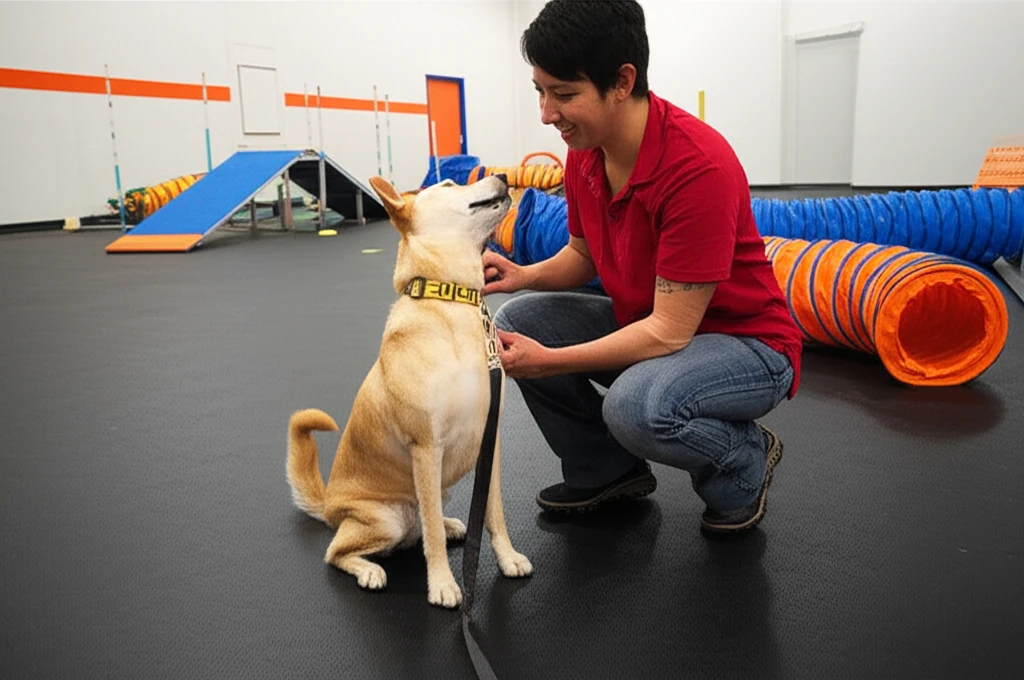
What Positive Reinforcement Actually Means
In learning theory, positive reinforcement has a precise definition: adding something desirable immediately after a behavior to increase the likelihood that the behavior will occur again. "Positive" does not mean nice or gentle. It means adding. "Reinforcement" means the behavior increases. When your dog sits and you give them a treat, you have positively reinforced the sit. The dog is more likely to sit again in similar circumstances because sitting produced something good.
This is distinct from the other three quadrants of operant conditioning. Negative reinforcement removes something unpleasant to increase a behavior (a leash correction stops when the dog moves into heel position). Positive punishment adds something unpleasant to decrease a behavior (a shock when the dog crosses a boundary). Negative punishment removes something desirable to decrease a behavior (turning your back when the dog jumps, removing your attention). All four quadrants are real, and all four can change behavior. The question is not whether they work. The question is which ones produce the best outcomes with the fewest harmful side effects.
Positive reinforcement training builds behavior by teaching dogs what to do rather than punishing them for what not to do. A dog who jumps on guests is not corrected for jumping. Instead, they are taught that sitting when guests arrive produces treats and attention. The jumping decreases not because it was punished but because an incompatible behavior, sitting, has been reinforced to the point where the dog chooses it over jumping. This approach requires more precision and patience than punishment, but the behaviors it builds are more reliable and more resilient because the dog is genuinely motivated to perform them.
What the Research Says
The scientific case for positive reinforcement training is not a close call. Decades of research in animal behavior, veterinary behavior, and comparative psychology converge on the same conclusion: reward-based training methods produce better behavioral outcomes and fewer problematic side effects than methods that rely on punishment or aversive tools.
A landmark 2009 study by Herron, Shofer, and Reisner at the University of Pennsylvania surveyed owners about their use of confrontational training techniques and the behavioral outcomes. Dogs whose owners used physical corrections, alpha rolls, staring down, or leash jerks showed significantly higher rates of aggressive responses directed at the owner. The dogs were not becoming more obedient. They were becoming more defensive, because they were being confronted by the person they were supposed to trust.
The American Veterinary Society of Animal Behavior (AVSAB) issued a position statement recommending that trainers and behavior professionals use positive reinforcement methods and avoid the use of punishment as a first-line approach. The statement cites research showing that punishment-based methods increase fear and anxiety, damage the human-animal bond, and are associated with higher rates of aggression. The British Veterinary Association, the European Society of Veterinary Clinical Ethology, and the Animal Behavior Society have issued similar statements.
Research on working dogs, including military dogs, detection dogs, and service dogs, confirms these findings. Dogs trained with reward-based methods perform as well or better than dogs trained with compulsion-based methods, and they show lower stress indicators, better problem-solving ability, and more willingness to try new behaviors. That willingness to try, called behavioral variability, is critical. A dog trained with punishment learns to avoid making mistakes. A dog trained with reinforcement learns to experiment, because mistakes are simply not reinforced rather than punished. The result is a dog who is more adaptable, more creative, and more engaged in the training process.
The "Balanced Training" Marketing Problem
If you spend any time researching dog trainers, you will encounter the term "balanced training." It sounds reasonable. Who would not want balance? But in the dog training industry, "balanced" is a marketing term that means the trainer uses both rewards and punishment. Specifically, it typically means the trainer uses treats and praise for easy behaviors and resorts to aversive tools, prong collars, e-collars, leash corrections, spatial pressure, when the dog does not comply quickly enough or when the behavior is more challenging.
The argument from balanced trainers is that some dogs or some behaviors require corrections, and that purely positive trainers are limited in what they can address. This argument does not hold up against the evidence. Every behavior that balanced trainers claim requires punishment has been successfully addressed using reinforcement-based methods by trainers who have the skill and patience to do it. Reactivity, aggression, resource guarding, fear-based behavior: all of these have well-documented, effective, reward-based protocols. What differs is the timeline and the skill required of the trainer, not the possibility of the outcome.
The real risk of balanced training is unpredictability. When a dog is sometimes rewarded and sometimes punished for related behaviors, they become uncertain about what produces safety and what produces discomfort. That uncertainty generates anxiety, and anxiety is the root of most behavioral problems people bring to trainers. A dog who is corrected for pulling on the leash, then praised for walking nicely, then corrected again when they look at a squirrel is not learning leash manners. They are learning that walks are stressful and their handler is unpredictable. That dog is a candidate for leash reactivity, not a solution for it.
When evaluating a trainer, the label matters less than the methods. Some trainers who call themselves positive use punishment-based methods when frustrated. Some trainers who avoid labels are genuinely skilled, reward-based professionals. Ask specific questions about what happens when a dog does not comply. The answer tells you everything the label does not.
What to Look For in a Trainer's Methods
A trainer who genuinely practices positive reinforcement will demonstrate several consistent characteristics.
They use food, play, and environmental rewards to build behaviors. Treats are not a crutch. They are a communication tool that tells the dog, with precise timing, which behavior produced a good outcome. Over time, the food is faded and the behavior is maintained by real-life rewards, like the door opening after a sit or the leash going on after calm behavior. But in the learning phase, food provides the clearest, fastest feedback available.
They set dogs up to succeed rather than waiting for them to fail. Good trainers manage the environment so the dog is likely to make the right choice, then reinforce that choice heavily. A trainer who lets a dog walk into a situation they are going to fail at, then corrects the failure, is training reactively instead of proactively.
They adjust criteria when the dog is struggling. If a dog cannot hold a stay for thirty seconds, a good trainer does not repeat the thirty-second stay until the dog gets it right. They shorten the stay to five seconds, reinforce success, and build back up. This is not lowering standards. It is training mechanics. Every complex behavior is built from smaller, achievable steps.
They understand and address the emotional state behind behavior. A dog who lunges and barks at other dogs is not being naughty. They are experiencing an emotional response, usually fear or frustration, that drives the behavior. Correcting the behavior without changing the underlying emotion is like putting tape over a check engine light. The symptom disappears temporarily, but the problem gets worse. Positive reinforcement methods change the emotional response first, and the behavior follows.
At any stage of your search for a trainer, prioritize methods over marketing. The trainer's website may say all the right things. Watch a class. Watch how they respond when a dog makes a mistake. Watch the dogs in the room. The dogs will tell you everything you need to know.
Why Zoom Room Trains This Way
Every Zoom Room class uses positive reinforcement methods exclusively. Not because it is trendy. Not because it is easy. Because it is what the evidence supports, and because we believe you should be in the room seeing exactly how your dog is trained.
Our group class format means your dog learns in the presence of real distractions from the very first session. Other dogs, new smells, unfamiliar surfaces, and the energy of a group setting all provide opportunities to practice focus, self-regulation, and social skills. You learn the mechanics of marking and rewarding behavior with precise timing, so you can continue the work at home with the same consistency your dog experienced in class.
We do not use prong collars, choke chains, shock collars, or any tool that relies on pain or intimidation. We do not use alpha rolls, leash corrections, or verbal intimidation. We do not subscribe to dominance theory, pack hierarchy, or any framework that positions training as a contest of wills between you and your dog. Your dog is not trying to dominate you. They are trying to figure out what works, and our job is to make the right choices obvious and rewarding.
This approach works for puppies learning their first cues. It works for adolescent dogs going through the chaos of social maturity. It works for rescue dogs rebuilding trust. And it works for dogs with complex behavioral challenges who need their emotional state changed before their behavior can follow. The science is clear. The results speak for themselves. Your first class is where it starts. Find a Zoom Room near you and see the difference for yourself.
Frequently Asked Questions
Does positive reinforcement work for aggressive dogs?
Yes. Aggression is almost always rooted in fear, anxiety, frustration, or pain, and changing those underlying emotional states is the most effective path to reducing aggressive behavior. Punishment-based approaches to aggression suppress the warning signals, like growling and lip curling, without addressing the emotion driving them. The dog appears better temporarily but is actually more dangerous because they have learned to skip the warning and go straight to a bite. Positive reinforcement protocols for aggression, including desensitization and counter-conditioning, change how the dog feels about the trigger, which changes the behavior from the inside out. Severe aggression cases should be managed by a veterinary behaviorist or certified behavior consultant, but the methodology remains reward-based.
Will my dog only listen when I have treats?
Not if the training is done correctly. Treats are used heavily during the learning phase because they provide the clearest, most immediate feedback to the dog. Once a behavior is learned, the treats are gradually faded and replaced with real-life rewards: going outside, greeting a friend, playing with a toy, or access to sniffing on a walk. The technical term is transitioning from a continuous reinforcement schedule to a variable one, which actually makes the behavior more resilient, not less. Think of treats as training wheels. They are essential at the start and deliberately removed once the skill is solid. A well-trained dog works for the relationship, the routine, and the occasional surprise reward, not for a constant stream of cookies.
What is the difference between positive reinforcement training and permissive training?
Positive reinforcement training is structured, systematic, and involves clear expectations for behavior. It is not permissive. Dogs in a positive reinforcement program learn boundaries, impulse control, and self-regulation. The difference is how those lessons are taught. Instead of punishing a dog for making a wrong choice, you prevent the wrong choice through management and heavily reinforce the right one. A dog who is not allowed to practice jumping on guests, and is consistently rewarded for sitting instead, learns the boundary without experiencing punishment. Permissive training is the absence of training. Positive reinforcement is the deliberate, skilled application of learning science to build the behaviors you want.
Ready to Get Started?
Zoom Room uses positive reinforcement exclusively in every class, for every dog, at every level. Experience the difference science-backed training makes for your dog and for your relationship.
Find a Zoom Room